
Psoriasis is a skin disease that can occur behind or inside the ears. Learn more about symptoms, causes and treatment here.
You may have heard of psoriasis, a condition that causes irritated skin. But did you know it can occur in your ears as well? Learn more about how this condition affects your ears and discover treatment options to find relief.
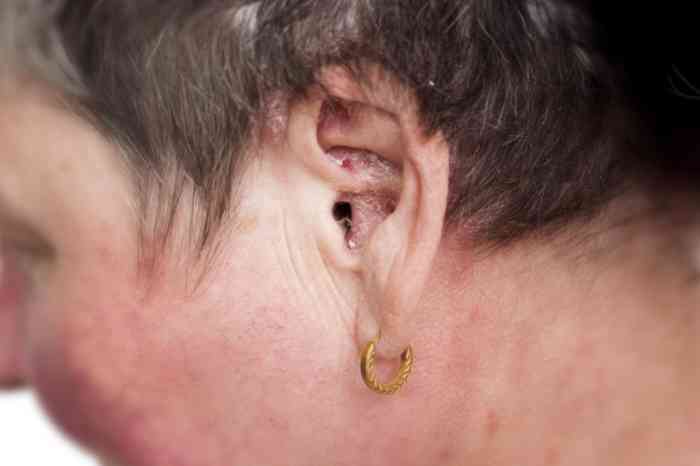
Psoriasis is a common, chronic skin condition that affects children and adults, categorized by patches of scaly skin that are painful and itchy. Psoriasis in the ears causes a buildup of scaly skin or earwax. The condition is identified by skin redness and round, raised patches of skin covered in white, flaky dead skin (also known as plaques).
While the exact cause of this autoimmune condition is still unknown, it is characterized by overactivity in the immune system. In psoriasis patients, the immune system attacks its own cells and issues, targeting skin cells, known as keratinocytes. Those skin cells grow and divide faster than they can be shed, causing red, inflamed patches to appear. Psoriasis can be transmitted genetically, meaning that a child whose parents have psoriasis is at a higher risk for developing it as well. Other triggers include high mental stress response, alcohol use and smoking, and certain medications.
Now is the perfect time to reflect on your hearing health. Experience better hearing RISK-FREE* in the new year!
Psoriasis in the ears can show up on different parts of the ears. Below are some of the common areas where it appears:
Psoriasis is one condition in a larger category of skin diseases known as dermatitis. While there are some shared symptoms, identification comes down to how the condition presents itself. In the case of psoriasis, the white, flaky patches of skin appear to be dry, while they will look oilier in other types of dermatitis.
Location is also a determining factor, particularly in seborrheic dermatitis vs psoriasis. Psoriasis is most often found on elbows, knees and around the sacrum (the bony structure that’s at the bottom of the spine and connects to the pelvis). By contrast, seborrheic dermatitis is often found on the scalp or oilier areas of the body. Psoriasis and other kinds of dermatitis can be present at the same time.
While both conditions present with itchy and inflamed skin, there are major differences when comparing neurodermatitis vs psoriasis. Neurodermatitis is characterized by intense, repetitive itching urges that have a psychological origin, like nervousness, stress and anxiety. In most cases, it occurs on the arms, neck, legs, back, chest and scalp.
Join the millions of Americans who have trusted Miracle-Ear for hearing care that’s tailored to their needs.
Psoriasis in ears symptoms are visually identifiable:
These can also be accompanied by intense itchiness in or around the ears. If the psoriasis becomes infected, there might be crusting and oozing around the plaques.
In most cases, psoriasis in the ears can be diagnosed with a physical exam to identify and characterize the plaques. Your doctor will also review your medical history to assess your risk for the disease. If these methods don’t offer conclusive results, your doctor might order a skin biopsy to examine the skin cells. If you’re also experiencing vertigo, your doctor might order an MRI to see if there are internal issues.
Depending on your symptoms, there are many ear psoriasis treatment options available. Some medications include:
Talk to your doctor to explore your options and determine which solutions will work best for you.
Outside of prescribed remedies for ear psoriasis, there are natural remedies to treat your ear psoriasis.
These home remedies for psoriasis in the ear might provide some relief from your symptoms, but be sure to talk to your physician before choosing to apply DIY skin treatments.
We offer solutions that transform hearing, from nearly invisible, comfortable designs to robust AI technology.
If you wear hearing aids and have ear psoriasis, you may experience some discomfort while wearing your devices. Depending on the type of hearing aid you wear and where your psoriasis is located, there might be some additional friction or irritation from your devices. If you have discomfort as a result of wearing your hearing aids with ear psoriasis, speak with a hearing care professional at your local Miracle-Ear to find a comfortable solution.


 Learn how tomorrow's hearing aids can help you today

 Find your closest Miracle-Ear center