We offer modern hearing solutions with options to fit your budget. Explore available types of hearing aids and discover which style might fit you.
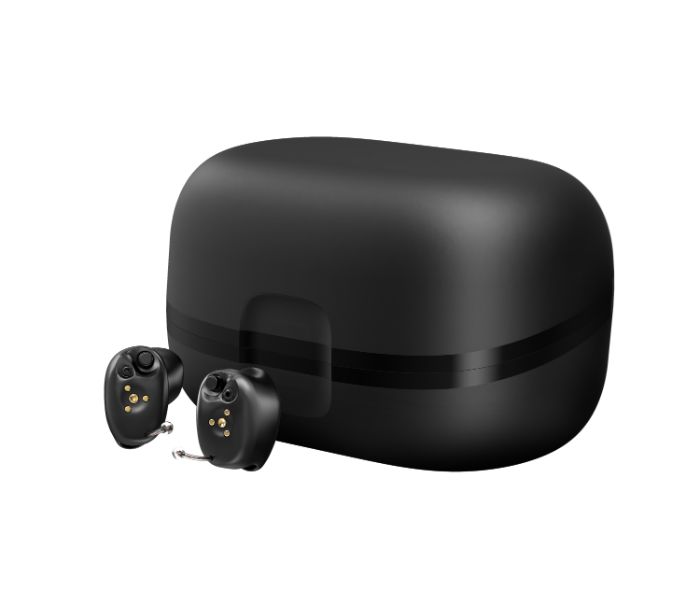
Our ITC/ITE hearing aids rest comfortably in the ear with various sizes for discreet, more natural sound. This style offers easy controls and customized performance through innovative features.
Discover ITE
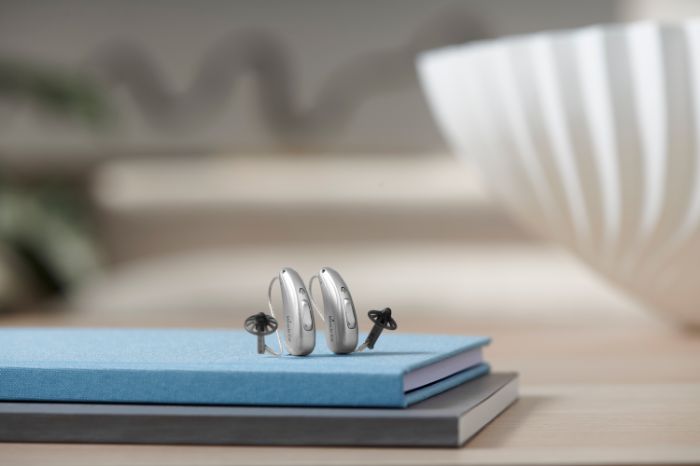
Our RIC hearing aids offer the most natural sound experience by placing the speaker directly in the canal. RIC hearing aid styles are very discreet, as the only component that’s visible is a clear wire that runs from behind the ear to the ear canal.
Discover RIC
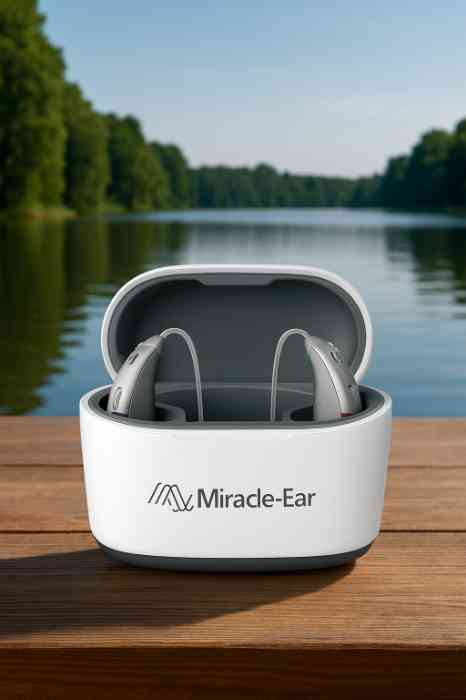
If you need a more powerful style, our BTE hearing aids deliver the strongest sound. For all their power, BTE hearing aid styles are very easy to maintain and take care of.
Discover BTE

Invisible-in-canal (IIC) hearing aids
Nearly invisible, expert sound.

Completely-in-canal (CIC) hearing aids
Small but mighty.
Choosing a style and model of hearing aids depends on your specific hearing loss needs, as well as lifestyle and personal preferences for looks and features. By learning more about different hearing aid styles—IIC, CIC, ITC, ITE, RIC and BTE—you’ll get a better idea of what each type of hearing aid offers. It’ll also help prepare you to have a discussion with your Hearing Care Professional (HCP) who will pair you with the best hearing aids for your needs. They’ll be with you every step of the way as you discover what’s right for you.
Wondering what type of hearing aids are best for your unique needs? Below, we break down what hearing aids best suit different degrees of hearing loss.
Finding the best type of hearing aid for sensorineural hearing loss really comes down to your specific needs. For more significant hearing loss, BTE models are a powerful choice that rests comfortably behind the ear. RIC hearing aids are a popular option because they are discreet, comfortable and work for mild to severe hearing loss. If you want the smallest option, IIC and CIC hearing aids are nearly invisible and help with mild to moderate hearing loss.
Having trouble with conductive hearing loss? This condition occurs when sound can’t reach the inner ear. In some cases, conductive hearing loss is due to earwax buildup, and all you need is to have your doctor professionally clean your ears. But for some people, conductive hearing loss is due to physical abnormalities or a permanent condition, and hearing devices are needed. Traditional hearing aids often won’t work for this type of hearing loss—but innovative solutions can help. Bone-conduction hearing aids, worn with a softband, cleverly send sound vibrations through your bones to the inner ear. For a more permanent option, bone-anchored hearing aids (BAHA) involve surgery to place a small titanium implant in the skull. An external sound processor then connects to this implant, bypassing the outer and middle ear and sending clear sounds directly to the inner ear.
Hearing aids that fit inside the canal are the most discreet options. This includes CIC hearing aids, and our most discreet style: IIC. These models are custom molded to your ear, so they’re comfortable to wear all day.
RICs are also discreet. Using a small electrical wire and a dark, opaque ear dome, RIC hearing aids are less noticeable than other over-the-ear hearing aids.
With BTE hearing aids, all electronics sit outside the ear, so they can be cleaned more easily and are the least susceptible to moisture and wax. And, of course, all hearing aids in our Miracle-EarBLISS™ line are waterproof, protecting against moisture.
If you live in or are visiting a hot or humid climate, hearing aid dryers, dehumidifiers or dry-and-clean chargers for rechargeable hearing aids (like the MECHARGE™ powerdry or our Dry & Clean Charger), are a great way to manage moisture.





 Learn how tomorrow's hearing aids can help you today