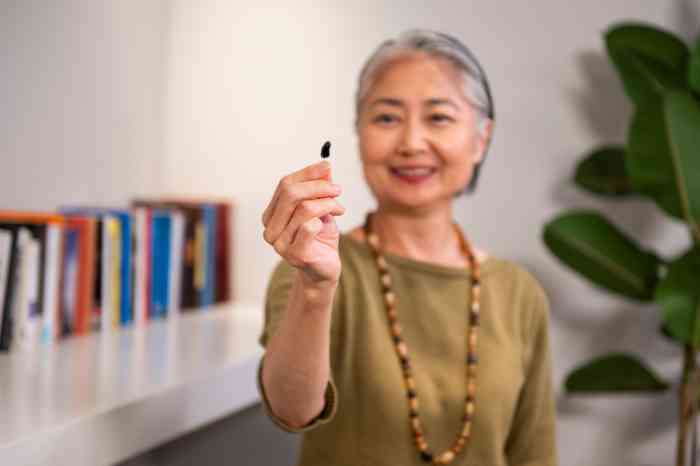
female client with hearing aid

Hearing Aids

How do hearing aids work?

Learn more about how sound, amplification, and customization work together to improve your hearing

Hearing aids amplify and process sounds

A hearing aid is a technological device that helps people live a higher quality of life through better hearing and understanding.

Miracle-Ear hearing aids are specially created to amplify sounds selectively―helping to minimize background noise and improve the sounds and voices we most want to hear. The hearing aids are constantly processing all sounds to minimize distractions and create clearer sounds that are easier to understand.

Dr. Jason Meyer

Dr. Jason Meyer, Au.D.

Audiologist, Regional Training Manager

Key Takeaways

  • A hearing aid is a technological device that helps people live a higher quality of life through better hearing and understanding.
  • Miracle-Ear hearing aids amplify sounds selectively and help minimize background noise.
  • The main components of hearing aids include the microphone, digital chip, amplifier, receiver, battery compartment, and rocker switch.
  • Using this tech, hearing aids will conduct sound detection, amplification, and delivery to the ear.
  • Through programming, every pair of hearing aids can be customized based on the user’s needs and level of hearing loss.
  • Each Miracle-Ear hearing device comes with software that a certified hearing care professional will use to customize the hearing aid to your specific lifestyle and listening needs.
female audiologist with female patient

How does a hearing aid actually work?

Hearing aid parts

To understand how hearing aids work, it is important to understand the different parts of hearing aids. Let’s take a look at the main components of a hearing aid.

Sound enters the hearing aid through an advanced microphone system. Most Miracle-Ear hearing solutions employ directional microphones, which focus on conversations and significantly improve speech understanding in the presence of noise.

The digital chip, also known as “the brain” of a hearing aid, analyzes and converts sound to deliver the optimal high-definition digital sound quality. The digital chip utilizes various processes at the same time to create the best listening signal for each user. The goal is to create an audible and comfortable listening environment and minimize unwanted background noise.

The built-in amplifier analyzes and boosts the sound from the digital signal processor. This is where wanted sounds, such as music or a loved one’s voice, are enhanced to provide a more natural listening experience.

The receiver (or speaker) sends the processed and enhanced sound into the ear canal. The adjustable earpiece is fully customizable to fit in the ear canal with complete comfort. Our most popular Receiver-in-the-Canal (RIC) model is versatile, discreet, and can be personalized for your specific needs.

Many hearing aid models are powered by a zinc-air battery or NiMH rechargeable batteries. The battery door acts as an on/off switch for the hearing aid when simply opened or closed.

A lot of today's hearing aids, however, are powered by lithium-ion batteries. This built-in power cell means you don't have to worry about changing batteries in your rechargeable hearing aids.

The rocker or program switch controls a hearing aid’s settings. It can be used in many ways, such as adjusting volume, settings, or the focus of the directional microphones. The rocker switch provides control for the user who wants it, but the hearing aid can be set up to function on its own with complete automation.
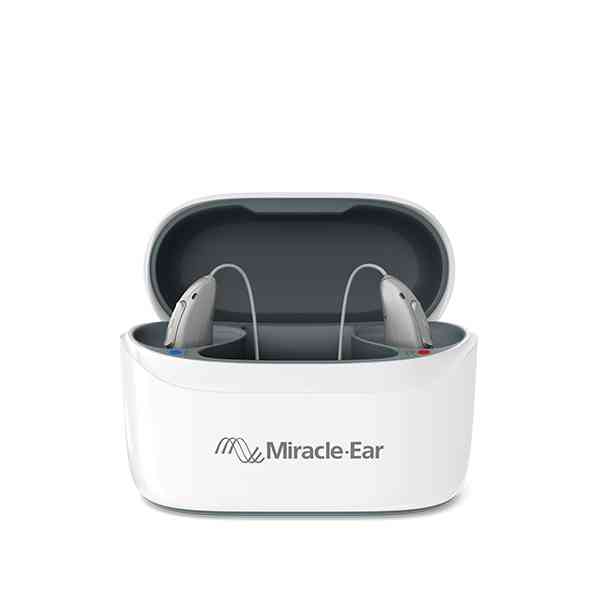
Miracle-Ear hearing aid

Explore the Parts of a Hearing Aid

Understanding the parts inside your hearing aid can help you keep it clean and solve issues if they happen. 

Learn more
Woman smiling

Hearing aids myths and facts

There are many misconceptions about wearing hearing aids and hearing loss. We compare myths vs. facts about hearing aids to keep you informed.

Learn more

Schedule your free hearing test

Your store

How exactly do hearing aids work? Step by step

All the technology inside a hearing aid works together to perform one intended function: to allow you to hear better. Sound detection, amplification, and delivery paired with programming customization will ensure a seamless hearing experience. But how do hearing aids work, exactly?

Let’s walk through it:

1. Sound detection

1. Sound detection

Sound detection

It all starts with sound detection

Say someone calls your name—your hearing aid microphone picks up their voice. If you’re using an analog hearing aid, it will convert the sound waves into electrical signals, while a digital one will convert them into numerical codes using its digital chip. 
2. Signal amplification

2. Signal amplification

Signal amplification

Signal amplification follows sound detection.

After receiving and converting the sound, the hearing aid will adjust, modify, and amplify the signal using the signal processor and amplifier. The level of signal amplification needed will depend on your hearing loss.
3. Sound delivery to the ear

3. Sound delivery to the ear

Sound delivery to the ear

When the sound reaches the ear

After going through the processor and amplifier, the sound is transferred to the receiver, which then delivers sound to the ear canal and hair cells in the inner ear. Those hair cells detect the now amplified sound and send the signals along to the brain.
4. Customization through programming

4. Customization through programming

Customization through programming

Tailored for the specific hearing loss

Hearing aid programming helps streamline and improve the process. Every person requires some level of customization, as everyone’s hearing loss is different. For example, somebody with severe hearing loss will require more amplification than those with mild.

If you need help adapting your hearing aid programming to your needs, a hearing care professional can assist at your nearest Miracle-Ear location.

Male customer and female caregiver reading a book

Hearing Aid User Manuals

These hearing aid manuals will help you make the most out of your Miracle-Ear devices.

Learn more
Female customer with hearing aids

The future of hearing aids

Hearing aid technology is in an exciting new era. Learn more about the promising future of hearing aids.

Learn more

High quality hearing aids

At Miracle-Ear, we believe our hearing aids stand out in quality, reliability, and warranty.* Each device comes with software that a certified hearing care professional will use to customize the hearing aid to your specific lifestyle and listening needs.

As you begin hearing new tones and sounds, your hearing care professional will pay close attention and make any necessary adjustments to ensure your hearing aids are working perfectly to allow for easier listening.

Understand Hearing Aids - Infographic

Get a better understanding of how your hearing aid works with this simple infographic.

female audiologist with female patient

Which hearing aid style is best for me?

{"initialStep":"E103-prequalification-age-range","steps":[{"stepId":"E103-prequalification-age-range","subtitle":"Where are you on your hearing journey?","answers":[{"label":"I already wear hearing aids and want to improve my experience","nextStep":"FINALSTEP","aptType":"60#60"},{"label":"I’m new to hearing aids and want to try them for the first time","nextStep":"FINALSTEP","aptType":"60#60"}]}]}
Try Miracle-Ear hearing aids.

Where are you on your hearing journey?

Get support and advice

Book an appointment online

Book now

Take a free online hearing test

Start test

Find a hearing aid center near you

Search now