A hearing test is one of the most straightforward steps you can take to protect your long-term hearing health—yet most people wait years before scheduling one. Whether you are looking for a hearing test for adults or simply want a baseline, this guide covers when to get a hearing test, what the signs of hearing loss look like, and what to expect at a free Miracle-Ear hearing evaluation.
Hearing loss rarely happens overnight. It tends to develop gradually, which means early signs of hearing loss in adults are easy to overlook or attribute to other causes. Common hearing loss symptoms include:
If you recognize several of these hearing loss symptoms in your daily life, scheduling a hearing test is the right next step—even if you're not sure your hearing has changed significantly.
According to the American Speech-Language-Hearing Association (ASHA), adults should get a baseline hearing test around age 21. After that, the recommended schedule for a hearing test for adults is:
Even without obvious hearing loss symptoms, hearing can decline gradually and go undetected for years. A hearing screening provides an objective measurement of where your hearing stands—giving you and your hearing care professional a clear picture over time.
If you're asking yourself when to get a hearing test, the answer is usually sooner than you think. Early detection makes a meaningful difference in outcomes.
The following quiz questions are adapted from the Hearing Handicap Inventory for Adults (HHIA), a 25-part questionnaire used to assess how hearing loss may be impacting you. Keep track of your answers on a piece of paper to understand where you may be struggling to hear.
If you answered yes to two or more questions, you may be experiencing early signs of hearing loss. A free hearing test at Miracle-Ear is the clearest next step—read on to find out what to expect at a hearing test.
Never underestimate the importance of ear care, your hearing might depend on it.
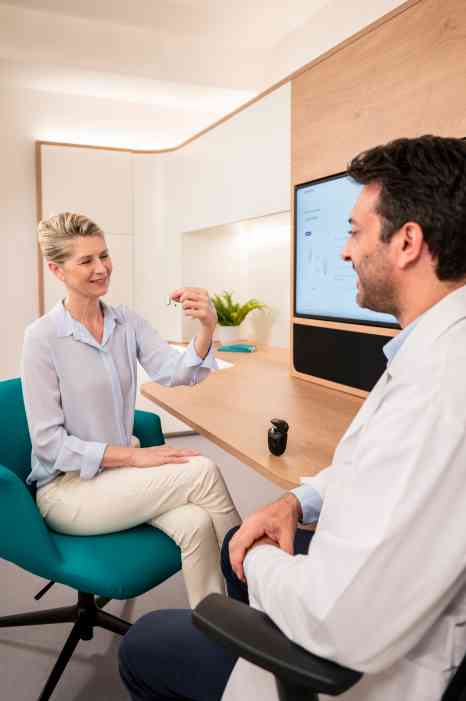
A free hearing evaluation at Miracle-Ear is a comprehensive, professional assessment conducted by a licensed hearing care professional. Here's what the process looks like.
Not all hearing tests are the same. An online hearing test offers a quick, convenient way to check your hearing from home—but it works differently from a clinical hearing evaluation conducted by a licensed professional. Understanding the difference helps you choose the right starting point for your hearing health
Miracle-Ear's free online hearing test is a quick, convenient starting point for checking your hearing from home. It screens for common patterns of hearing difficulty and takes just a few minutes to complete. While an online hearing test can flag potential concerns, it does not replace a clinical evaluation—it cannot produce a full audiogram or assess speech understanding in real-world conditions.
A free in-person hearing evaluation at Miracle-Ear provides a complete clinical picture of your hearing health. Conducted by a licensed hearing care professional, it includes a physical ear inspection, pure-tone audiometry, and a speech discrimination test. Results are explained in full, and if hearing aids are recommended, your HCP will walk you through the options that fit your needs and lifestyle.


 Think you might be experiencing hearing loss?