When you lie down to sleep at night, what types of sounds do you hear? A rush of city traffic? Chattering cicadas? Nothing? If you're among those who rely on sounds to help you sleep, you're not alone. A recent survey by the Sleep Doctor found 52% of us use some type of background noise to fall asleep. While this number includes those who fall asleep to music or nature sounds, the majority of respondents (77.8%) employ white noise, brown noise or pink noise to help them nod off.
In addition to helping with sleep, these kinds of therapeutic sounds — called color noise — have been shown to lower stress and enhance relaxation and focus.
Let's look at what color noise is, how it can benefit you and the effect it can have on your auditory system.
Audio engineers use colors to represent different sound frequencies based on how they appear on a spectral density chart. Just as different frequencies of light can be categorized as colors, sounds have their "colors" based on their energy distribution across the frequency spectrum. The naming convention helps characterize and differentiate these sounds based on their unique properties. Each type of color noise has a unique frequency distribution, which means they sound different and can have different effects on our ears, brains and bodies.
The most common types of color noise used as therapeutic sounds are white noise, pink noise and brown noise.
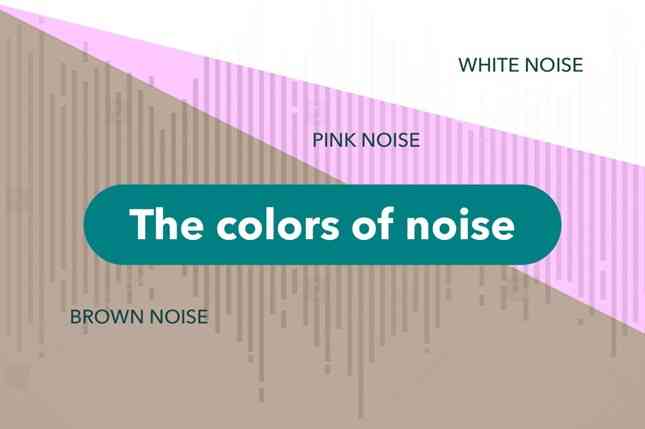
White noise is produced by combining all the different noise frequencies that are within the human hearing range and projecting them equally at the same time, making it effective at masking other, more disruptive sounds when you’re trying to sleep or concentrate.
Examples of white noise include television static, the hum of a fan, or a vacuum cleaner.
People use white noise as therapeutic sound for several different purposes, including:
Pink noise and white noise are similar, but they differ in how the low and high frequencies are distributed. In pink noise, there is less power or volume in the higher frequencies, giving more emphasis to the lower ones.
Examples of pink noise include wind rustling through leaves, steady rain and ocean waves.
Sometimes, the sound you choose comes down to preference, but you might also consider what research shows pink noise is most helpful for, including:
Brown noise reduces the volume of higher frequencies even more than pink noise, offering an even deeper soundscape. Unlike pink noise and white noise, brown noise gets its name from a person: botanist Robert Brown. He discovered Brownian motion—the random movement of particles suspended in a medium (think of watching dust motes move when you see them highlighted in a sunbeam)—and it's said that the sound signals of brown noise mimic that kind of random motion.
Examples of brown noise include a waterfall, strong wind, heavy rainfall or the sound of a shower.
Brown noise can be used in a similar way to white or pink noise, but there are specific qualities to its lower frequency that make it ideal for:
Never underestimate the importance of ear care, your hearing might depend on it.
Sound therapy is a form of sensory therapy that uses all types of sound to improve health and well-being. The science behind sound therapy suggests sound waves affect brain activity and can influence our mental states, emotions and even physiological health.
Color noises are a natural fit in the world of therapeutic sounds for all the reasons we've mentioned above.
Tinnitus is the sensation of perceiving sounds that have no external source. This common problem can have consequences for everyday life; tinnitus sufferers report sleep disruption, the inability to concentrate and even emotional distress because of the constant ringing, buzzing or hissing.
Sound therapy for tinnitus attempts to tap into the brain's ability to adapt to or "ignore" sounds. Tinnitus sufferers can make use of white or pink static noise designed to distract from tinnitus, or pink and brown "ocean wave" sounds that can create a soothing environment to alleviate some of the stress brought on by tinnitus.
A 2017 study found that those with tinnitus can use white noise to achieve significant improvements in discomfort levels, with two-thirds of patients preferring white noise over other sound colors for its effectiveness in overshadowing the tinnitus pitch. However, other studies have shown that some uses of white noise in patients with tinnitus have adverse effects long-term.
It's important to consult with your hearing care professional before using color noise therapy to treat tinnitus.
Sound therapy and color noise can offer several benefits, but it’s important to exercise caution when implementing any new therapy — especially when it comes to the health of your ears. Keep this advice in mind:
If you’re curious how you can use therapeutic sounds or color noise to help with tinnitus or other ways to safely use sound therapy, a Miracle-Ear hearing care professional can help you explore your options. Make an appointment at your neighborhood location today.



 Find an expert at any of our 1,600+ locations nationwide



 Start your journey towards better hearing