Most hearing loss comes on gradually. It can be so subtle that you may not even recognize the signs, like fatigue, mental strain, or increased difficulty following conversations in noisy environments. Over time, as your brain works harder to fill in the blanks left by hearing loss, these seemingly small challenges can add up and lead to frustration, mental strain, social isolation, and even cognitive decline.
Aural rehabilitation can be a powerful tool in helping your brain re-learn how to process, interpret, and prioritize sounds effectively. When used in combination with hearing aids, it enhances not only your ability to hear but also your ability to understand speech, filter out background noise, and adapt to different listening environments more comfortably.
Learn more about how your hearing works from certified experts.
According to the American Academy of Audiology, “Aural rehabilitation uses strategies to improve communication of people with hearing loss.” [1]
Aural rehabilitation is a comprehensive program that includes auditory training and speech-reading methods with the ultimate goal of improving communication, reducing listening fatigue, and enhancing the overall quality of life for people with hearing loss.
American Academy of Audiology 2025
The foundations of aural rehabilitation and audiology as a profession expanded significantly during World War II,[2] driven by the need to rehabilitate soldiers and sailors returning home with hearing loss.[3]
In 1998, Dr. Nancy Tye-Murray emerged as a prominent voice in the discipline with her book, “Foundations of Aural Rehabilitation: Children, Adults, and Their Family Members.” Now in its sixth edition, the Tye-Murray foundations of aural rehabilitation method is considered a cornerstone in the field, providing a comprehensive, evidence-based approach to auditory training, speech-reading, and counseling for individuals with hearing loss.[4]
Modern components of aural rehabilitation can include auditory training, speech-reading techniques, counseling, and assistive listening devices, including hearing aids, all designed to improve communication and quality of life for adults and children with hearing loss.
We offer solutions that transform hearing, from nearly invisible, comfortable designs to robust AI technology.
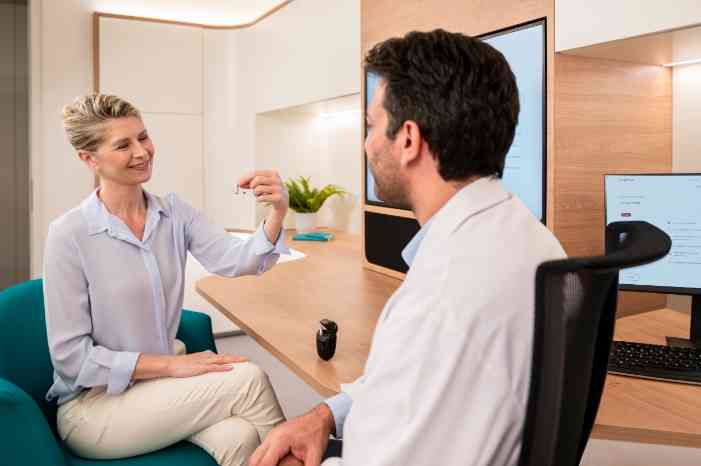
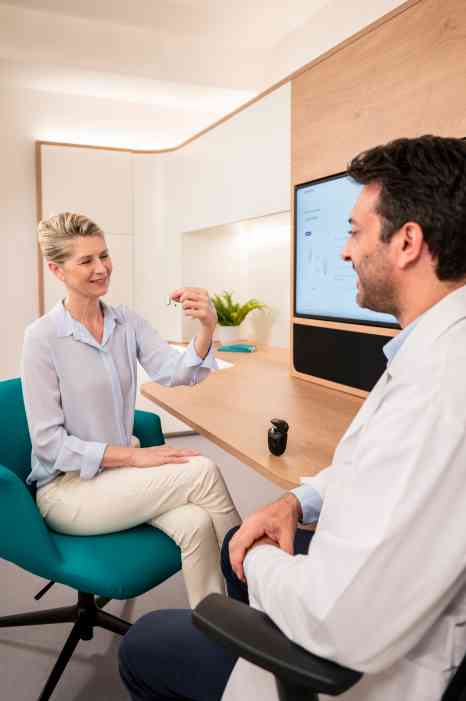
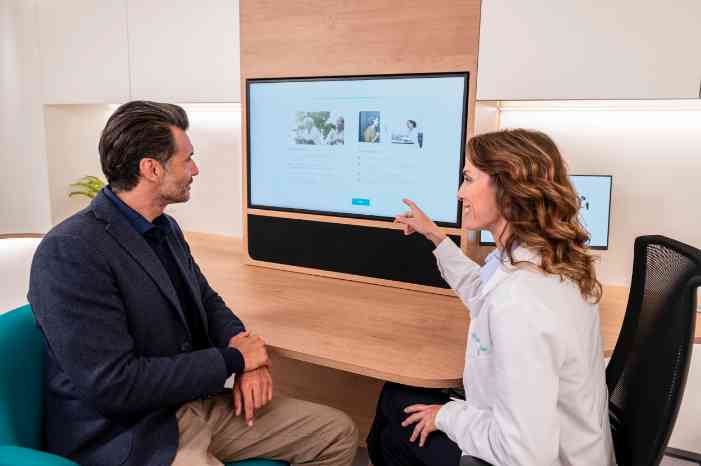
The first step in the process, after you’ve recognized the signs of hearing loss, is to seek out an evaluation from a hearing care professional (HCP). You may ask, When is the best time to use hearing aids? An audiologist or HCP can offer answers based on your unique hearing profile.
While aural rehabilitation encompasses more than just hearing aids, they are a crucial component in the success of many aural rehabilitation programs.[5]

What are the goals of aural rehabilitation programs? The goal of any aural rehab program is to help those with hearing loss hear, understand, and communicate better in order to improve their quality of life.[6]
Audiologists and patients work together to do this using a number of methods, technologies, and strategies.
Communication strategies can be helpful in managing hearing loss as a chronic condition. Your audiologist or HCP can give you communication strategies, including[7]:
Learn more about communication strategies for hearing loss here.
Some people benefit from specific exercises to aid in hearing rehabilitation. Auditory therapy involves real-world listening exercises that help participants understand and process sounds better. Exercises can include:
Aural rehabilitation speech therapy can include strategies to help people process and visualize speech more clearly, such as[8]:
Adult aural rehabilitation starts with an assessment of a person’s unique goals and goes on to focus on improving communication skills, reducing listening fatigue, and enhancing overall quality of life. Common goals within aural rehabilitation for adults include understanding speech more clearly (especially in noisy environments), improving confidence in conversations, and reducing reliance on visual cues such as lip-reading.
To reach these goals, practitioners and patients work together on aural rehabilitation speech therapy activities, communication training, auditory training, and even counseling.
Aural rehabilitation is typically provided by trained professionals such as audiologists or speech-language pathologists (SLPs). Other providers, like otolaryngologists (ear, nose, and throat doctors) and psychologists, may also be involved in offering aural rehabilitation.
Hearing aid wearers should start with their HCP, who can help them find the correct professional for their needs. You can also consult the American Speech-Language-Hearing Association (ASHA) for resources and support for aural rehabilitation.
If you’re exploring hearing aid options to maximize the benefits of aural rehabilitation strategies, visit a Miracle-Ear hearing aid center to speak with a hearing expert. We can help you find the devices that match your needs. Schedule an appointment at a location near you to get started.
We offer solutions that transform hearing, from nearly invisible, comfortable designs to robust AI technology.
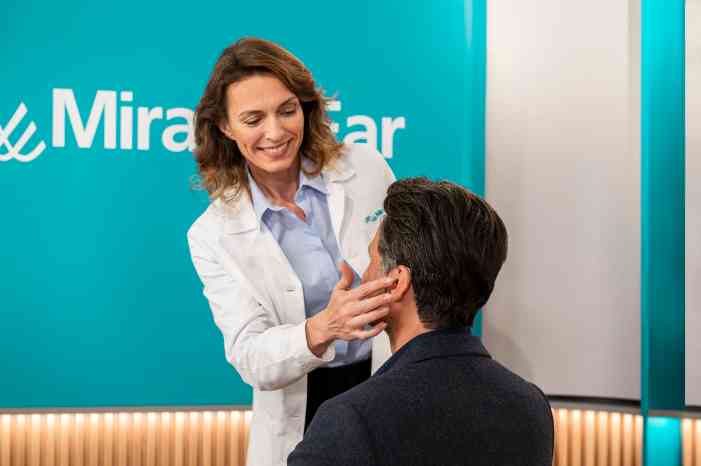
Aural rehabilitation is part of Miracle-Ear’s complimentary lifetime aftercare, ensuring you get the most out of your hearing aids. Your HCP at Miracle-Ear can support you with personalized aural rehabilitation plans and make recommendations in the following areas:
[1] American Academy of Audiology. "Aural Rehabilitation for Adults." American Academy of Audiology, https://www.audiology.org/consumers-and-patients/managing-hearing-loss/aural-rehabilitation-for-adults/. Accessed 9 Feb. 2025.
[2] Lessons from the Past: Two Influential Articles on the Early History of Audiology." The Hearing Review, 14 May 2015, https://hearingreview.com/hearing-loss/hearing-loss-prevention/industrial-military/lessons-past-two-influential-articles-early-history-audiology. Accessed 9 Feb. 2025.
[3] Gase, Jacqueline. "Artifacts Recall the History of Military Hearing and Speech Health." National Museum of Health and Medicine, 2 May 2019, https://medicalmuseum.health.mil/micrograph/index.cfm/posts/2019/artifacts_military_hearing_speech_health. Accessed 9 Feb. 2025.
[4] Tye-Murray, Nancy. Foundations of Aural Rehabilitation: Children, Adults, and Their Family Members. 6th ed., Plural Publishing, 2022.
[5] American Academy of Audiology. "Aural Rehabilitation for Adults." American Academy of Audiology, https://www.audiology.org/consumers-and-patients/managing-hearing-loss/aural-rehabilitation-for-adults/. Accessed 9 Feb. 2025.
[6] Boothroyd, Arthur. "Adult Aural Rehabilitation: What Is It and Does It Work?" Trends in Amplification, vol. 11, no. 2, 2007, pp. 63–71. https://doi.org/10.1177/1084713807301073.
[7] American Academy of Audiology. "Aural Rehabilitation for Adults." American Academy of Audiology, https://www.audiology.org/consumers-and-patients/managing-hearing-loss/aural-rehabilitation-for-adults/. Accessed 12 Feb. 2025.
[8] Gallaudet University Hearing and Speech Center. "Aural Rehabilitation/Communication Therapy." Gallaudet University, n.d., https://gallaudet.edu/hearing-speech-center/speech-and-language/aural-rehabilitation-communication-therapy/. Accessed 12 Feb. 2025.


 Meet with a licensed expert
.jpg/jcr:content/renditions/cq5dam.web.700.700.jpeg)
 Find your closest Miracle-Ear center