Can AirPods be used as hearing aids? It's one of the most common questions people ask when exploring hearing support options. AirPods® Pro do offer FDA-cleared hearing aid functionality—but understanding what that means, and how it compares to prescription hearing aids, is essential before you decide.
In 2022, FDA rule changes introduced over-the-counter hearing aids, making hearing support more accessible without a prescription. Two years later, in September 2024, the FDA authorized the Hearing Aid feature on AirPods Pro 2—the first software-based OTC hearing aid of its kind. As of 2026, two AirPods models carry full FDA-cleared hearing aid functionality:
Both require an iPhone or iPad running iOS 18 or later. Setup is done through Settings > Hearing Assistance > Set Up Hearing Assistance.
AirPods Pro 2 and AirPods Pro 3 devices give users access to a Hearing Test, a Hearing Aid feature, and active Hearing Protection when used with an iPhone or iPad. These and other AirPod models also offer a Live Listen audio feature.
The AirPods hearing test uses clinically validated pure-tone audiometry to assess your level of hearing loss—right from home. Active Noise Cancellation and the in-ear seal on AirPods Pro create the controlled conditions needed for an accurate result.
To take it: open Settings, tap your AirPods name, then tap Hearing Assistance > Set Up Hearing Assistance > Take a Hearing Test.
The test takes around five minutes and results are stored privately in the Health app on your device. If results show mild to moderate hearing loss, you'll be prompted to set up the Hearing Aid feature.
Once your AirPods hearing test confirms mild to moderate hearing loss, your personalized hearing profile activates the Hearing Aid feature—transforming your AirPods Pro into FDA-cleared OTC hearing aids. This makes AirPods Pro a practical option as hearing aids for mild to moderate hearing loss. Key capabilities include:
The Hearing Aid feature offers up to 10 hours of battery life on a single charge on both AirPods Pro 2 and Pro 3.
Live Listen is an accessibility feature available across a wider range of AirPods models. It uses your iPhone or iPad as a directional microphone, streaming audio directly into your ears to help you follow conversations in noisy environments.
While Live Listen is not a hearing aid and is not FDA-regulated as such, it can be a useful tool for people who experience occasional difficulty hearing in loud settings—without any clinical hearing loss. Simply place your device near the person you want to hear and activate Live Listen through your Control Center.
Active Hearing Protection on AirPods Pro 2 and Pro 3 automatically reduces exposure to loud environmental sounds that could damage your hearing over time. The feature analyzes your sound environment in real time and lowers decibel levels before they reach your ears.
You can also use Active Noise Cancellation to block environmental sounds entirely, or choose Transparency and Adaptive modes to control how much of your surroundings you hear. Note: the Hearing Aid feature only works when your AirPods are in Transparency mode.
While many people with mild-to-moderate hearing loss appreciate the price point of Apple AirPods and the intuitive integration with iPhones, users also encounter challenges and limitations.
To activate the Hearing Aid feature capabilities, users must first complete a hearing test using their AirPods and an iOS device—and even getting to the point of taking the test can be finicky. You need a very quiet environment in which to take the test (your device will let you know if there’s too much background noise and will prevent you from taking the hearing test until you’re in a quieter environment).
You also need to get the fit just right with the earbud tips for the hearing test to begin. Some users report struggling with these preliminary settings to take the test.
While setup is as simple as the click of a button if the hearing test determines you have mild-to-moderate hearing loss (your hearing test results help your device calibrate to your hearing needs), users aren’t able to manually adjust settings to account for a loud environment, such as a restaurant or theater.
Like all over the counter (OTC) hearing aids, all this is “self-service” since you don’t have an Hearing Care Professional to help you customize your settings and fit.
Join the millions of Americans who have trusted Miracle-Ear for hearing care that’s tailored to their needs. We always offer free hearing tests so you can understand your personal level of hearing loss to determine what hearing aid is best for you.
Understanding the differences between AirPods Pro and prescription hearing aids helps you make the right choice for your hearing needs. Here are five key areas to consider:
AirPods Pro with the Hearing Aid feature activated are FDA-regulated OTC hearing aids designed specifically for adults with perceived mild to moderate hearing loss. They are not suitable for severe or profound hearing loss—making them an option for those seeking hearing aids for mild to moderate hearing loss, but not a replacement for more advanced care.
Prescription hearing aids, by contrast, are programmed by a licensed hearing care professional to address any level of hearing loss—from mild to severely profound—with far greater precision and customization.
AirPods Pro come with multiple silicone ear tip sizes, but unlike custom fit hearing aids, they are not molded to the specific contours of your ears. For extended daily wear, this can lead to discomfort—and a poor seal affects both sound quality and the accuracy of the Hearing Aid feature.
Prescription hearing aids can be custom-molded to fit precisely inside your ear canal or behind your ear, making them more comfortable for all-day wear. The hearing aid fitting process is handled by your hearing care professional, who assesses your ear anatomy and recommends the style that works best for your specific needs.
AirPods Pro 2 and Pro 3 offer up to 10 hours of battery life using the Hearing Aid feature on a single charge—not enough for a full waking day if you need continuous hearing support. Prescription hearing aids offer significantly longer battery options:
For those who rely on hearing support throughout the day, the battery performance of prescription hearing aids is a meaningful advantage.
AirPods Pro can deliver real benefit for people with mild to moderate hearing loss—the Hearing Aid feature is clinically validated and FDA-cleared. That said, customization is limited: settings adjust based on your hearing test results, but you cannot access the level of fine-tuning that prescription hearing aids provide.
With prescription hearing aids, your hearing care professional programs your devices to your exact audiogram, lifestyle, and listening environments. If your needs change, those settings can be updated. For anyone who needs hearing aids for mild to moderate hearing loss and wants a fully personalized solution, prescription devices offer a level of precision and ongoing support that AirPods Pro simply cannot match.
The Hearing Test feature on AirPods Pro 2 & 3 is something you do on your own, at home, or in a different quiet environment. While it has a simple user interface and scientifically validated results, it is different from a professional hearing test.
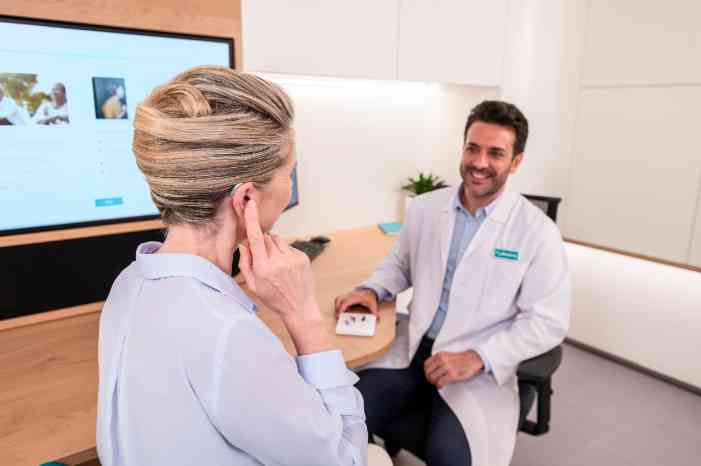
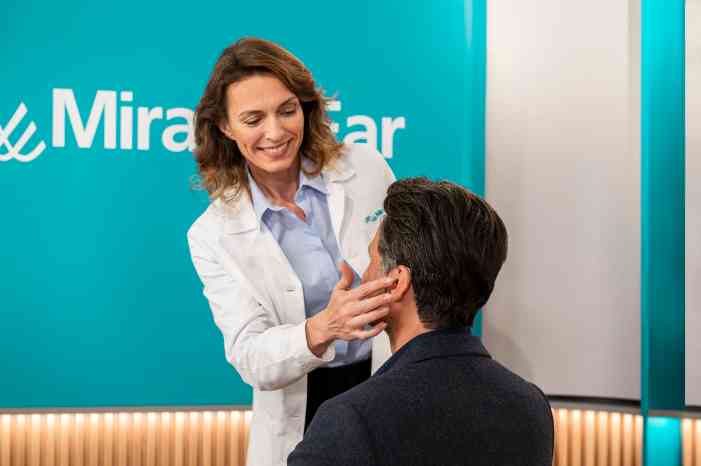
A professional hearing test, like those offered for free at Miracle-Ear, is conducted by an audiologist or licensed Hearing Care Professional (HCP). But before a professional even begins conducting a hearing test, they’ll first take a complete health history and inspect your ear canals.
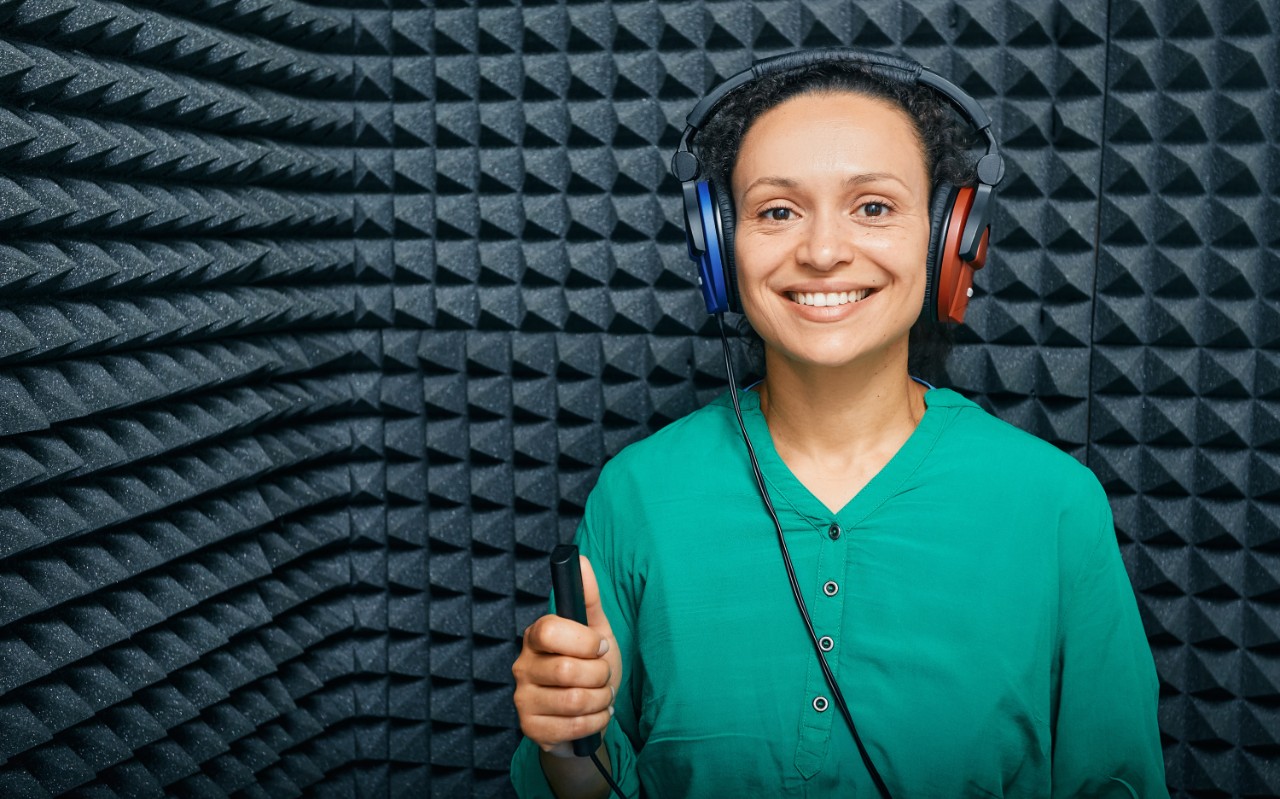
During the hearing test, you’ll not only experience the pure-tone audiometry test similiar to what the AirPods uses, but your Hearing Care Professional will also conduct a speech discrimination test, which measures a person’s ability to hear and understand speech in both quiet and noisy environments.
Once your hearing test is complete, your HCP will review your results with you, give you context around what kind of hearing loss you’re experiencing, and offer tailored suggestions for hearing aids that can best help you.
If you purchase hearing aids, they’ll help custom-fit your devices and program them to your specific hearing and lifestyle needs. If you ever have a problem with your device or settings, you can come back to any Miracle-Ear store for free follow-up care and adjustments.
The Hearing Test and Hearing Aid features on AirPods Pro 2 and AirPods Pro 3 are regulated health features that require regional authorization before they can be offered. Feature availability varies by country and region. Both require an iPhone or iPad running iOS 18 or later.
Choosing which hearing aids are best for you can feel like a daunting process, but the hearing care professionals at Miracle-Ear are here to help. If you notice any early hearing loss symptoms, schedule your free appointment with a professional at your local Miracle-Ear.
By catching the signs of hearing loss early, you can take the first steps toward finding a solution that gives you the tools, support, and confidence to hear better.
AirPods Pro can be a useful starting point for people with mild to moderate hearing loss—but they work best as a first step, not a complete solution. If you've noticed changes in your hearing, a free hearing test at Miracle-Ear gives you the full picture. Our hearing care professionals will help you understand your results and find the hearing aids that are truly right for your hearing, your lifestyle, and your long-term health.
Apple, the Apple logo, AirPods, iPad, iPhone, and Live Listen are trademarks of Apple Inc., registered in the U.S. and other countries. App Store is a service mark of Apple Inc.
Other trademarks and trade names are those of their respective owners.
A free hearing evaluation at Miracle-Ear is a comprehensive, professional assessment conducted by a licensed hearing care professional. Here's what the process looks like.



 Learn how tomorrow's hearing aids can help you today