Did you know the average person waits seven years after they realize they have hearing loss before seeking help and buying hearing aids? Think about all the conversations they’ve missed.
One of the main reasons people neglect to get their hearing checked is because they’re worried about having to wear bulky hearing aids. But while hearing aids of the past may have been considered a little cumbersome, today's discreet hearing aids are smaller and smarter.
Don’t miss the first babbles of your children or grandchildren, a conversation with a friend or the words of your medical doctor.
Here’s what you need to know about buying your first hearing aid.
In the past, there was a stigma attached to wearing hearing aids. Because of their bulk and visibility, many people were unwilling to wear them. In addition, those with hearing loss continued to struggle to hear in the presence of background noise, because previous versions of hearing aids simply amplified sounds.
Thanks to great advances in modern digital technology, today’s hearing aids are much more powerful, intelligent and discreet. Hearing aids can now be customized to fit your own stylistic preferences and come in a variety of colors, sizes and shapes. There are even types of hearing aids that are so small and comfortable you may forget you are wearing them.
We offer solutions that transform hearing, from nearly invisible, comfortable designs to robust AI technology.
There are many considerations when shopping for hearing aids, whether it’s your first pair or you’re simply looking to upgrade what you currently have. Keep reading for details on what to look for when buying hearing aids.
Before buying your first hearing aid, you need a thorough hearing evaluation performed by a licensed Hearing Care Professional or audiologist. This is not optional — it is the foundation of an effective hearing aid fitting.
A comprehensive hearing exam will assess:
Without this baseline, no hearing aid — regardless of price or technology — can be properly calibrated to your needs.
Miracle-Ear offers free hearing test at over 1,600 locations nationwide. Your Hearing Care Professional will not only conduct the evaluation but will also interpret your hearing test results, explain your audiogram, and help you identify which hearing aid styles and technologies are appropriate for your needs and determine what type of hearing aid will serve you best.
There are several different types and styles of hearing aids, and different styles are better suited for different levels of hearing loss and lifestyle needs.
In addition to considering hearing aid styles, it’s also important to consider the level of technology available. Hearing aid technology has come a long way in the past decade, and there are technology advancements to fit all lifestyles and budgets.
Below, you’ll find some of our most popular technology offerings, as well as which Miracle-Ear devices you can find this technology built into.
But remember: It is important to work with your HCP to select the correct technology and style for you.
Pairs with a dedicated app to allow discreet, real-time adjustment of volume and program settings directly from a smartphone. Some apps also provide battery status monitoring, remote care features, and hearing health data. Available on all Bluetooth-enabled Miracle-Ear models.
Your hearing care professional will help you determine which technology level is appropriate given your hearing loss profile, daily listening demands, and budget.
Hearing aids represent a meaningful financial investment. In the United States, the cost of a pair of prescription hearing aids typically ranges from approximately $1,000 to $8,000 or more, depending on the technology tier, style, and the services included in the purchase.
Coverage for hearing aids varies widely among insurance plans. Medicare Parts A and B do not cover hearing aids, though some Medicare Advantage plans may offer a benefit. Private insurance policies differ significantly. You should contact your insurance company directly to clarify your coverage before purchasing.
Financing and assistance options
There are many places you can buy hearing aids in today’s world—from big-box warehouse retailers to boutique hearing clinics, and many places in between. But if you’re looking for a free hearing exam, exceptional service, cutting-edge technology, free aftercare services and convenient locations, look no further than Miracle-Ear. With over 1,600 locations nationwide, you can find a Miracle-Ear hearing aid center that’s closest to you.
While it’s possible to buy hearing aids online, what you gain in convenience and cost-savings, you’ll lose in professional guidance and customized devices. It’s wise to get a hearing exam right before purchasing hearing aids to make sure they’re tailored to your specific hearing needs—and this should be done by a licensed professional.
That provider can also help you find the hearing aids that best suit your needs, take custom impressions of your ears for a custom fit and also program your devices to your unique hearing loss and lifestyle needs.
Providers like Miracle-Ear also offer free* unlimited hearing aid cleanings and checks, device repairs and maintenance, and annual hearing exams to ensure your devices are always tailored to your exact hearing needs.
All of these features are things you won’t get if you buy hearing aids online.
Since 2022, the U.S. Food and Drug Administration (FDA) has permitted the sale of over-the-counter (OTC) hearing aids directly to consumers without a prescription, for adults with perceived mild to moderate hearing loss.
OTC devices are generally more affordable and are available through retail and online channels without a clinical appointment. For some individuals with straightforward, self-identified mild hearing loss, they may provide some benefit.
However, OTC devices are not programmed to an individual audiogram. They cannot be calibrated to the specific frequencies, degree, and type of hearing loss that a clinical evaluation identifies. Users of OTC devices also do not receive:
Miracle-Ear exclusively provides prescription hearing aids, fitted and programmed by licensed Hearing Care Professionals. For the majority of individuals — and particularly for those with moderate to severe hearing loss, asymmetric hearing loss, or complex listening needs — prescription devices fitted by a professional consistently produce better outcomes.
Adjusting to hearing aids is a process, not an event. First-time wearers frequently experience an adaptation period during which sounds — including their own voice — may seem different or unfamiliar. This is a normal neurological response as the auditory system readjusts to receiving stimuli it has not processed at full volume for some time.
Key milestones to expect:
At Miracle-Ear, your hearing care professional will schedule follow-up appointments to monitor your progress and make programming adjustments as needed. This ongoing relationship is a central part of the Miracle-Ear approach and is included at no additional charge* through FREE Unlimited Care.
For more hearing loss prevention tips, treatment options and helpful hearing health information, check out our free hearing guide.
When you purchase hearing aids from Miracle-Ear, you receive access to lifetime aftercare services at no additional cost* thanks to Unlimited Care, including:
This continuity of professional care is one of the most clinically meaningful aspects of purchasing prescription hearing aids through a provider network — and one that is simply not available when purchasing OTC or online devices.
 FInd a center near you.
* FREE Unlimited Care. Cleanings and in-office service are always free. Miracle-Ear® lifetime aftercare not included with hearing aids purchased utilizing some insurance benefits. See store for details.
** Risk-free trial available at participating Miracle-Ear locations only. If you are not completely satisfied, the hearing aids may be returned to the store of purchase for a full refund. The hearing aids must be in satisfactory condition, as determined by Miracle-Ear®. Fitting fees may apply. See store for additional details.


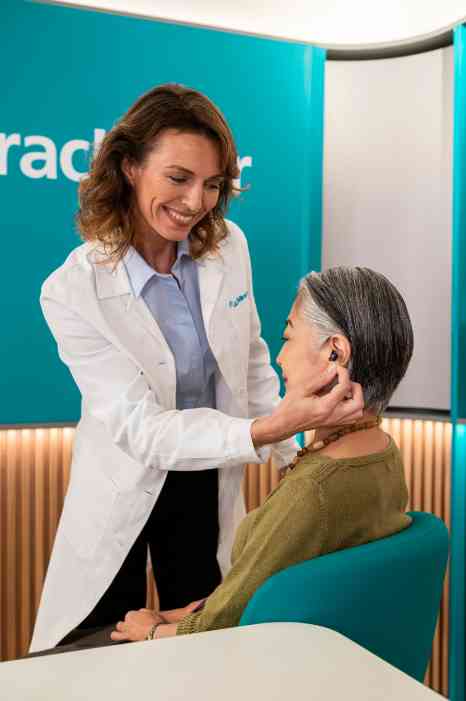
 Our experts are here for you wherever you may be