Cleaning hearing aid

Clean

Hearing aid cleaning kit with supplies

The best hearing aid cleaning kits: essential cleaners, tools and supplies to keep devices clean every day

Hearing aid care and maintenance

It’s important for all hearing aid users to learn about proper hearing aid care and how regular maintenance supports hearing aids’ longevity. Cleaning hearing aids at home is a key part of that maintenance. A hearing aid cleaning kit is a useful tool for upkeep and cleanliness. The typical cleaning kit for hearing aids is made up of a cloth, brushes and picks to get into the nooks and crannies. Adding this set to your hearing aid supplies makes cleaning easier and more convenient. Read on to learn where to purchase a hearing aid cleaning kit, each tool’s purpose and best practices.

Key Takeaways

  • Keeping hearing aids clean helps them last longer. A hearing aid cleaning kit makes the process easier.
  • Miracle-Ear hearing aids always include a type-specific hearing aid cleaning kit.
  • Typically, a hearing aid cleaning kit will include a cloth, brush, and pick.
  • The approach to cleaning a hearing aid depends on the type of device (in-the-ear, receiver-in-canal, or behind-the-ear hearing aids).
  • The best hearing aid cleaning kit will include tools relevant to your hearing aid type. You do not need to use every tool within the kit.
  • While hearing aid cleaning kits are sold at retailers, a dedicated hearing aid store can offer both the kit and additional education and demonstrate how to use its tools. 
  • Cleaning hearing aids requires a gentle touch, as doing it incorrectly or haphazardly could cause damage.
  • Hearing aid users should clean their hearing aids daily, with a weekly deep clean.
  • Never use alcohol as a disinfectant for hearing aids. Instead, use a spray or wipe formulated for hearing aid cleaning.
Miracle-Ear specialist shaking hands with patient

Ask our hearing care professionals

If questions come up when you're cleaning your hearing aids, know that you aren't on your own. If you have specific questions about how to clean hearing aids or what tools to use, ask your hearing care specialist. He or she will be able to ensure you’re getting the most out of the lifetime care and service* that comes with every Miracle-Ear hearing aid purchase.

What’s the best hearing aid cleaning kit?

The best hearing aid cleaning kit is the one that has all the tools you need and works for your hearing aid type. To find the best hearing aid cleaning kit for you, start by understanding which tools you’ll need for your devices. Since kits come with multiple tools and you often can’t pick and choose which ones, it’s best to find the most complete set for all your possible cleaning needs.  

Audiologist with clients

Explore Related Hearing Topics

Learn more about how your hearing works from certified experts.

Discover our blog now

Hearing aid cleaning tools

Kits come with a variety of hearing aid cleaning tools, which we will discuss below. Other, more specialized tools like dehumidifiers and air blowers are also available. All of these hearing aid tools and hearing aid cleaners work together to keep your hearing aids comfortable and working their best.

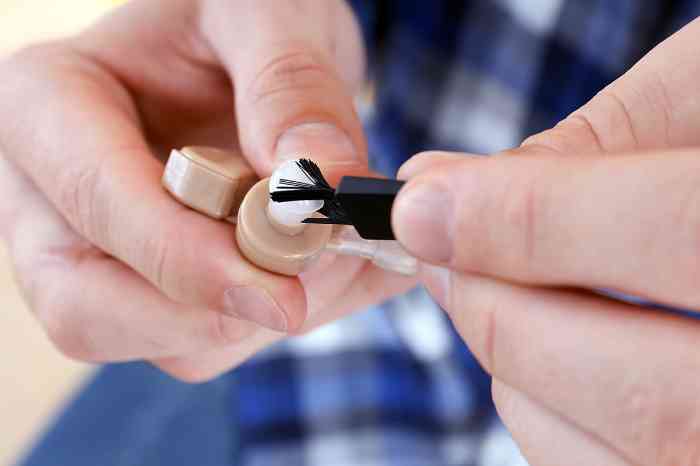
A soft-bristled hearing aid brush can get into the hard-to-reach nooks of your hearing aids. The hearing aid brush, which looks like a tiny toothbrush — just with fewer bristles — whisks away any buildup, from dust to earwax.

The hearing aid cleaning wire is exactly what it sounds like. When pushed through a hearing aid tube, this thin, flexible wire helps dislodge and push out the buildup present inside. For that reason, it’s a go-to tool for people who wear hearing aids with long vents and bore holes, like BTEs or ITEs.

Keeping a hearing aid cleaning cloth in your hearing aid cleaning kit is a great alternative to single-use wipes. The soft microfiber cloth can clean off a hearing aid without scratching its surface or leaving lint behind

A hearing aid wax pick, usually a plastic handle with a fine metal loop at the end, is perfect for removing hardened earwax from the deep nooks and crannies of the hearing aid (like the sound ports) that brushes can’t reach. Be extra careful when inserting the wax pick — if you’re not feeling confident about how to use it, ask a hearing care professional for a demonstration

Hearing aid spray is a water-based, alcohol-free solution formulated for earwax removal. While it can be helpful, pause before you spray it on anything.

Hearing aid spray can only be used on waterproof hearing aids. If you choose to use hearing aid spray to help clean your waterproof hearing aids, proceed with caution and never spray directly on the device — spritz it lightly onto a cleaning cloth and then use it. Direct spraying can cause moisture to get into the microphone or other openings in the hearing aid, potentially damaging its electrical components.

Hearing aid spray can be used on conventional earmolds if they’ve been removed from the hearing aid shell. It should not be used on hearing aid domes used for RIC products. 

To avoid causing moisture damage, only use premoistened hearing aid cleaning wipes on earmolds, and only once they’ve been removed from the tubing that connects them to your hearing aids.

Wipes should not be used for hearing aid domes for RIC models. Avoid alcohol-based options and instead look for ones with a formula specifically for hearing aid cleaning.  

A hearing aid air blower, also known as a bulb blower, is a tool made up of a collapsible rubber sphere and a small, pointed tip. When you squeeze the sphere, the hearing aid air blower releases a gentle burst of air through the tip and blows away dust and dirt particles or moisture.

This tool is especially useful for cleaning BTE hearing aid tubes because it sends air directly through the tube. A hearing aid cleaning wire can remove any further debris that remains in the tube after using the air blower. For BTE earmolds, which can be removed from hearing aids to be cleaned with water, sprays, or premoistened wipes, air blowers help blow out excess or residual moisture — but earmolds should still be dried completely overnight before reattaching them.

Moisture is a big issue for hearing aids. If your hearing aid comes into contact with liquid of any kind, it’s important to dry it out as quickly as you can. That’s where the hearing aid dehumidifier comes in. These handy tools can help zap moisture and water out of the hearing aids in different ways.

The passive hearing aid dehumidifier uses absorbent materials that suck environmental moisture out of the hearing aids as they lie inside an airtight caseThis is not the best option if you, say, showered while wearing your hearing aids, but it’s helpful in humid environments.

If you did accidentally shower in your hearing aids and need to wick away water, try an electric hearing aid dryer. This small box uses a gentle fan to dry your hearing aids. (Note: do not use a hairdryer to try to achieve similar results, as the heat can damage the hearing aid.) Of course, if your hearing aids get soaked or have prolonged exposure to water, consult a hearing care professional.  

HCP at store

Care for your ears

Ear care not only improves your hearing health, but your overall health as well. Get started today by scheduling a free hearing test. Find your nearest Miracle-Ear store to get started on your journey to better hearing.

Where to buy a hearing aid cleaning kit

You might be wondering where to buy hearing aid cleaning kits. Many retailers carry hearing aid cleaning kits, but hearing aid stores like Miracle-Ear can provide both kits and specialized guidance. Miracle-Ear includes a range of tools with your hearing aid purchase and sells replacements, as well as other products in stores.

A Miracle-Ear hearing care professional can assist with regular maintenance and show you how to properly clean a hearing aid. So, if you’re considering where to buy hearing aid cleaning kits for the first time, a store that provides this added layer of education can be helpful.

How to clean hearing aids

There is a range of different hearing aid types, and the kind you have will determine the best approach for how to clean a hearing aid. In-the-ear (ITE), receiver-in-canal (RIC), and behind-the-ear (BTE) hearing aids have different hardware and different needs.

Here’s what you need to know about how to clean each type:

  • Wipe the hearing aid with a dry cleaning cloth.
  • Use the brush from your hearing aid kit to remove any wax or debris from the microphones, filters, or vents.
  • Use a vent cleaning tool to push any wax out. It’s helpful to have gravity do some of the work, too. Point your hearing aid downward as you use the vent tool, allowing any loosened debris to fall out. For whatever gravity doesn’t handle, use a pick or wire loop to clear the leftover bits.
  • Every four weeks or so, replace the wax filter on your ITE hearing aid using specialized filter replacement tools. One end of the tool is designed to remove the existing filter, while the other end puts a new filter in place.
  • Use the microfiber cloth to wipe the hearing aids again. It helps to keep their case clean as well, so wipe that down before putting them in it.

  • Start by wiping the hearing aid with a dry, lint-free soft cloth.
  • Use the hearing aid cleaning brush to remove debris from the microphones on the hearing aid shell. You can also brush the rocker switch and the battery door to keep them working correctly.
  • Next, brush any wax or debris from the hearing aid dome. You may also need to use the wax pick or a wire to remove wax that the brush can’t get, or take the dome off and wipe it down with a soft cloth or a hearing aid cleaning wipe.
  • While you have the dome off, if needed, replace the wax filter (something that should be done every month). Use a wax filter tool to remove the old filter and replace it with a new one. If the dome is damaged, replace it. Make sure that when you replace the dome that it is securely in place.
  • Once these steps are complete, wipe down the hearing aids and case for the finishing touch.

  • Start with a wipe down to remove any surface dirt or earwax. Go over your hearing aid shell and earmold using a microfiber cloth.
  • Brush the outside of the hearing aid shell, including the microphones, rocker switch, and battery door, with the cleaning brush from your kit.
  • Take a close look at your earmold, looking for wax or debris in the sound bore or vent. Use a wax pick or cleaning wire to scrape or push any wax out. You can also wipe the earmold with a cloth lightly spritzed with cleaning spray.
  • Examine the tubing. If you spot any blockages or earwax buildup, carefully blow air through the tube using a hearing aid air blower, or guide a cleaning wire through the passage.
  • Tubing may need to be replaced periodically, a task that your hearing care provider can help with.

No matter the type, always handle your hearing aids gently while cleaning them, and use hearing aid cleaning tools with caution. And if you see signs of moisture, try using a hearing aid dehumidifier overnight or target the specific area with a hearing aid air blower.   

afro-male-client

How to clean hearing aids

FAQs about cleaning hearing aids

As mentioned, every type of hearing aid needs a slightly different approach, but the best way to clean hearing aids revolves around gentleness and care.

Handling your hearing aids and tools with caution helps prevent any accidental damage.

Prep work is also key. Before you start cleaning your hearing aids, wipe down the area where you’ll be working, wash your hands, and set the hearing aids on a clean cloth.

To avoid damaging your hearing aids during the cleaning process, avoid water, non-hearing-aid-specific cleaners, and heat. These all can potentially cause irreversible damage to your hearing aids’ electrical components.

Want to learn the best way to clean hearing aids in detail? Talk to a Miracle-Ear hearing aid specialist for guidance.

The answer to how often hearing aids should be cleaned is? Daily. To ensure proper upkeep, give your hearing aids a general wipe down and look over them every day. For more intensive deep cleaning, keep a weekly cadence.

There are a few different options for how to disinfect hearing aids. But keep in mind that you should not use bleach, alcohol, or hand sanitizer products. Try a hearing aid-safe disinfectant sprayed on a microfiber cloth, as detailed in the hearing aid spray section above.

Never spray directly onto the hearing aid, as it can cause moisture damage and ruin your device. Single-use made wipes for hearing aids could also work, depending on your hearing aid model. Alternatively, certain electronic sanitizing devices can use UV light to disinfect your hearing aids when you’re not using them.

No. Cleaning hearing aids with alcohol, simply put, could break down plastics and cause damage to the device. There are wipes and sprays specifically formulated for hearing aid cleaning, making them a better option than alcohol wipes or sprays.

Visit us in a Miracle-Ear center for more information

store outside
Find the Miracle Ear store closest to you
We’re here for you wherever you’re at home or traveling with experts at over 1,600 locations nationwide.
Find your nearest store
patient and audiologist inside store
Book a free appointment online
Join the millions of Americans who have trusted Miracle-Ear for hearing care that’s tailored for their needs.
Book an appointment
Audiologist and client inside store
Let our certified experts help you
For generations, we've been pioneering better hearing through our personalized approach to care and continued innovation.
More about our experts
people driving

Do you need more information? Contact us

Complete the form and someone from our team will reach out to you. With over 1,600 stores nationwide, we'll help you find the one closest to you.

Get support and advice

Book an appointment online

Book now

Take a free online hearing test

Start test

Find a hearing aid center near you

Search now