Hearing loss exists on a spectrum. Those with mild hearing loss may occasionally struggle to follow a conversation, while those with moderate hearing loss may find certain sound frequencies difficult to perceive. For individuals living with severe hearing loss, however, the impact is considerably greater — even loud sounds can be hard to detect without amplification.
The right hearing aid can make a meaningful difference in daily communication, safety, and overall quality of life. Whether you're exploring options for yourself or a loved one, understanding what to look for in a hearing aid for severe hearing loss is an important first step.
Hearing loss is measured in degrees based on how loud a sound must be (in decibels) before you can hear it. Normal hearing falls between -10 dBHL and 20 dBHL. Severe hearing loss is defined as the inability to hear sounds below 71 to 90 dBHL, meaning most conversational speech is inaudible without amplification. You may only perceive very loud sounds — like a lawnmower or a passing subway train — on your own.
Profound hearing loss, the most significant degree, is defined as a hearing threshold greater than 90 dBHL. People with profound hearing loss often cannot hear any speech without hearing devices.
What does hearing loss sound like? Watch to experience firsthand the effects of hearing loss over time.
The most common and effective treatment for severe hearing loss is the use of prescription hearing aids or cochlear implants.
Prescription hearing aids amplify sound to levels you can actually hear, restoring access to everyday conversations and environmental sounds.
Cochlear implants involve a surgical procedure to directly stimulate the auditory nerve and may be recommended in cases of profound hearing loss where hearing aids provide insufficient benefit.
There is no single best hearing aid for severe hearing loss. In fact, each of the three main styles of hearing aids (BTE, ITE, and RIC) offers features that can meet your severe hearing loss needs and support your hearing health journey. Review the capabilities of each to determine which style might be the best for you.
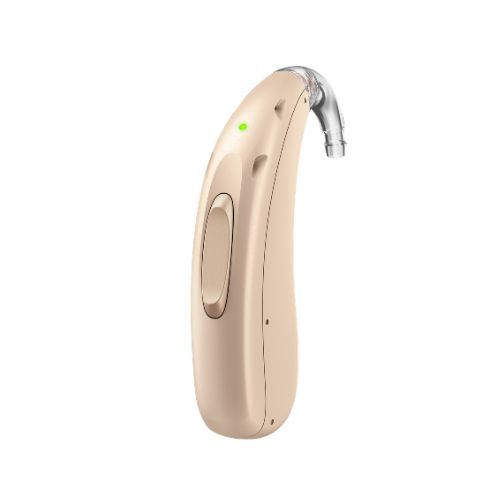
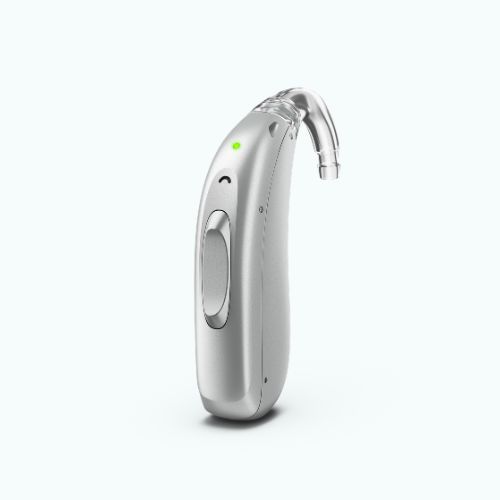
With behind-the-ear (BTE) hearing aids, the receiver, microphone, and amplifier are all housed together in a shell that sits behind the ear and includes tubing that directs sound into the ear canal through domes or ear molds.
BTE hearing aids can be useful for all types of hearing loss, but their larger size means extra power and amplification for people living with severe hearing loss.
For those with profound hearing loss, high-gain BTE models represent the most powerful hearing aid option available, delivering the maximum amplification needed when other styles may fall short.
The most popular type of hearing aid is receiver-in-canal (RIC) models. With these, the microphone and other processing technology are housed in a slim shell that sits behind the ear, connected by a thin wire to the receiver that sits in the ear canal.
RICs owe their popularity in part to their discreet looks and comfortable fit, but even more so to their versatility—they can be an ideal choice for everything from mild to severe hearing loss, depending on the technology and specific model you choose with your hearing care professional (HCP).
In-the-ear (ITE) hearing aids sit completely in the ear canal. This type of hearing aid is smaller and more discreet than BTE hearing aids, but can still be worn by people with a wide range of hearing loss, including severe, depending on the model.
Its directional microphones help focus sound amplification and help drown out unwanted background noise, making them useful for severe hearing loss. This type includes several related hearing aid styles—completely-in-canal (CIC) and in-the-canal (ITC)—that each offer their own capabilities and features.
Discuss your options with your hearing care professional (HCP) to determine which style might best support you.
Have you ever wondered if you can get the best otc hearing aids for severe hearing loss?
Over-the-Counter or better known as OTC hearing aids are FDA-approved only for adults with perceived mild to moderate hearing loss. They are self-fitted, come with limited customization options, and provide lower maximum amplification. If you have severe or profound hearing loss, OTC devices will not provide enough power to meaningfully improve your ability to hear. So to answer the question, you cannot get otc hearing aids for severe hearing loss.
We offer solutions that transform hearing, from nearly invisible, comfortable designs to robust AI technology.
Once you’ve considered how a hearing aid style can support your severe hearing loss needs, it’s important to think about additional functions and features that can enhance your listening experience. Take these features into account when you’re considering how to choose a hearing aid:
Due to their position inside the ear canal, some hearing aids are designed to be water-resistant to manage the natural moisture that develops in the ears.
However, some hearing aids are designed to be more waterproof, making them a great option for people who are more likely to develop excessive sweat around the face, live in humid/wet environments, or participate in water-based hobbies like boating or swimming. Those include waterproof hearing aids from the Miracle-EarBLISS™+ line.
Severe hearing loss becomes more common with age, affecting a significant portion of adults over 65. For seniors, choosing the right hearing aid involves more than just amplification power — ease of use, comfort, and day-to-day practicality all matter.
Here's what seniors with severe hearing loss should prioritize when selecting a hearing aid:
Rechargeability: Rechargeable hearing aids like many solutions from Miracle-Ear eliminate the need to handle small disposable batteries, which can be challenging with age. Simply place the device in its charging case overnight.
Ease of use: Hearing aids with simple controls, intuitive apps, and automatic environment adjustment reduce the learning curve and daily effort required to manage the device.
Bluetooth connectivity: Direct streaming from TV and phone makes it easier for seniors to enjoy entertainment and stay connected with family members — especially important for those with severe loss who need every advantage in challenging listening situations.
Professional fitting and aftercare: For seniors, working with a Miracle-Ear hearing care professional at a local center is especially valuable. Devices are fine-tuned to the individual audiogram, and lifetime aftercare ensures adjustments can be made as hearing changes over time.
Most cases of severe hearing loss are considered to be sensorineural hearing loss. This type of hearing loss occurs when there’s damage to the sensitive hair cells of the inner ear or to the auditory nerve that carries soundwaves to the brain. Once these delicate structures become damaged, they cannot be repaired, meaning that sensorineural hearing loss—including severe hearing loss—is permanent.
However, while severe hearing loss can’t be reversed, hearing loss can be significantly improved with hearing aids.
Hearing loss at any level can affect your life, involvement in everyday activities, and even your ability to work. However, certain degrees of hearing loss are covered by the Americans with Disabilities Act (ADA) under particular qualifications. Your hearing loss is considered a disability if:
If you meet these qualifications, you may qualify to register as disabled. Your employer must then make reasonable accommodations to meet your needs under the ADA, allowing you to continue to work in a way that aligns with your hearing loss needs.



 Learn how tomorrow's hearing aids can help you today