Ear candling is a popular alternative treatment for cleaning wax out of ears and has also been touted as a way to relieve other symptoms. But is it safe and/or effective? In this post, we’ll introduce this ear-cleaning method, outlining the efficacy and safety risks.
Ear candling is a form of alternative therapy that uses heat to extract excess earwax, along with other impurities and toxins. Some people believe ear candles—also called ear cones, auricular candles, or earwax extraction candles—can also help relieve sinus pressure, rhinitis, tinnitus, migraines, earaches, muffled hearing, and hearing loss.
But what does this candle that cleans wax from ears do? Some manufacturers claim the heat of the ear candle creates negative pressure that helps suction or draw earwax out of the ear. Other suppliers claim the heat from the candle melts earwax so that the wax can leave the patient’s ear in the following days.1 However, science does not back these claims, and the use of ear candling has been widely discouraged by health organizations like the FDA—and, in fact, the FDA has banned the import of ear candles into the United States.2
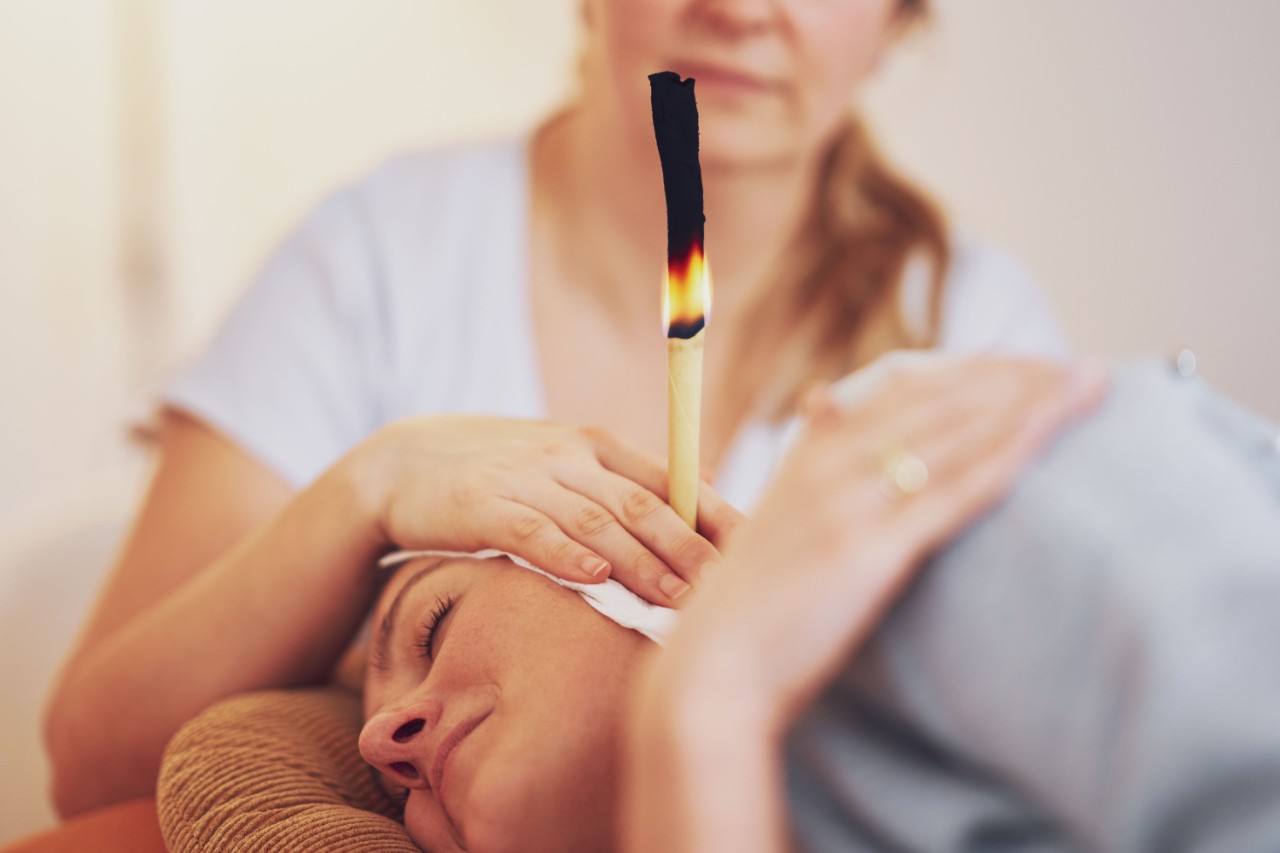
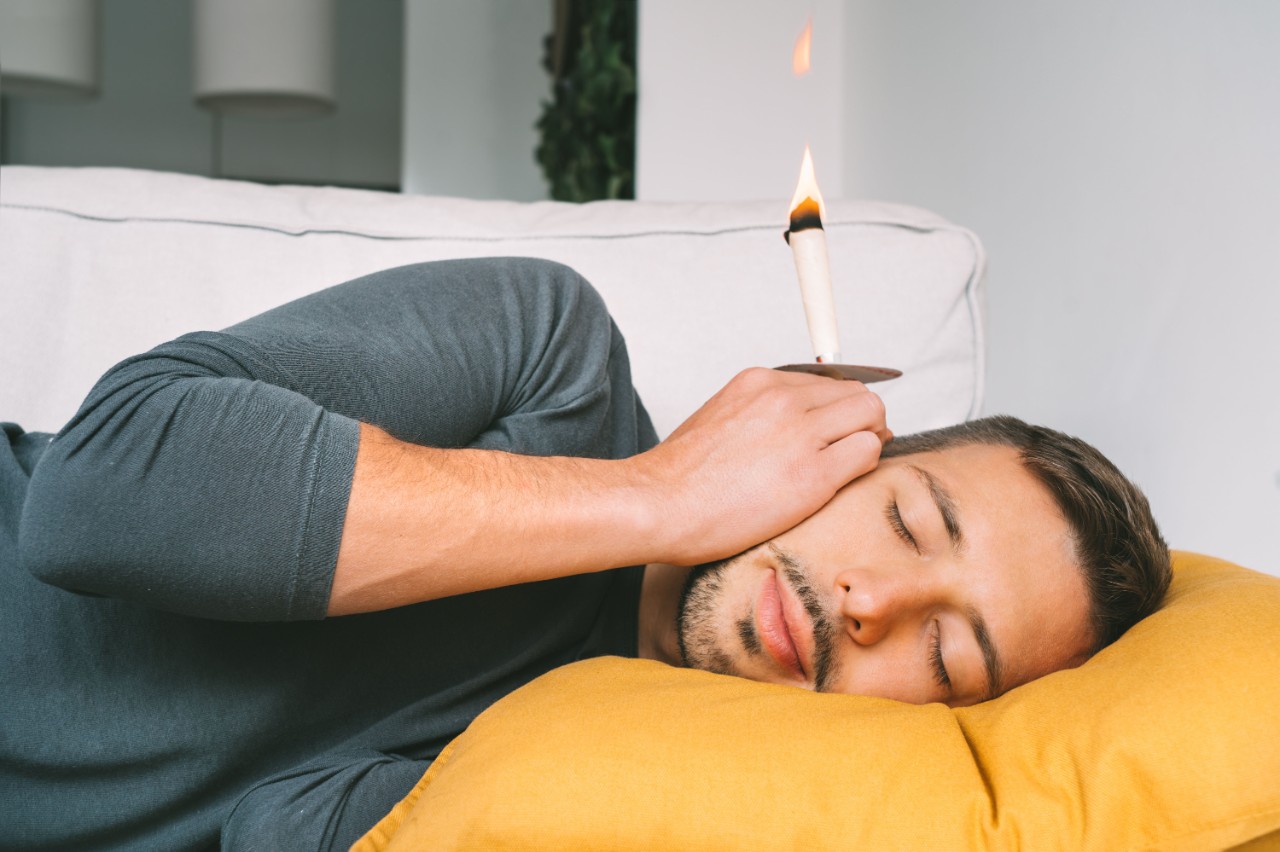
Ear candles are approximately 10 inches long and consist of a hollow fabric tube coated in beeswax or paraffin. Sometimes they also include honey or essential oils for additional aromatherapeutic benefits. The procedure includes placing the hollow candle in the ear canal and having another person light the other end of the candle, usually while the patient is lying on their side. The candle remains lit and burns down for approximately 15 minutes. Once the flame is extinguished, you can open up the hollow candle and see what manufacturers and practitioners allege is the earwax, toxins, and other impurities drawn out during the procedure.
Ear candling can be conducted using a kit at home, but some beauticians and alternative therapists also offer this service.
Some people certainly believe that ear candles work. However, the efficacy of ear candling is not backed by science, and the procedure puts the patient at risk of injuries to the ear and face.3
Different scientific studies have investigated the validity of manufacturer and practitioner claims on how ear candles work. One study set out to test the vacuum or “chimney” effect of ear candles and whether they actually created negative pressure that would draw out earwax and other impurities.4 Scientists created an artificial ear canal and used a tympanometer to measure the pressure within the ear canal during an ear candling procedure, but no negative pressure was found to be created in the ear canal during the procedure.
Never underestimate the importance of ear care, your hearing might depend on it.
Another group of scientists conducted a study to determine if a lit ear candle produced enough heat to melt earwax.1 While the ear candle was burning, they measured the temperature 10 mm from the base, but the highest temperature it reached was approximately 72º F. This is well below body temperature and therefore can’t melt earwax.
As for their efficacy, a small clinical trial conducted ear candling procedures on a group of patients.4 Half of the ears had impacted earwax in them, and half did not have any earwax. An otoendoscopic camera was used to capture ear candling before and after photographs. These photographs revealed that the ears that had earwax in them did not have any removed after the ear candling procedure. Moreover, the ears without earwax actually had evidence of candle wax being deposited into the ears.
The FDA does not approve the use of ear candles to treat any condition and warns that ear candling can result in serious injuries, even when used according to the manufacturer’s instructions.5 Risks and side effects include:
Beyond these risks, ear candling can actually push earwax deeper into the ear canal, causing it to feel clogged, along with other hearing problems.
There is currently no scientific evidence that ear candles help clogged ears. Likewise, using an ear candle for ear infection treatment is also discouraged, with no scientific evidence to back it up. If you’re concerned about clogged ears or an ear infection, visit your health care provider for treatment and advice.
A scientific article on the risks and efficacy of ear candling shared a case study of ear candling with a complication.1 The article shares that a patient followed up with her doctor after a session of ear candling, which had resulted in hearing problems. The patient told her doctor that the candling practitioner had burned herself while trying to remove the candle, which caused candle wax to drip into the patient’s ear canal. The patient was referred to an ENT, who found a large piece of candle wax lodged in her ear canal, as well as a small perforation in the tympanic membrane (eardrum) of that ear. The patient had the candle wax removed from her ear while under anesthesia, but she still suffered from the perforated tympanic membrane and mild conductive hearing loss in her ear that hadn’t improved by her follow-up appointment one month later.
And this isn’t an uncommon situation. In a survey about ear candling, 122 doctors from the Northwest Academy of Otolaryngology-Head and Neck Surgery were asked about their patients and ear candling.4 40 doctors reported having patients who admitted to using ear candling, and 20 doctors reported having treated patients with injuries that resulted from ear candling.
As already mentioned, there is no scientific evidence that ear candling is an effective treatment method for excess earwax or other maladies. And the potential risks far outweigh the alleged benefits. The safest way to clean your ears is to have your primary care physician or an ENT do it for you.
Most tools that are commonly used to clean ears at home can damage your eardrums and push earwax further into your ears. Avoid using the following tools to clean your ears:
Your ears are self-cleaning and don’t typically need to be cleaned. Certain types of eardrops can be used to clean ears with the approval of a doctor.
1. Rafferty, J et al. “Ear candling: should general practitioners recommend it?.” Canadian family physician Medecin de famille canadien vol. 53,12 (2007): 2121-2. https://pmc.ncbi.nlm.nih.gov/articles/PMC2231549/.
2. “Import Alert 77-01.” Accessdata.Fda.Gov, U.S. Food and Drug Administration, 4 June 2025, www.accessdata.fda.gov/cms_ia/importalert_225.html.
3. Zackaria, Mohamed, and Antony Aymat. ‘Ear Candling: A Case Report’. The European Journal of General Practice, vol. 15, no. 3, Informa UK Limited, 2009, pp. 168–169, https://doi.org/10.3109/13814780903260756.
4. Seely DR, Quigley SM, Langman AW. Ear candles—efficacy and safety. Laryngoscope. 1996;106(10):1226–9. doi: 10.1097/00005537-199610000-00010. https://onlinelibrary.wiley.com/doi/10.1097/00005537-199610000-00010
5. Ear candles. AAP News, April 2010; 31 (4): 26. 10.1542/aapnews.2010314-26l. https://publications.aap.org/aapnews/article/31/4/26/23708/Ear-candles.



 Start your journey towards better hearing

 Find an expert at any of our 1,600+ locations nationwide