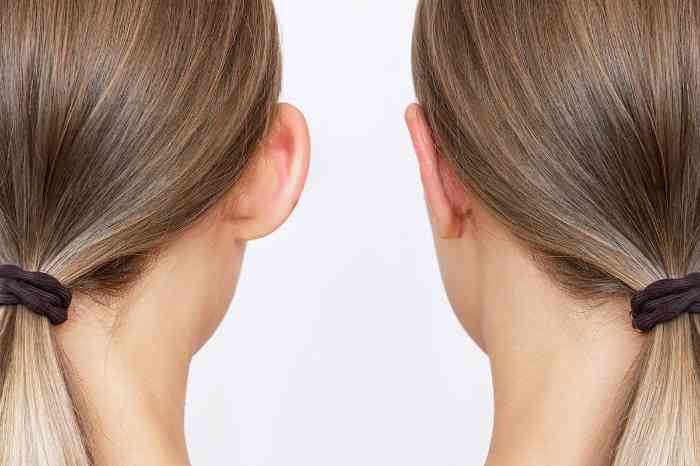
Two girls

Otoplasty (ear surgery)

What is otoplasty? Definition & meaning

Otoplasty, meaning cosmetic ear surgery, makes adjustments to the shape, position, or proportion of the ear. Reasons for otoplasty surgery include birth defects (some may affect hearing), treating misshapen ears from injury , or appearance dissatisfaction.1,2

Overall, otoplasty involves achieving balance and proportion between the ears and the face. Whether to get otoplasty is a personal decision that an individual should make for themselves, and not to fulfill an “ideal image.”

Key Takeaways

  • Otoplasty is a cosmetic ear surgery that adjusts the shape, position, or proportion of the ear for both medical and aesthetic reasons.
  • There are several types of otoplasty, including ear pinning, ear reduction, and ear reshaping—each addressing a different concern.
  • Most otoplasty procedures are outpatient and involve incisions, cartilage adjustment, and sutures. 
  • The average cost of otoplasty varies based on procedure type, location, and other factors. Insurance is unlikely to cover it, unless the procedure is deemed medically necessary.
  • Full recovery typically takes up to six weeks. Patients should avoid strenuous activity, sleep on their back, and wear a headband as directed.
  • Otoplasty does not affect hearing and is generally considered safe when performed by a board-certified surgeon.

Types of otoplasty

Ear correction surgery is not a “one-size-fits-all” approach. There are several types of otoplasty depending on the change you’re looking to make for your ears: 1, 2

  • Ear pinning: Also known as ear setback surgery, this otoplasty for prominent ears repositions ears that stick out far from the head.
  • Ear reduction surgery: Addresses disproportionately large ears.
  • Ear reshaping surgery: Also known as ear correction surgery, it corrects irregular contours or asymmetry.

These procedures are either performed on one ear (unilateral otoplasty) or both (bilateral otoplasty). No procedure strictly requires bilateral surgery, but it’s often recommended to ensure symmetry. Your surgeon will recommend an approach based on your anatomy and aesthetic goals.1

HCP at store

Hearing Diseases and Health Concerns

Hearing plays an important role in our health. You may be surprised by how hearing health affects and is affected by other systems in our body, from mental health to physical health. Hearing loss is connected to many other health conditions throughout the body. While hearing loss may not be the cause of these diseases or conditions, it is considered a risk factor for many.

Otoplasty operation techniques

Otoplasty surgery is often an outpatient procedure. The techniques used during your otoplasty procedure will vary depending on the location of the incisions. Typically, most otoplasties involve:1

  1. Incisions: Either inside your ear folds or the back of your ear
  2. Adjusting cartilage: Includes removal, folding, or grafting of cartilage and/or skin to the ear
  3. Stitching up the incisions

For those considering an operation to pin back ears, the Mustardé technique will likely be used in their ear pinning operation.

Mustardé sutures are the most commonly used method for an ear pinning procedure because the technique often results in high efficacy, low reoperation rates and yields high patient and surgeon satisfaction.

Ear pinning surgery with Mustardé sutures is considered the standard method for otoplasty ear pinning and has been widely used since the 1960s.3, 4

Unlike other techniques, this is a nonsurgical otoplasty that uses a needle to insert material into the surface of the ear cartilage. Stitches hold the ear in your preferred shape or hold the cartilage to a bone behind the ear.

If you’re debating incisionless otoplasty vs. otoplasty that requires surgery, consider this: It’s less invasive, with small punctures and sutures, and has a shorter recovery time. Talk to your surgeon about the method that’s best for your situation.5

What to expect before and after otoplasty surgery

While a minimally invasive outpatient procedure, it’s still important to know what to expect for your otoplasty, before and after, to minimize side effects and improve recovery. Here’s what you can prepare for:1

Before otoplasty surgery:

  • You will likely be asked to avoid aspirin, anti-inflammatory drugs, and herbal supplements to reduce the risk of bleeding.
  • You’ll take either local or general anesthetics to enter a sleep-like state, so you’re relaxed and don’t feel pain.

After otoplasty surgery:

It’s normal to feel some uncomfortable side effects of otoplasty. Don’t be alarmed if you experience the following:

  • Bleeding after otoplasty: Your ears will be bandaged due to the incisions or punctures made during your procedure, which may cause some minor bleeding.
  • Otoplasty pain: Common side effects include soreness, tenderness, itchiness, swelling, and bruising. This is normal and will eventually subside in a few weeks. You may get a special otoplasty headband to wear to help with that.

Full otoplasty results can take four to six weeks. There may be small otoplasty scars, but they should be inconspicuous.1

HCP and customer

Commitment to excellence

Join the millions of Americans who have trusted Miracle-Ear for hearing care that’s tailored to their needs.

Book a free hearing test

Otoplasty recovery and healing timeline

How long does otoplasty take to heal? Otoplasty recovery time can vary depending on your procedure, though the average full otoplasty healing may take up to six weeks.1,2

Steps to help promote otoplasty healing include:1,2

  • Wearing an otoplasty headband after surgery helps protect your ears and maintain their new position during recovery.
  • Keeping the area clean and dry.
  • Applying ice to reduce swelling.
  • Avoiding strenuous activity and sleeping on your side during recovery for otoplasty.

It’s important to take your otoplasty recovery day by day and follow your surgeon's instructions closely. 

Otoplasty for prominent ears, microtia & cauliflower ear

Setback otoplasty and otoplasty for prominent ears are some of the most common reasons people seek ear correction surgery. However, otoplasty goes beyond cosmetic concerns and also treats the following medical conditions:1,2

  • Microtia ear: A congenital condition where the outer ear is underdeveloped or absent. Otoplasty for microtia typically involves reconstructing the ear using cartilage grafts.
  • Cauliflower ear: A deformity caused by blunt trauma, which is common in contact sports. Surgery for cauliflower ear removes or reshapes the damaged cartilage. Otoplasty for cauliflower ear is often recommended when the deformity is significant.

FAQs about otoplasty

If you're wondering how long after otoplasty you can sleep on your side, most surgeons recommend avoiding it and sleeping on your back instead during otoplasty recovery to prevent pressure on the incisions. Ask your surgeon how to sleep after otoplasty and how long this applies to your situation, as recovery rates vary.1

Otoplasty is typically performed on children aged 4 or older, once the ear cartilage has fully developed. However, adults can also get the procedure.1

Otoplasty is a cosmetic procedure that alters the outer ear only and does not affect hearing. If you have hearing concerns, contact an audiologist.1

Yes, you can wear hearing aids after an otoplasty—however, you’ll have to wait until your ears have fully healed before you can begin wearing them again (if you already wear hearing aids) or before getting fitted for new hearing aids.

Talk to your surgeon about your specific situation and when you can begin wearing hearing aids. Because otoplasty sometimes affects the size of the external ear canal, hearing aid users with custom earmolds may need to get new earmolds. Similarly, those with behind-the-ear hearing aids may need to get the fit of their hearing aid hook adjusted. 6

For any concerns about hearing aid fit post-otoplasty, talk with your medical doctor and/or audiologist. An audiologist or other hearing care professional can customize hearing aids to your specific ear shape and needs.

How long to wear a headband after otoplasty depends on your procedure. Some only need a few weeks, and others need up to three months. Follow your surgeon’s specific guidance. This helps the ears maintain their new position while healing.1

Most surgeons recommend avoiding strenuous exercise or swimming after otoplasty for about six weeks after surgery to keep incisions dry and reduce infection. Ask your surgeon specifically about swimming and showering after otoplasty, as timelines vary.1

Swelling after otoplasty is normal and expected. To help reduce swelling after otoplasty, keep your head elevated, wear your otoplasty headband as directed, and avoid strenuous activity. Most swelling goes down within a few weeks.1

Follow your surgeon's specific instructions on how to clean your ears after otoplasty. Generally, you’ll gently clean around the incisions and avoid submerging your ears in water until fully healed.1

Like any surgical procedure, otoplasty carries some risk (infection, bleeding, swelling, scarring, and potentially asymmetry—though rare). However, it is generally considered safe when performed by a board-certified surgeon.1

Incisionless otoplasty results can be long-lasting but not always permanent. Because no cartilage is removed, there is a chance that the ears can gradually return to their original position, unlike traditional otoplasty. 7, 8 Always talk to your medical provider before making any decisions regarding elective surgeries or health concerns.

**Not medical advice

The medical or surgical information provided herein is for general informational and educational purposes only. Miracle-Ear does not perform, recommend, or advise on medical or surgical procedures. The content is not intended to be a substitute for professional medical advice, diagnosis, or treatment. Always seek the advice of your physician or other qualified health provider with any questions you may have regarding a medical condition or treatment.

Having trouble with your hearing?

Customers at Miracle-Ear store
Find the Miracle Ear store closest to you
We’re here for you wherever you’re at home or traveling with experts at over 1,600 locations nationwide.
Find your nearest store
patient and audiologist inside store
Book a free appointment online
Join the millions of Americans who have trusted Miracle-Ear for hearing care that’s tailored for their needs.
Book an appointment
Audiologist and client inside store
Let our certified experts help you
For generations, we've been pioneering better hearing through our personalized approach to care and continued innovation.
More about our experts

Sources

1. “Ear Surgery.” American Society of Plastic Surgeons, www.plasticsurgery.org/cosmetic-procedures/ear-surgery. Accessed 23 Feb. 2026.

2. “Otoplasty.” Healthline, www.healthline.com/health/otoplasty. Accessed 23 Feb. 2026.

3. Hilger, Peter. “Modification of Mustardé Otoplasty Technique.” Minnesota Physicians, https://mphysicians.org/hilger/about/media_publications/modification_of_mustarde_otoplasty_technique. Accessed 23 Feb. 2026.

4. “Otoplasty.” PubMed, pubmed.ncbi.nlm.nih.gov/33133954/. Accessed 23 Feb. 2026.

5. “Ear Correction Surgery.” NHS, www.nhs.uk/tests-and-treatments/cosmetic-procedures/cosmetic-surgery/ear-correction-surgery/. Accessed 23 Feb. 2026.

6. Rinaldi, V, and D Portmann. “Otoplasty: special attention in patients wearing hearing aids.” Revue de laryngologie - otologie - rhinologie vol. 132,4-5 (2011): 223-6.

7. Mehta, S., and A. Gantous. “Incisionless Otoplasty: A Reliable and Replicable Technique for the Correction of Prominauris.” JAMA Facial Plastic Surgery, vol. 16, no. 6, 2014, pp. 414–18, pubmed.ncbi.nlm.nih.gov/25211644/.

8. Edafe, O., et al. “Outcomes and Complications of Incisionless Otoplasty: A Retrospective Observational Study and a Review of the Literature.” International Journal of Pediatric Otorhinolaryngology, 2020, www.sciencedirect.com/science/article/pii/S016558762030389X.

Get support and advice

Book an appointment online

Book now

Take a free online hearing test

Start test

Find a hearing aid center near you

Search now