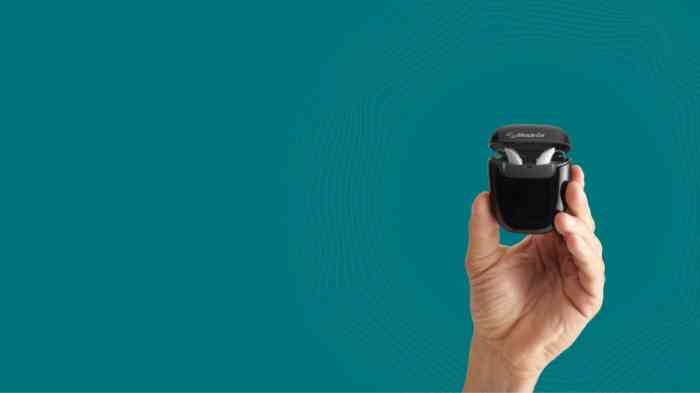
Hearing aids may be common today, but few people know their long and fascinating history. These small devices have transformed millions of lives, evolving from simple horns to advanced AI-powered solutions. What began as bulky, limited tools has become life-changing technology that helps people with hearing loss fully participate in daily life.
Let’s explore how hearing aids developed through the centuries, the inventors who made key breakthroughs, and how Miracle-Ear has played a role in shaping the future of better hearing.
Despite the hearing aid’s technological background and its advanced modifications, it’s actually older than some would suspect. In fact, the history of the hearing aid can be traced all the way back to the 13th century.
Some of the first hearing aids were actually constructed of animal horns and looked like trumpets. These trumpet-like hearing aids worked as the thin tube side was placed directly in the ear, and the wider side faced away from the ear.
While basic devices like ear trumpets appeared in the 1600s, the first electric hearing aid was invented in 1898 by American inventor Miller Reese Hutchison. Motivated by a friend’s hearing loss, Hutchison applied new telephone and microphone technology to create the Akouphone. This portable device used a carbon transmitter powered by a battery to amplify sound.
Learn more about how your hearing works from certified experts.
The 1920s marked a major shift in hearing aid technology with the introduction of vacuum tubes, which replaced the earlier carbon microphone designs. Vacuum tubes amplified electrical signals much more effectively than carbon transmitters, producing clearer and stronger sound. This made hearing aids usable for people with more severe hearing loss.
Never underestimate the importance of ear care, your hearing might depend on it.
By the late 1940s, vacuum tube hearing aids were already portable but still heavy, fragile, and required frequent battery changes. A major breakthrough came in 1947, when Bell Laboratories invented the transistor, a tiny semiconductor device that could switch and amplify electrical signals just like a vacuum tube, but with far greater efficiency, durability, and compactness. This innovation set the stage for much smaller and more practical hearing aids.
By the 1950s, the newly invented transistor was being built into hearing aids, replacing the fragile vacuum tubes of earlier models.
The 1970s and 1980s were decades of rapid innovation, with hearing aids becoming smaller, more efficient, and more tailored to individual needs.
Join the millions of Americans who have trusted Miracle-Ear for hearing care that’s tailored to their needs.
The 1990s marked a major turning point in hearing aid technology, as the industry shifted from analog to digital processing. Around the mid-1990s, hearing aids became more programmable, allowing hearing care providers to fine-tune devices for individual hearing profiles. Early models often had switches or tiny screws that could be adjusted with special tools to modify amplification and improve sound quality. This was the first step toward giving users more control and flexibility, with settings that adapted to different listening situations such as quiet conversations or noisy environments.
In 1996, the first fully digital hearing aids were introduced. Unlike analog devices, which simply amplified all sounds, digital hearing aids converted sound into numerical signals that could be processed by a microchip. This allowed for much clearer, more precise sound, as well as features like background noise reduction and multiple listening programs.
The 1990s represented a cultural shift: hearing aids were no longer viewed just as amplifiers but as smart medical devices that could improve quality of life through customization and adaptability.
The 2000s were the decade when digital hearing aids became standard. By the mid-2000s, nearly 80% of all hearing aids sold were digital, replacing analog models almost entirely. Digital processing allowed sounds to be analyzed and adjusted in real time, making it possible to amplify speech while reducing background noise, something analog devices could not achieve effectively.
A key development during this time was the introduction of wireless connectivity. Hearing aids could now communicate with each other, enabling features such as automatic volume balancing between ears. This made listening more natural and improved the localization of sounds.
Manufacturers also introduced directional microphones, feedback suppression, and adaptive noise reduction systems, all of which dramatically improved clarity in challenging environments like restaurants or busy streets. Rechargeable battery options began appearing, though most users still relied on disposable button-cell batteries.
Another important step forward was compatibility with accessories. Devices could connect to external transmitters for use with televisions, telephones, and assistive listening systems, expanding functionality beyond simple amplification.
By the end of the 2000s, hearing aids were no longer just amplifiers—they were becoming miniature computers for the ear, offering personalization, comfort, and better speech understanding than ever before.
Modern hearing aids have evolved into sophisticated AI-driven devices that go far beyond simple sound amplification. Today’s models use artificial intelligence and machine learning to analyze listening environments in real time, automatically adjusting settings to improve speech clarity while minimizing background noise. This allows users to transition seamlessly between quiet conversations, busy restaurants, and outdoor settings without needing manual adjustments.
Many devices feature Bluetooth streaming, enabling direct connections to smartphones, tablets, and televisions for calls, music, or podcasts. Paired with smartphone apps, users can adjust the settings on their hearing aids, track usage, and even locate their devices when not in use.
We offer solutions that transform hearing, from nearly invisible, comfortable designs to robust AI technology.
Rechargeable batteries have made hearing aids more convenient and eco-friendlier, while long-wear designs allow some models to stay in the ear canal for weeks at a time. Advanced directional microphones and AI speech enhancement provide clearer sound in noisy environments, helping wearers feel more confident in social situations.
Overall, hearing aids today are not just medical devices; they are smart, connected tools that integrate into everyday life. With ongoing improvements in AI, wireless connectivity, and comfort, hearing aids continue to offer greater independence, accessibility, and quality of life for people with hearing loss.
While hearing aids have transformed over the past century, another revolutionary technology has advanced in parallel: cochlear implants. Introduced in the 1980s, these devices provide a solution for people with severe hearing loss who may not benefit from traditional hearing aids. Instead of amplifying sound, cochlear implants bypass damaged parts of the ear and send electrical signals directly to the auditory nerve. Today’s implants are smaller, safer to implant, and more effective than ever before, greatly expanding candidacy and improving outcomes for users worldwide.
Although Miracle-Ear specializes in advanced hearing aids rather than implants, the evolution of cochlear implants highlights the broader innovation happening in hearing aid – and reinforces the importance of providing solutions that meet the unique needs of every individual.



 Schedule your free hearing test today!
.jpg/jcr:content/renditions/cq5dam.web.700.700.jpeg)


 Find your closest Miracle-Ear center