The ear disease otosclerosis is a condition characterized by abnormal bone growth within the bones (ossicles) in the ear, which interferes with your ability to hear. The name comes from oto (meaning “ear”) and sclerosis (meaning “hardening”). Otosclerosis can gradually make hearing more difficult as the abnormal bone growth blocks sound’s ability to move from the middle ear to the inner ear.1
More than 3 million people in the United States are affected by otosclerosis, and the condition most often affects younger adults. The majority are young Caucasian women, with symptoms typically appearing between ages 10 and 45.2
This article will walk through how otosclerosis affects hearing, common treatment options, and how hearing aids can help you manage the condition and stay connected to the world around you.
Join the millions of Americans who have trusted Miracle-Ear for hearing care that’s tailored to their needs.
Once someone has been diagnosed, the next question is how do you treat otosclerosis? While there is currently no drug therapy that provides a true cure for the condition, several procedures and treatment options can help improve hearing loss and make living with otosclerosis more manageable.1 The right approach to otosclerosis treatment usually depends on the degree of hearing loss a person has.
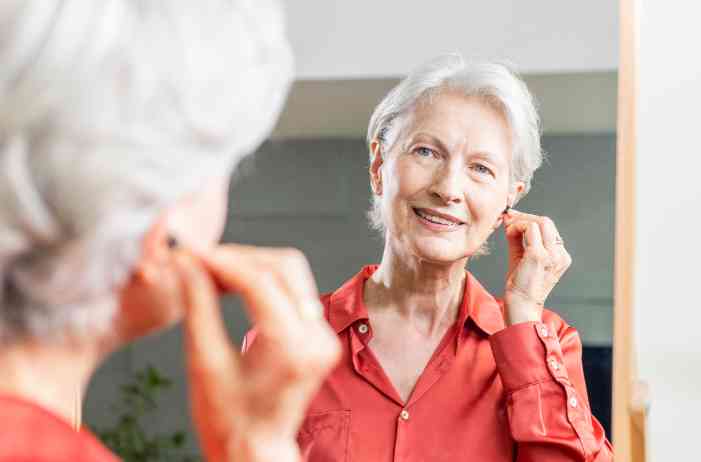
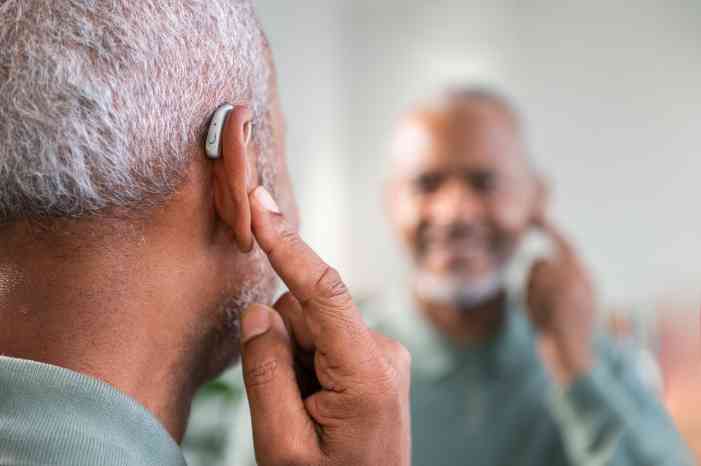
The most common way to manage otosclerosis-related hearing loss is through hearing aids.2 Because the condition prevents sound from moving easily through the middle ear, hearing aids help by amplifying sound so it’s easier for the inner ear to pick up.1
In more advanced cases, alternatives to hearing aids for elderly and younger otosclerosis patients may be considered.
Surgery for otosclerosis can help improve hearing in more advanced instances of abnormal bone growth. The most common otosclerosis operation is called a stapedectomy. This procedure involves removing the stapes bone from the middle ear and replacing it with a prosthetic device. This allows sound waves to move normally through the ear, improving hearing.1
When deciding between otosclerosis surgery vs. hearing aids, the choice often comes down to the severity of hearing loss and personal preference. Hearing aids are usually the first line of treatment because they’re non-invasive, easy to adjust, and highly effective for many people. Surgery, on the other hand, is typically considered when a person’s hearing loss becomes more significant. While surgery can lead to excellent results, it also inherently involves risks.1 For many people, hearing aids offer a simpler, more flexible, and reliable way to manage otosclerosis without undergoing an operation.
We offer solutions that transform hearing, from nearly invisible, comfortable designs to robust AI technology.
The best type of hearing aid for otosclerosis for most people is a standard hearing aid. The specific hearing aid type or style doesn’t make a huge difference in efficacy. Traditional prescription hearing aids are a common starting point because they’re non-invasive, widely available, and can be adjusted to your specific hearing needs.
In cases where a stapedectomy isn’t an option or when conventional hearing aids don’t provide enough benefit, a bone-anchored hearing aid (BAHA) may be recommended. BAHAs are hearing aids that work by transmitting sound vibrations directly through the skull bone to the inner ear. While such implantable options can be effective, they require a minor surgical procedure, making them a more invasive option than traditional hearing aids.3
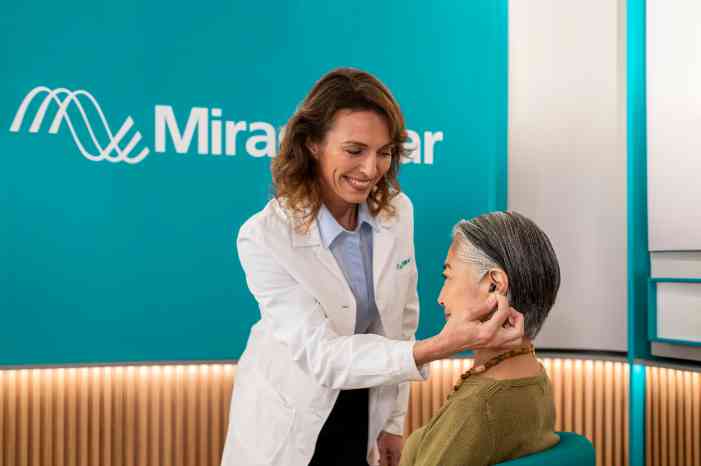
After receiving a diagnosis from an ENT specialist, you can work with them or a hearing professional to choose the hearing aid style and features that best suit your hearing loss and lifestyle needs.
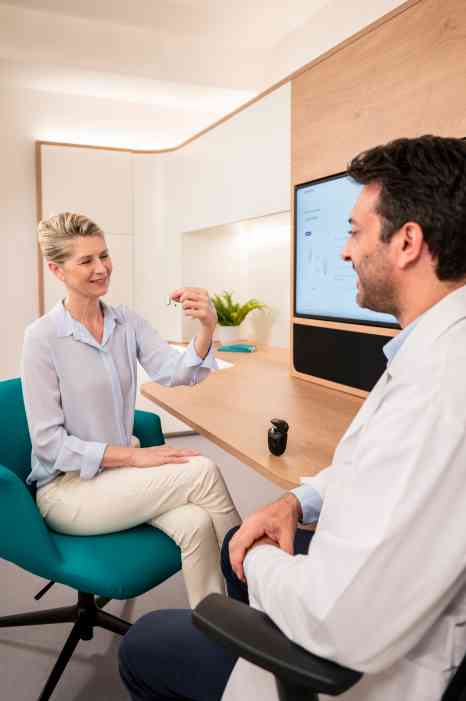
Because otosclerosis affects how sound moves through the middle ear, hearing aids often need to be programmed with careful adjustments to amplification, clarity, and background-noise management.
If you have otosclerosis, the most important first step is to see a doctor, usually an audiologist, otologist, or ENT specialist, for an accurate diagnosis. From there, a licensed hearing care professional can work with your doctor to determine the best hearing aid settings for your specific type and degree of hearing loss.
Never underestimate the importance of ear care, your hearing might depend on it.
Hearing aids cannot cure otosclerosis, but they can make sounds clearer and speech easier to understand. This can make everyday activities—from conversations to work to family life—much more manageable and enjoyable.
Because hearing and communication play such a big role in building relationships, maintaining your ability to hear is vital for emotional well-being and overall health. Strong social connections have been shown to boost longevity, support the immune system, and even help people recover from illness more quickly.4
Some studies also suggest that hearing aids for otosclerosis may help improve balance, offering yet another potential benefit.5
Tinnitus and dizziness are two additional associated symptoms often linked with otosclerosis.2 Hearing aids for otosclerosis may help improve these symptoms, making them another great treatment option for this condition. For tinnitus, the perceived ringing in the ears sensation, hearing aids help by amplifying external sounds, making tinnitus less noticeable.
Some evidence indicates that hearing aids help those with hearing loss (including otosclerosis-related hearing loss) improve their balance and alleviate dizziness. These studies suggest this is because our brains use sound to build a mental “map” of our surroundings. This map helps us understand where our bodies are in space and is key to our sense of balance.
Do you hear buzzing, humming, or ringing in the ears? You’re not alone. Schedule time with a hearing care professional to evaluate treatment options and solutions.
Research shows that people with normal hearing can stand or move more steadily when they have clear sound cues around them. By helping your ear hear more clearly, hearing aids for otosclerosis can improve your brain’s ability to “map” your surroundings and maintain balance.5 If you’re experiencing hearing loss, the most important step is to talk to a healthcare provider who can evaluate your ears and discuss treatment options.
A simple starting point is taking a free online hearing test from Miracle-Ear, which can help you understand your hearing and whether a hearing aid might benefit you. Early action can make a big difference in staying connected and enjoying everyday life.
1 “Otosclerosis.” National Institute of Deafness and Other Communication Disorders, U.S. Department of Health and Human Services, 16 Mar. 2022, www.nidcd.nih.gov/health/otosclerosis.
2 “Otosclerosis.” American Hearing Research Foundation, 24 Aug. 2022, www.american-hearing.org/disease/otosclerosis/.
3 De Vito, Andrea, et al. “Implantable Hearing Aids in Otosclerosis: Indications, Surgical Applications, and Cost-Effectiveness.” PubMed Central, U.S. National Library of Medicine, 18 June 2025, pmc.ncbi.nlm.nih.gov/articles/PMC12180551/.
4 “Beating Social Isolation: How Hearing Aids Help: Miracle-Ear.” Miracle Ear, 24 Sept. 2024, www.miracle-ear.com/blog-news/social-isolation-and-hearing.
5 Mahafza, Marina Tareq, et al. “A Systematic Review of the Effect of Hearing Aids on Static and Dynamic Balance in Adults with Hearing Impairment.” PubMed Central, U.S. National Library of Medicine, 15 Nov. 2022, pmc.ncbi.nlm.nih.gov/articles/PMC9666870/.



 Schedule your free hearing evaluation today!


 Find your closest Miracle-Ear center