A child’s ability to hear—or lack thereof—plays a significant role in developmental milestones, such as talking and reading. Hearing loss can lead to underdeveloped communication skills, which means detecting such hearing loss in children early becomes crucial to the child’s well-being. From infancy to school age, children may exhibit different signs of hearing difficulties, and understanding these age-specific symptoms can help caregivers take timely action.
While Miracle-Ear stores do not test or fit anyone under the age of 18, the Miracle-Ear Foundation is dedicated to assisting younger patients in need. Read on for the common signs of hearing loss in children, potential causes, symptoms of hearing loss in children and the importance of seeking a hearing evaluation to address concerns.
Recognizing the signs of hearing loss in children is key to early detection. While symptoms might differ by child, it’s important to contact a healthcare provider for a hearing screening as soon as concerns arise. Here are age-specific indicators that can help you spot potential warning signs:
Hearing loss in children and infants can stem from various factors. Hearing loss may be present at birth due to genetic factors or prenatal infections, genetic causes account for approximately 50-60% of cases.1 Among these, around 20% also involve a genetic syndrome such as Down syndrome or Usher syndrome.1
Hearing loss that develops later in childhood, conversely, is known as acquired hearing loss in children. Loud noise, physical trauma like head injuries, certain ear-affecting illnesses and ototoxic drugs can all cause acquired hearing loss. About 30% of hearing loss cases can also be attributed to nongenetic factors, such as infections during pregnancy, environmental influences or complications after birth.1
Congenital cytomegalovirus (CMV) infection is the leading infectious cause of birth defects in the United States.5 This virus can be transmitted during pregnancy if a person becomes infected, as it can cross from their bloodstream into the placenta.5 Babies born with CMV may experience hearing loss in one ear, with the possibility of progressive hearing loss affecting the other ear later on.6
For some infants, hearing loss is present at birth, while for others, it emerges as they grow older. Beyond hearing concerns, congenital CMV can also lead to vision issues and other health complications.2 It is important to note that while some babies with CMV appear to have normal hearing early on, they may develop hearing difficulties later.
Conductive hearing loss is the most common type of hearing loss among infants and young children. It occurs when there is an obstruction in the outer or middle ear that stops sound waves from reaching the inner ear.7, 9, 10 While some children are born with this condition, it is more commonly caused by ear infections.7 Conductive hearing loss is typically temporary.7, 9, 10
Otitis media, an inflammation of the middle ear often involving fluid buildup, is the most common cause of conductive hearing loss in children.9
Hearing loss in children treatment can include a variety of approaches, from hearing aid technology or surgery to therapy and educational accommodations. Here are some options at a caretaker’s disposal:
Hearing aids are small, battery-powered devices designed to make sounds louder, assisting children with mild to moderately severe hearing loss. With the help of these devices, many children can achieve nearly normal speech clarity in quiet settings.7
For children with more severe hearing loss, hearing aids enable them to perceive some sounds, but they may still rely on additional tools like lip reading or sign language to fully engage in conversations.
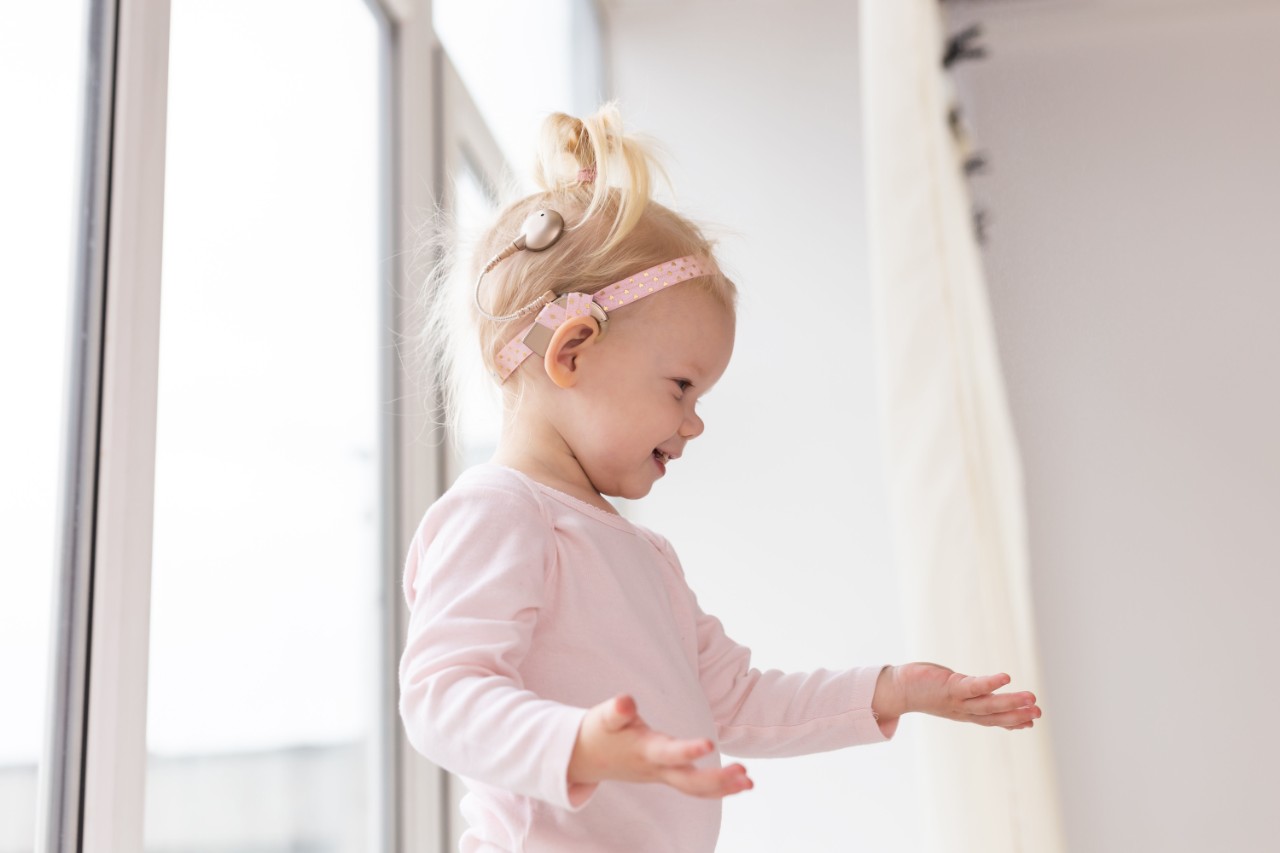
Cochlear implants are advanced electronic devices that can help children with severe to profound hearing loss in both ears regain some ability to hear. Unlike hearing aids, which amplify sound, cochlear implants work by capturing sound with a speech processor worn behind the ear. The sound is then transmitted to an implant placed inside the inner ear, bypassing the damaged parts of the hearing system.7
While cochlear implants improve access to sounds, they don’t recreate normal hearing. However, with consistent auditory therapy and auditory training in children with hearing loss, children who receive these implants can often learn to understand spoken language.
For children living with hearing loss, adjustments in the classroom can make a significant difference. These may include preferential seating arrangements, assistive devices for hearing, tailored teaching methods and accommodations during tests.10
Teachers are encouraged to collaborate with audiologists, speech-language pathologists (SLPs) and the child to ensure these strategies meet the student’s needs throughout the school year.
The exact number of children affected by hearing loss remains unclear. However, data from the CDC suggests that about one to three out of every 1,000 children in the U.S. are impacted by hearing loss. Some studies present slightly higher estimates, indicating two to five cases per 1,000 children.11
On a global scale, the World Health Organization reports that approximately 34 million children live with some type of hearing loss.12
Hearing loss in children can deeply affect their communication, learning and emotional well-being.
Hearing loss can delay a child's ability to produce sounds, develop speech and communicate effectively. Addressing hearing concerns as early as possible is critical to minimizing these delays and supporting a child’s developmental progress.
The early years of life are crucial for building language skills. If hearing loss goes undetected, it can significantly disrupt a child’s ability to develop these skills and create long-term challenges in communication.
Identifying hearing loss in children as early as possible is crucial for their development, and knowing the right diagnostic steps can make all the difference.
Hospitals across the U.S. conduct hearing screenings on newborns within their first month of life.7 This test is both quick and painless, serving as a vital early step in identifying congenital hearing loss. It is an essential safeguard, ensuring your baby’s auditory health is monitored from the start.
However, even a successful newborn screening doesn’t eliminate the need for ongoing evaluations. Some types of hearing loss can emerge gradually or later during childhood. That’s why regular hearing assessments as your child grows are key to detecting any changes early.
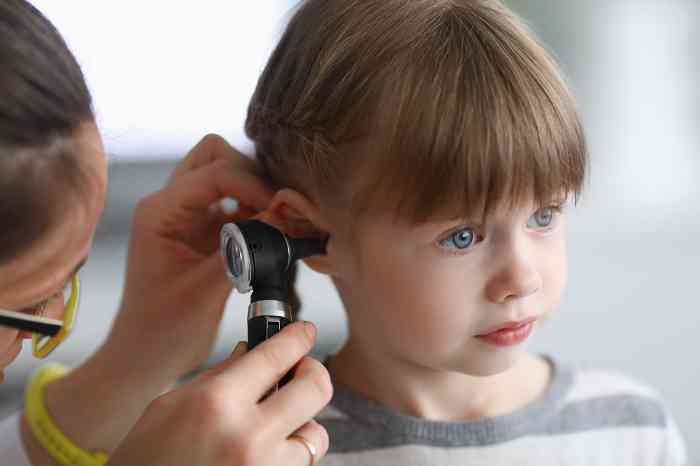
Children who do not pass an initial hearing screening should undergo a comprehensive hearing evaluation by an audiologist. This specialized professional is trained to perform detailed hearing tests to identify potential hearing loss, determine severity and classify the type. During this evaluation, the audiologist will ask about the child’s birth history, any instances of ear infections and family history of hearing issues.
There are various noninvasive procedures an audiologist can use to pinpoint the specifics of a child’s hearing loss. These evaluations are designed to be simple and painless, ensuring a stress-free process for young patients.
Hearing loss can occur at any stage of life, including childhood. Below are several factors that may increase the risk of hearing loss in children and actionable steps parents can take to help prevent it.
Vaccinations are an important part of keeping both mothers and babies healthy. Certain vaccines are recommended before, during and after pregnancy to provide critical protection.15
When a mother receives these vaccines, the antibodies she develops can cross the placenta and help protect her baby against serious illnesses, especially in the first months of life.16
Vaccinating during pregnancy can also safeguard mothers themselves from contracting illnesses that may pose risks to their newborns.16 After birth, it’s essential to ensure your child stays up to date on their standard vaccinations as recommended.
Prolonged exposure to loud noise can lead to noise-induced hearing loss, which may cause communication and learning challenges, ringing in the ears (tinnitus), distorted hearing or difficulty detecting sounds and warnings in the environment.18
Identifying and minimizing exposure to sources of loud noise—such as power tools, lawnmowers, music at high volumes, or loud concerts—is key to preventing damage.18, 19 Here are some effective strategies:
Chronic ear infections can also contribute to hearing loss if left unaddressed, but there are preventive measures parents can take to reduce the risk. Keeping up with routine immunizations and ensuring your child gets a yearly flu vaccine can significantly reduce the likelihood of infections. Flu vaccines are recommended especially for children attending daycare.21
Adopt good hygiene practices and encourage your child to wash their hands regularly to prevent the spread of germs that can lead to illnesses and ear infections. Smoking near children has been linked to higher rates of ear infections, so it’s important to keep them away from cigarette smoke.20, 21 Establish healthy habits and try to limit their contact with sick children whenever feasible.
Certain medications, known as ototoxic drugs, can cause inner ear damage, which could lead to hearing and balance issues that can significantly affect a child's ability to learn and communicate.
Caregivers should monitor for changes in hearing, balance, concentration or signs of frustration, as these may indicate a hearing problem. If concerns arise, scheduling an appointment with a healthcare provider is recommended.
With temporary hearing loss caused by ear infections, a child should feel better within a few days of antibiotic treatment. If symptoms persist, contact a doctor as a different antibiotic may be needed. Fluid in the middle ear may remain but typically clears within three to six weeks.21
Using antibiotics to treat infections can lead to antibiotic resistance, making future infections harder to treat. It's best to consult a healthcare provider as treatment depends on a child’s age, symptoms and level of pain.
1 CDC. "Data and Statistics About Hearing Loss in Children." CDC, www.cdc.gov/hearing-loss-children/data/index.html. Accessed 8 August 2025.
2 CDC. "About Hearing Loss in Children." CDC, www.cdc.gov/hearing-loss-children/about/index.html. Accessed 8 August 2025.
3 ASHA. "Communication Milestones: Birth to 1 Year." ASHA, www.asha.org/public/developmental-milestones/communication-milestones-birth-to-1-year/. Accessed 8 August 2025.
4 Auditdata. "How to Recognize & Address Hearing Loss in Kids and Teens." Auditdata, www.auditdata.com/insights/blog/how-to-recognize-address-hearing-loss-in-kids-and-teens/. Accessed 8 August 2025.
5 CDC. "Cytomegalovirus (CMV) and Congenital CMV Infection." CDC, www.cdc.gov/cytomegalovirus/congenital-infection/index.html. Accessed 8 August 2025.
6 CDC. "Hearing Loss and Congenital CMV Infection." CDC, www.cdc.gov/cytomegalovirus/congenital-infection/hearing-loss.html. Accessed 8 August 2025.
7 Boston Children's Hospital. "Hearing Loss." Boston Children's Hospital, www.childrenshospital.org/conditions/hearing-loss. Accessed 8 Aug. 2025.
8 Dimitrov, Lilia, and William Gossman. "Pediatric Hearing Loss." StatPearls, National Center for Biotechnology Information, www.ncbi.nlm.nih.gov/books/NBK538285/#article-26795.s9. Accessed 8 Aug. 2025.
9 ASHA. "Causes of Hearing Loss in Children." ASHA, www.asha.org/public/hearing/causes-of-hearing-loss-in-children/?srsltid=AfmBOopa81FAdAEmdQBLnBNU7fsHbAUwlWxoXxKky39-pC6tZB1vu9II. Accessed 8 August 2025.
10 ASHA Leader. "Audiologists in Schools: Supporting Students with Hearing Loss." ASHA Leader, leader.pubs.asha.org/do/10.1044/2023-0524-bhsm-auds-schools/full/. Accessed 8 Aug. 2025.
11 CDC. "Hearing Loss in Children: Research." CDC, www.cdc.gov/hearing-loss-children/research/index.html. Accessed 8 Aug. 2025.
12 World Health Organization. "Deafness and Hearing Loss." WHO, www.who.int/news-room/fact-sheets/detail/deafness-and-hearing-loss#:~:text=Overview,will%20have%20disabling%20hearing%20loss. Accessed 8 Aug. 2025.
13 NIDCD. "Quick Statistics About Hearing." NIDCD, www.nidcd.nih.gov/health/statistics/quick-statistics-hearing. Accessed 8 Aug. 2025.
14 CDC. "Hearing Loss in Children: Screening." CDC, www.cdc.gov/hearing-loss-children/screening/index.html. Accessed 8 August 2025.
15 CDC. "Hearing Loss in Children: About." CDC, www.cdc.gov/hearing-loss-children/about/index.html. Accessed 8 Aug. 2025
16 CDC. "Vaccine Safety: Pregnancy and Vaccination." CDC, www.cdc.gov/vaccine-safety/about/pregnancy.html. Accessed 8 Aug. 2025.
17 CDC. "Recommended Vaccines during Pregnancy." CDC, www.cdc.gov/vaccines-pregnancy/recommended-vaccines/index.html. Accessed 8 Aug. 2025.
18 CDC. "Preventing Noise-Induced Hearing Loss in Children." CDC, www.cdc.gov/hearing-loss-children/about/preventing-noise-induced-hearing-loss.html. Accessed 8 Aug. 2025.
19 NIDCD. "Noise-Induced Hearing Loss." NIDCD, www.nidcd.nih.gov/health/noise-induced-hearing-loss. Accessed 8 Aug. 2025.
20 CDC. "Ear Infections: About." CDC, www.cdc.gov/ear-infection/about/index.html. Accessed 8 Aug. 2025.
21 NIDCD. "Ear Infections in Children." NIDCD, www.nidcd.nih.gov/health/ear-infections-children#10. Accessed 8 Aug. 2025.
22 ASHA. "Language and Communication in Deaf and Hard of Hearing Children." ASHA, www.asha.org/practice-portal/professional-issues/language-communication-deaf-hard-of-hearing-children/?srsltid=AfmBOorxnDxCOkZEIIEU0RxdAlb104mGxC0i-OqPR-hd6ybz8_OgaOQv#collapse_1. Accessed 8 Aug. 2025.


 Our experts will help you with any questions you may have

 Find the closest Miracle-Ear center