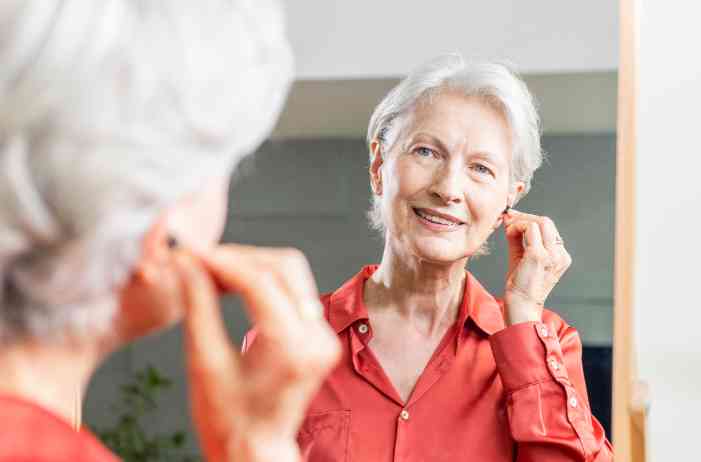
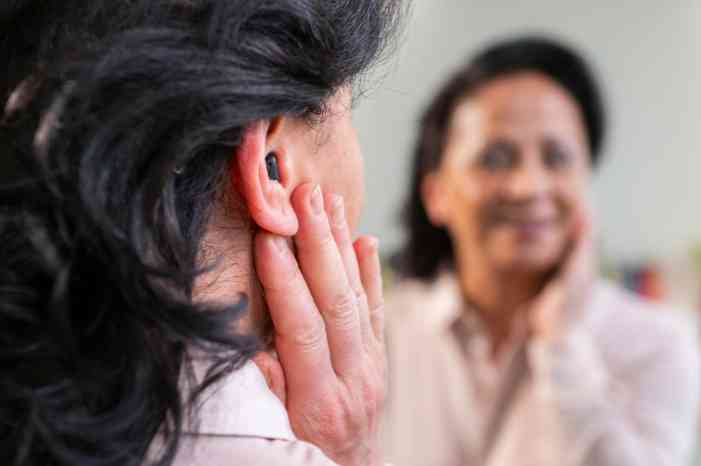
Many people are familiar with noise-canceling technology, like that in headphones. Did you know that this advanced technology is also used in hearing aids? Hearing aids are designed to help boost sound, but not all noises need to be amplified. When background noise is too loud, it can be difficult for people to listen to conversations or focus on what they’re trying to hear. Noise-canceling hearing aids are designed to help solve this problem. Hearing aids that block out background noise can distinguish sounds in the background from noises in the foreground.
Join the millions of Americans who have trusted Miracle-Ear for hearing care that’s tailored to their needs.
Noise-canceling technology has been around for many decades. The concept was first developed back in the 1930s by physicist Paul Lueg. In the 1950s and 1960s, this technology began being implemented in the military. Because aircraft cockpits were so noisy, people needed a way to block out the background noise so soldiers could communicate with each other effectively. Noise-canceling hearing aids started becoming available around the 1970s.1 While these early devices worked well, they also had many limitations. Technology has since come a long way, especially in hearing aids.
Today, noise-canceling hearing aids offer many more features. Digital noise reduction (DNR) technology works by identifying background noise and dimming it while amplifying the sounds of speech. Because sound waves that come from speech spectral design than noise, these hearing aids can distinguish the difference and adjust accordingly. However, it’s important to note that noise-canceling hearing aids cannot fully eliminate background sounds. Certain sounds, such as music or noises that suddenly change in volume, might be harder for these hearing devices to catch and filter out.
When it comes to noise-canceling technology, there are two different types: active and passive.
Active noise-canceling hearing aids work by creating a signal to neutralize background sounds. This type of noise-canceling technology works best for background sounds that are persistent.
Passive noise suppression, on the other hand, works by using a physical barrier to block unwanted noise. This is common in devices like headphones, earbuds, or types of hearing protection that physically cover parts of the ear, muting background sounds.
Hearing aids offer many features that make them easy and convenient to use. Noise-canceling hearing aids work by using directional microphones that pick up sounds from different areas. The device then processes each of the sounds. Advanced algorithms can tell which sounds should be amplified and which sounds should be reduced. Noise-canceling hearing aids often have other features as well.
Hearing aids with Bluetooth and noise canceling are standard across many devices today. This allows hearing aids to connect to a person’s phone. Rechargeable noise-canceling hearing aids are also popular since many people prefer to charge their devices rather than changing the batteries. Additionally, AI integration is now being used in many hearing aids. This technology can help hearing aids adapt more quickly to new sound environments to better filter out background noise.

Hearing aids for noisy environments offer many pros. Here are a few benefits.
There are many noise-canceling hearing aids on the market today. Miracle-Ear’s wide selection offers the best noise-canceling hearing aids with the latest in technology, including in-the-ear, receiver-in-canal, and behind-the-ear hearing aid noise-canceling options.
But what is the best hearing aid to reduce background noise? Miracle-EarSPARK™ is one top-rated options. This style is one of the latest innovations from Miracle-Ear. It features advanced sound processing with AI adjustments. To find the best hearing aid fit for you, be sure to stop in at your local Miracle-Ear store and speak with a hearing care professional.
Because noise-canceling hearing aids can be customized, they work for a wide range of people and their hearing loss. However, they are not the best fit for everyone. Some people find noise-canceling technology to be calming, while others claim that it makes speech sound muffled.2 However, there are a few people who may specifically benefit from using this hearing technology.
Noise-canceling headphones use similar technologies to noise-canceling hearing aids. Some styles use active noise cancellation while others use passive noise suppression. However, unlike hearing aids, headphones have more limitations. They cannot be adjusted and customized to the extent that hearing aids can.
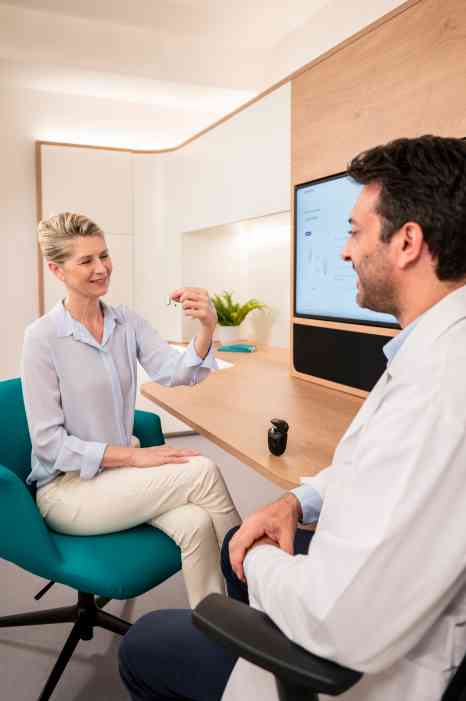
While hearing aids have settings that people can adjust on their own, noise-canceling hearing aids should be adjusted by a hearing care professional, especially if a person has specific hearing needs. Schedule an appointment at a Miracle-Ear location near you to have your Miracle-Ear device adjusted.
1 Bentler, Ruth, and Li-Kuei Chiou. “Digital noise reduction: an overview.” Trends in amplification vol. 10,2 (2006): 67-82. doi:10.1177/1084713806289514. https://pmc.ncbi.nlm.nih.gov/articles/PMC4111515/
2 Kim, Subong. “How Our Brainstem Shapes Hearing Aid Success With Noise Reduction.” Hearing Health Foundation. July 15, 2025. https://hearinghealthfoundation.org/blogs/how-our-brainstem-shapes-hearing-aid-success-with-noise-reduction
3 “Hearing Aids / Masking Devices.” American Tinnitus Foundation. Accessed November 18, 2025. https://www.ata.org/about-tinnitus/therapy-and-treatment-options/hearing-aids-masking-devices/


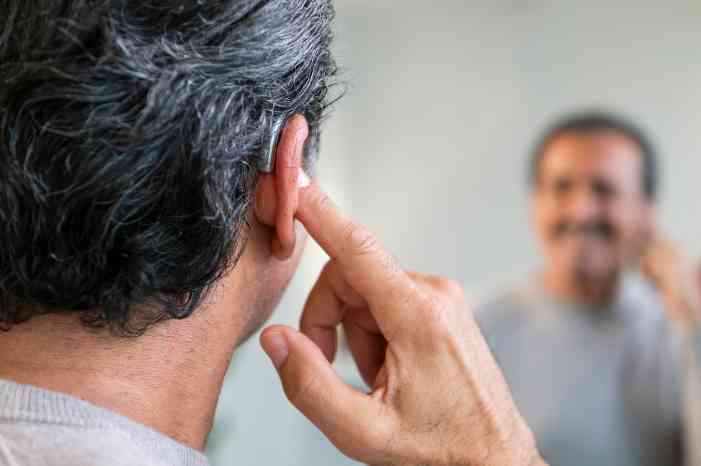

 Start your journey towards better hearing




 Schedule your free hearing test