What is aural rehabilitation?

Last update on Apr, 21, 2021

Hearing aids can significantly boost people’s quality of life by making it easier for them to hear and discern the sounds around them. However, getting fitted for a hearing device is usually only the first part of the full hearing solution. Like athletes who undergo physical therapy and become accustomed to artificial limbs, individuals with hearing aids can benefit enormously from specialized training in order to take full advantage of their devices. That training is known as aural rehabilitation.

Ann Hennessy

Ann Hennessy, MS, CCC-A

Miracle-Ear Audiologist

Key Takeaways

  • Aural rehabilitation is a combination of devices, counseling, exercises, and techniques that help those with hearing loss improve their communication abilities.
  • The goal of aural rehabilitation is to improve quality of life by enhancing conversational abilities and reducing the limitations brought on by hearing loss.
  • For children with hearing loss, aural rehabilitation is generally referred to as “habilitative” vs “rehabilitative” since the child is learning these communication skills for the first time.
  • Generally, Aural rehabilitation care plans are developed by professionals such as audiologists, hearing care professionals, or speech-language pathologists.
  • Aural rehabilitation plans can include hearing aid and device training, auditory training exercises, listening strategies, lipreading, cued speech, and a holistic combination of all these techniques.

What is aural rehabilitation?

Aural rehabilitation is a care plan designed to help those with hearing loss improve their communication abilities. It aims to improve conversational abilities (particularly listening and speech discrimination) and reduce the limitations brought on by hearing loss, ultimately improving quality of life. Aural rehabilitation programs are individualized and developed with a person-and family-centered mindset. The foundations of aural rehabilitation care plans can include counseling, sensory aids like hearing aids or cochlear implants, environmental modifications, auditory and communication skills training, and sound therapy¹.

For adults with hearing loss, aural rehabilitation is about restoring communication skills that have been compromised or lost because of hearing loss. But for children with hearing loss, aural/audiologic rehabilitation is generally referred to as “habilitative” vs “rehabilitative” since the child is learning these communication skills for the first time2.

How aural rehabilitation works

Aural rehabilitation typically focuses on building skills in three categories: cognitive skills, communication strategies, and degraded speech. The approach behind the program is to teach the brain to focus only on the sounds that a listener needs to understand a conversation. It also helps the patient learn to “fill in the blanks” when faced with a garbled or missed word.

In general, aural rehabilitation is effective, improving one’s ability to understand conversation in noisy environments and improving the social and conversational deficits caused by hearing loss. Improvement is most notable with an aural rehabilitation care plan that includes a holistic combination of sensory management (like the use of hearing aids or a cochlear implant), instruction from an HCP on how to effectively use hearing devices and accessories, continually practicing communication skills in real-world environments, and counseling to address the emotional struggles of hearing loss3.

Interestingly, aural rehabilitation offers valuable benefits not just to hearing aid users but also to a wider range of individuals. Even people with good hearing can potentially improve their ability to function in loud environments by utilizing aural rehabilitation therapies and techniques.

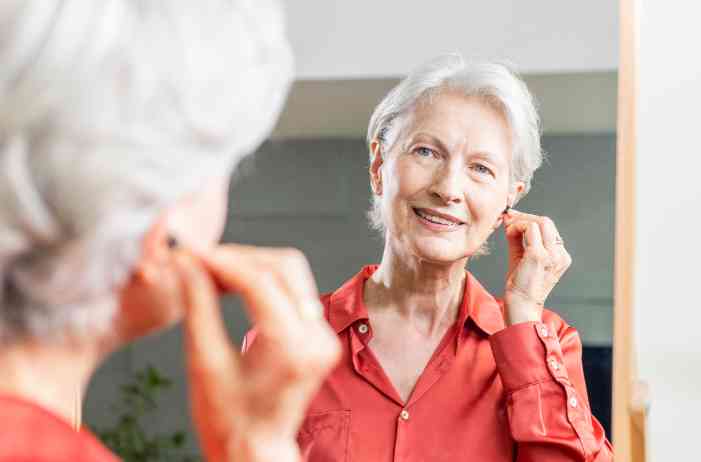
Woman wearing hearing aids

Hearing devices for you

Explore our range of modern hearing devices. We offer comfortable solutions that transform hearing, from nearly invisible designs to robust AI technology.

Types of aural rehabilitation for different age groups

Since different age groups have different communication understanding and needs, aural rehabilitation care plans can vary by age.

  • Adult aural rehabilitation involves rebuilding communication skills after experiencing hearing loss. This can include hearing and cochlear implant rehabilitation exercises like auditory training and learning new communication techniques. Aural rehabilitation activities for adults can also include learning speech reading, making environmental modifications to improve speech understanding, and attending support groups.
  • Pediatric aural rehabilitation, also known as aural habilitation, focuses on helping children develop communication skills from scratch, with modifications based on their hearing limitations. This can include the use of hearing aids, developing language and improving speech, using visual cues, learning sign language, and training in auditory perception2.

Aural rehabilitation classes: Exercises & techniques

Below are several exercises and techniques that can be used in aural rehabilitation care plans. These are usually guided by an audiologist, sometimes with help from a speech-language pathologist, and mostly done at home or in everyday settings.

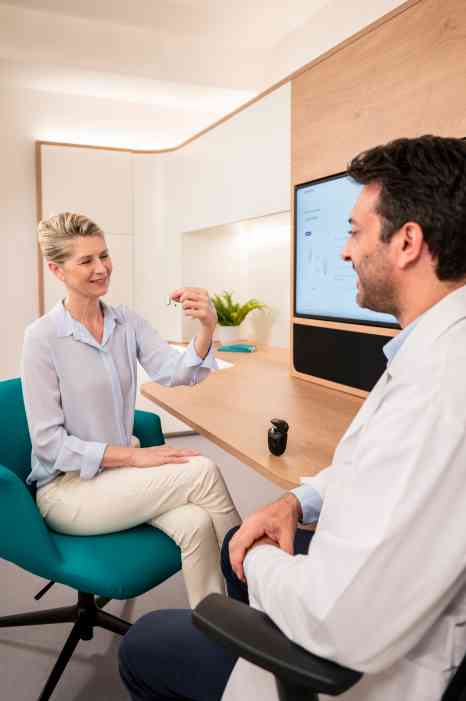
When hearing loss is detected, the first action item is generally fitting a person for hearing aids or other assistive listening devices. Your HCP will help you find the hearing device best suited to your needs, and they will then take the time to help train you on the device, so you understand how it works and how to adjust as needed.

Your HCP may recommend doing some auditory training exercises at home to help you adjust to your hearing aids and improve your listening and communication skills as you adjust. After all, listening is a skill that a person can practice and improve. Some of these training exercises may include speechreading (more on that, below), working on speech discrimination skills, and practicing listening in noisy environments. Auditory training can also be provided in-person through individual or group sessions, or through online courses or mobile apps.

Through counseling from an audiologist, HCP, or speech-language pathologist, individuals with hearing loss can learn various simple listening strategies, including those listed below, that can improve communication and understanding4.

  • Get specific: Avoid generalized requests for people to repeat themselves and instead get specific about what part of the sentence you didn’t understand. This could be asking a speaker to face you so you can see their mouth as they speak, slow down, spell a word you didn’t catch, or speak more loudly.
  • Face conversation partners: Ask communication partners to directly face you as you converse, so that you can lipread if needed, and use their facial expressions as additional visual cues of what they are communicating.
  • Focus your attention: Miscommunications happen more easily if you’re distracted. Ask conversation partners to get your attention before they start talking to you. This allows you to turn off the TV or set down a book or your phone and turn to face them so you’re ready to listen. 

Aural rehabilitation speech therapy often involves learning speechreading, or lipreading, skills. This involves using visual information—such as expressions or facial cues, gestures, and lip movements—to help aid conversational understanding. Individuals with hearing loss are encouraged to learn this skill to help “fill in the gaps” of the auditory element of a conversation. As part of this, family members and conversation partners are also encouraged to articulate their words to aid in speech reading and use proactive behaviors (such as directly facing the speech reader) when in conversation.

Cued speech is an approach that uses hand shapes, positioned in different places around the face, in combination with visual cues and speechreading to more thoroughly and unambiguously communicate and receive communication. This is a technique favored in auditory habitation for children. One study showed that the use of cued speech, along with a cochlear implant in children who are deaf or hard of hearing, further enhanced the benefits of the implant5.

This is a holistic methodology for individuals with hearing loss that encourages simultaneous use of all communication strategies—from speech and lipreading to sign language, gestures, and facial expressions—to better communicate and understand communication from others. This approach is particularly recommended for children as they develop communication skills.

In addition to practical, “hands-on” learning in active conversations, individuals with hearing loss can also use aural rehabilitation apps to further develop and refine their skills. These apps—often free or low-cost in the App Store or Google Play—feature listening games that help you work on your listening skills in different simulated sound environments. For those who want a bit more guidance, aural rehabilitation online courses can further improve communication and speech understanding. Some examples include LACE, an online program developed by UCSF, and clEAR, an online program developed by Dr. Nancy Tye-Murray and tested at Washington University in St. Louis.

It’s very important to practice listening and conversation skills at home, especially when you first get your hearing aids or cochlear implant, and your brain is readjusting to hearing things more clearly. Ask family members to intentionally converse with you so that you can practice your listening and speech discrimination skills. Talk about techniques from your HCP that you and conversation partners can both use to minimize misunderstandings

Find your closest Miracle-Ear center

Your store

Who provides aural rehabilitation

Providers of aural rehabilitation care plans include audiologists or licensed hearing care professionals, sometimes in conjunction with speech-language pathologists, psychologists, and other healthcare professionals.

Sources

1 American Speech-Language-Hearing Association. (n.d.). Aural rehabilitation for adults [Practice portal]. www.asha.org/practice-portal/professional-issues/aural-rehabilitation-for-adults/

2 “Child Aural/Audiologic Rehabilitation.” American Speech-Language-Hearing Association, American Speech-Language-Hearing Association, www.asha.org/public/hearing/child-aural-rehabilitation/. Accessed 5 Dec. 2025.

3 Boothroyd, Arthur. “Adult aural rehabilitation: what is it and does it work?.” Trends in amplification vol. 11,2 (2007): 63-71. doi:10.1177/1084713807301073. https://pmc.ncbi.nlm.nih.gov/articles/PMC4111411/

4 “Aural Rehabilitation for Adults.” American Academy of Audiology, 18 May 2022, www.audiology.org/consumers-and-patients/managing-hearing-loss/aural-rehabilitation-for-adults/.

5 Leybaert, Jacqueline, and Carol J LaSasso. “Cued speech for enhancing speech perception and first language development of children with cochlear implants.” Trends in amplification vol. 14,2 (2010): 96-112. doi:10.1177/1084713810375567. https://pmc.ncbi.nlm.nih.gov/articles/PMC4111351/ 

More from the blog

Discover a world of sounds.
View all

Get support and advice

Book an appointment online

Book now

Take a free online hearing test

Start test

Find a hearing aid center near you

Search now