Conductive hearing loss is one of the three types of hearing loss: sensorineural, conductive, and mixed. In conductive hearing loss, sound is not transmitted effectively to the inner ear. Various factors can cause it, including physical abnormalities, fluid buildup, or blockage in the outer or middle ear. As a result, loud sounds may sound muffled, and softer sounds may not be heard at all.
Conductive hearing loss, sometimes referred to as conduction deafness, is a common type of hearing impairment and can affect people of all age groups, although it is especially prevalent in young children. About 15% of children in primary school have experienced hearing loss, and of that number, 88.9% was identified as conductive hearing loss1.
Learn the difference between traditional hearing aids and BAHAs.
Conductive hearing loss symptoms commonly include:
Conductive hearing loss can either be temporary or permanent, and treatment depends on the cause. In many cases, it can be treated or corrected with thorough ear cleaning, medication, and/or consistent monitoring. For permanent conditions, common solutions include hearing aids or surgical removal of physical abnormalities.
While hearing aids can be a solution for hearing loss, it is important to note that traditional hearing aids may not be able to target the specific needs of conductive hearing loss. The best hearing aids for conductive hearing loss are bone-conduction options, as they bypass the damaged part of the ear and deliver sound directly to the inner ear.
Finding the right kind of hearing aid is a critical step to achieving the most comfortable hearing experience. Types of hearing aids for conductive hearing loss include bone-conduction hearing aids (BCHA) and bone-anchored hearing aids (BAHAs).
Bone-conductive hearing aids deliver sound to the inner ear by transmitting sound vibration through the bones of the skull. What does bone conduction mean, exactly? It’s defined by vibrations carried through the bones of the inner ear to trigger hearing and balance.
The device is typically held in place by a headband, softband, or adhesive system. It is frequently recommended to young children under 5 years old or adults who are testing bone-conduction before deciding to proceed with bone-anchored hearing aid surgery.
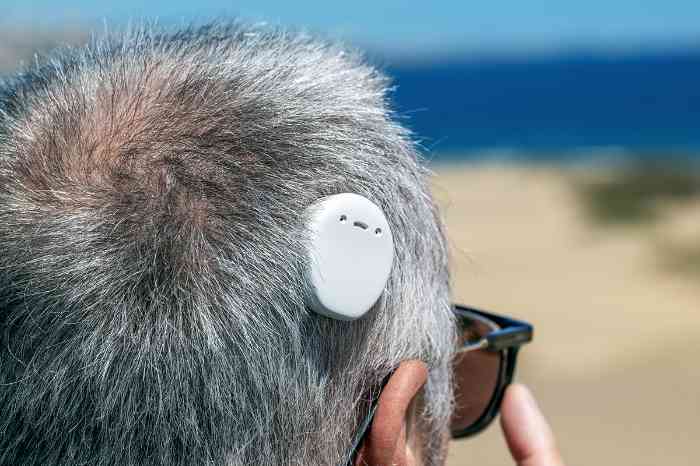
BAHAs work similarly to bone-conduction hearing aids but require surgical implantation to eliminate the use of a headband. A small titanium implant is surgically anchored to the skull. An external sound processor is connected to the implant either through a magnetic system or with an abutment placed during the surgery. Sound vibrations can then travel directly through the skull to the inner ear and cochlea.
The FDA has approved BAHAs for eligible adults and children over 5 years old. BAHAs have shown to improve hearing and quality of life in children, earning approval from parents as well2. Adults using BAHAs have also reported improved mental health and satisfaction compared to wearing other types of hearing aids3.
Hearing aids can help manage both conductive and sensorineural hearing loss. But the types of hearing aids that are suitable for each of these types of hearing loss differ. As mentioned above, bone-conduction options, like BAHAs, are generally the best option for those with conductive hearing loss. On the other hand, individuals with sensorineural hearing loss regularly use traditional hearing aids for treatment, with various types and styles being suitable options, depending on their specific hearing needs.
However, it is important to remember that hearing aids are not “one-size-fits-all” devices. Your hearing journey depends on the hearing aids you choose. Meeting with an audiologist or hearing care professional is critical to understanding what type of hearing loss you’re experiencing and what hearing aids will work best for you.
1 Sooriyamoorthy, Thushanth, and Orlando De Jesus. “Conductive Hearing Loss.” PubMed, StatPearls Publishing, 23 Aug. 2023, www.ncbi.nlm.nih.gov/books/NBK563267/.
2 Amonoo-Kuofi, Kwamena, et al. “Experience of Bone-Anchored Hearing Aid Implantation in Children Younger than 5 Years of Age.” International Journal of Pediatric Otorhinolaryngology, vol. 79, no. 4, Apr. 2015, pp. 474–480, https://doi.org/10.1016/j.ijporl.2014.12.033.
3 Hol, Myrthe K. S., et al. “The Bone-Anchored Hearing Aid.” Archives of Otolaryngology–Head & Neck Surgery, vol. 130, no. 4, 1 Apr. 2004, p. 394, jamanetwork.com/journals/jamaotolaryngology/fullarticle/647312, https://doi.org/10.1001/archotol.130.4.394.
4 NIDCD. “Cochlear Implants.” NIDCD, 18 Aug. 2015, www.nidcd.nih.gov/health/cochlear-implants#a.


 Start your journey towards better hearing