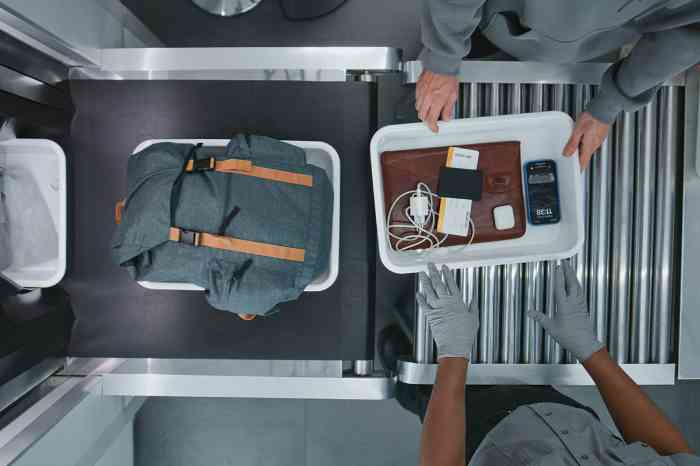
Airport security check

Transportation Security Administration (TSA) and hearing aids

Guide for airport security and air travel

TSA regulations for medical and assistive devices

Getting through a busy airport can be stressful, and the last thing you want is to worry about medical devices, like hearing aids, setting off alarms. The good news is that flying with hearing aids is straightforward when you’re familiar with the guidelines. With some quick preparation, you can smoothly pass through security and have a hassle-free flight—with no need to stress about TSA and hearing aids.

Key Takeaways

  • You can wear your hearing aids through security without removing them, but it’s helpful to inform the TSA officer beforehand.
  • Most hearing aids contain minimal metal and won’t trigger alarms, but full-body scanners may detect them.
  • Cochlear implants or bone-anchored hearing aids may require alternative screening methods, like a manual pat-down.
  • Spare lithium-ion batteries must be in carry-on luggage with terminals protected, while zinc-air batteries can go in either carry-on or checked bags.
  • Hearing aid chargers with lithium-ion batteries should stay in your carry-on for safety and compliance.

Flying with hearing aids

Air travel presents unique challenges for people with hearing loss. Airports are noisy, announcements are often garbled, and communication with staff can be rushed. However, flying with hearing aids doesn't have to be a hassle. Wearing hearing aids on airplanes is permitted, and with the right preparation and knowledge of the rules, you can travel confidently and stay connected to the world around you, not only at the airport but at your destination as well.

Hearing aids and airport security

Many people with hearing aids wonder, “Can I wear my hearing aids through airport security?” According to TSA guidelines, yes, you can keep your hearing aids on through security.1 However, it is always a good idea to let the security officer know you are wearing them before the screening begins. 

In most cases, hearing aids do not set off standard walk-through metal detectors. They contain very small amounts of metal, usually not enough to trigger the alarm. However, airport security technology varies. If you are going through a full-body scanner, your device will likely be visible to the scanner. 

If you have a cochlear implant or bone-anchored hearing aid, the rules are slightly different. You should consult your audiologist or the device manufacturer, as some devices should not be exposed to X-rays or certain scanners. In these cases, you can request a manual pat-down instead of going through the machine.

TSA has specific protocols for passengers with disabilities and medical conditions. When you approach the screening area, there are certain actions you can take regarding TSA and hearing aids:

  • Tell the TSA officer that you are wearing hearing aids. You can do this verbally or by using a TSA notification card, which is a discreet way to communicate your condition without announcing it to the whole line.
  • Proceed through the metal detector or body scanner as directed.
  • If the machine alarms or the officer sees the device on a body scanner, they may ask to inspect the hearing aid. You do not need to remove it. They may swab your hands or the device to test for explosives. 

If you are ever uncomfortable or having trouble understanding instructions, ask the officer to look at you when speaking or to write down instructions. Don’t be afraid to communicate and advocate for what you need.

A client buying a hearing aid

Commitment to excellence

Join the millions of Americans who have trusted Miracle-Ear for hearing care that’s tailored to their needs.

Book a free hearing test

TSA, hearing aid batteries and chargers

Packing your hearing aid batteries and chargers correctly is just as important as the screening process. Here’s what to know about air travel, TSA, and hearing aid batteries.

Yes, you can take your hearing aid charger on a plane. Most modern chargers use lithium-ion batteries. FAA regulations generally require loose lithium-ion batteries (spare batteries) to be in carry-on luggage, not checked bags. Since your charger likely has an internal battery, keeping it with you in the cabin is the safest and most compliant choice. Remember that if you end up checking your bag at the gate, you will need to remove any spare batteries from this bag, too.2

The placement of your hearing aid batteries (and any other batteries for electronic devices) depends on the type.

  • Zinc-air batteries (disposable): These are the standard disposable batteries with the sticker tabs (sizes 10, 13, 312, 675). You can pack these in either your carry-on or checked luggage. However, it is highly recommended to pack them in your carry-on for accessibility. You want easy access to them if your current battery dies mid-flight.
  • Lithium-ion batteries (rechargeable): Lithium batteries—including rechargeable hearing aids, hearing aid chargers, power banks, cell phone batteries, and laptop batteries—must follow strict safety guidelines when flying. They are prohibited from checked baggage due to fire risk. Spare lithium batteries (not installed in devices) must be carried in carry-on baggage as well, with terminals protected from short circuits using tape, cases, or packaging. If a carry-on bag is checked at the gate, all devices with lithium-ion batteries must be removed and kept in the cabin.2

Find your nearest Miracle-Ear center

TSA issues with hearing aids & how to avoid them

While the TSA is trained to handle medical devices, inconsistencies can happen. Here are a few tips to ensure a smooth experience:

  • Don’t place your hearing aids loose in the plastic bins that go through the X-ray belt. Keep them in your ears or securely inside your carry-on bag.
  • Download and print a TSA notification card before you fly. Handing this to the officer immediately bridges the communication gap.
  • Keep your cleaning kit, wax guards, and spare batteries in an easily accessible pocket of your carry-on.

By understanding TSA guidelines, preparing your batteries and chargers properly, and communicating effectively with airport staff, you can navigate the airport with ease. 

Hearing care specialist visiting a client

Do you need more information? Contact us

Complete the form and someone from our team will reach out to you. With over 1,600 stores nationwide, we'll help you find the one closest to you.

Sources

1 Transportation Security Administration (TSA). "Disabilities and Medical Conditions." tsa.gov/travel/tsa-cares/disabilities-and-medical-conditions.

2 Federal Aviation Administration (FAA). "Pack Safe: Batteries, lithium." faa.gov/hazmat/packsafe/lithium-batteries.

Get support and advice

Book an appointment online

Book now

Take a free online hearing test

Start test

Find a hearing aid center near you

Search now