An estimated one in five people in the United States struggle with some degree of hearing loss.1 People often wonder, “What is mild hearing loss?” and “Do I have mild hearing loss?” but don’t pursue treatment. Depending on your signs and symptoms, you might need to bring up possible hearing loss with your doctor, so you can take steps to address it early on.
Join the millions of Americans who have trusted Miracle-Ear for hearing care that’s tailored to their needs.
Hearing loss typically happens gradually, meaning it may be hard to tell if you’re losing your hearing. A few common signs to look for are:2
Learn more about how your hearing works from certified experts.
Hearing loss affects approximately one-third of adults ages 61 to 70 years old, and over 80% of adults over 85.4 This means that as people age, hearing loss becomes more common and likely more severe. Here is the average hearing loss by age:
Age range — Average hearing threshold (dB HL) — Notes
0–19 — 0–15 dB HL — Normal hearing
20–29 — 0–20 dB HL — Minimal high-frequency hearing loss
30–39 — 0–25 dB HL — Early signs of high-frequency hearing loss
40–49 — 5–30 dB HL — More noticeable high-frequency hearing loss
50–59 — 10–35 dB HL — Mild to moderate high-frequency hearing loss
60–69 — 20–40 dB HL — Moderate high-frequency hearing loss, may have trouble hearing speech clarity
70–79 — 30–50 dB HL — Moderate to severe hearing loss, may need hearing aids to help hear speech
80+ — 40–60+ dB HL — Severe hearing loss, especially in high frequencies
Yes, some forms of mild hearing loss can get worse over time, which is known as progressive hearing loss. Progressive hearing loss can happen for many reasons; noise-induced hearing loss is one of the most common. This happens when a person is repeatedly exposed to loud noises for long periods of time, which can slowly damage their hearing.
This is a common question, but the answer depends on the situation. Age-related hearing loss (presbycusis) generally worsens over time and cannot be corrected. However, for mild hearing loss due to infections, blockages or certain medications, various treatments can improve or correct symptoms.
These include medication (such as antibiotics for ear-infection-related hearing loss), surgery (including ruptured eardrum repair) or professional ear cleaning to remove impacted earwax. In these situations, getting medically treated hearing correction early on can help prevent a person’s hearing loss from becoming even worse.
For hearing loss that can’t be corrected, hearing aids are an incredible tool that can help a person hear sounds they can no longer hear on their own.
We offer solutions that transform hearing, from nearly invisible, comfortable designs to robust AI technology.
According to the Centers for Disease Control and Prevention (CDC), there are four degrees of hearing loss: mild, moderate, severe and profound.3 No matter the level, anytime hearing loss interferes with a person’s quality of life and ability to communicate, a doctor or hearing care professionals may recommend hearing aids.
If you’re asking yourself, “Do I need a hearing aid for mild hearing loss?” it is worth talking to a hearing care professional about your options. If your hearing loss is interfering with daily life, you may want to learn more about how hearing aids for mild hearing loss can help.
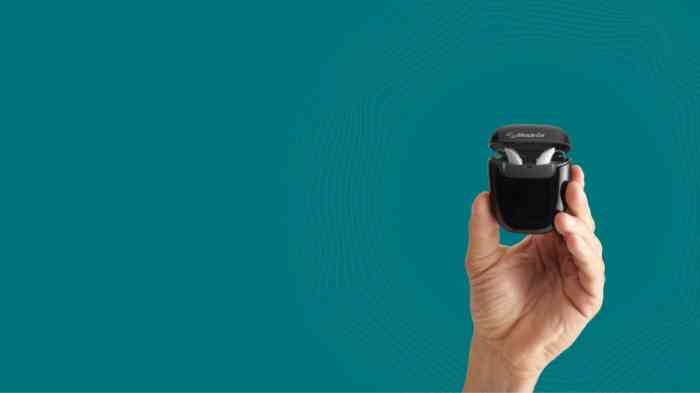
There are many types and styles of hearing aids available. The best hearing aids for mild hearing loss usually depends on the individual’s preferences. The Miracle-Ear BLISS+TM MEENERGY CIC R is discreet, in-the-ear style of hearing aids that many people find comfortable. They feature artificial intelligence (AI) and waterproofing technology, as well as a long battery life. The Miracle-Ear GENIUSTM X MEENERGY RF R X are another comfortable option. These are Miracle-Ear’s smallest rechargeable hearing aids that come ready to wear.
One of the best ways to care for your ears and prevent hearing loss is to get them properly examined by a hearing care professional. Find your nearest Miracle-Ear store to get started on your journey to better hearing.
There are many types of hearing aids for mild hearing loss. Some popular choices are:
There are several benefits of hearing aids for mild hearing loss. A few of these include:
In addition to hearing aids, there are other types of devices that may help people who are experiencing mild hearing loss.
A personal sound amplification product (PSAP) helps amplify sound. Unlike a hearing aid, however, PSAP works by making all sounds, including background noise, louder.
These usually work better for people who are experiencing mild hearing loss or just want a boost in sound, rather than those with more severe hearing loss.
People with very mild hearing loss may also benefit from adjusted communication. This could entail looking at the person and getting their full attention before engaging in conversation or intentionally having a conversation in a quieter space.
It’s important to remember that while changing communication strategies may help in some contexts, it is not always possible. Many times, a hearing device is a more effective option for the long term.
People often wonder about hearing aid costs and hearing aid insurance. Hearing aids usually cost between $1,000 to $8,000, with some being even more expensive.
While insurance sometimes covers hearing aids, it varies by state and type of insurance. Remember that you can also use funds from Flexible Spending Accounts (FSAs) and Health Savings Accounts (HSAs) to help cover the cost.
Over-the-counter, or OTC, hearing aids for mild hearing loss are an option for those who struggle with mild to moderate hearing loss. OTC hearing aids are similar to regular hearing aids, but a professional does not customize them.
While they work well for some people, their lack of customization may limit their ability to help with certain hearing needs.
That’s why we always recommend purchasing any type of hearing aids in person, with the help of a hearing care professional who can recommend the proper product to meet your exact hearing needs.
Never underestimate the importance of ear care, your hearing might depend on it.
Many people wonder what the adjustment period is like once they get their first hearing aids. Here are a few hearing aid tips for those who are adjusting to wearing them:
1 Haile, Lydia M et al. “Hearing Loss Prevalence, Years Lived With Disability, and Hearing Aid Use in the United States From 1990 to 2019: Findings From the Global Burden of Disease Study.” Ear and hearing vol. 45,1 (2024): 257-267. doi:10.1097/AUD.0000000000001420 https://pmc.ncbi.nlm.nih.gov/articles/PMC10718207/
2 “Hearing Loss.” National Health Service. Last reviewed May 30, 2025. https://www.nhs.uk/conditions/hearing-loss/
3 “Types of Hearing Loss.” Centers for Disease Control and Prevention. May 15, 2024. https://www.cdc.gov/hearing-loss-children/about/types-of-hearing-loss.html
4 Walling, Anne D, and Gretchen M Dickson. “Hearing loss in older adults.” American family physician vol. 85,12 (2012): 1150-6. https://pubmed.ncbi.nlm.nih.gov/22962895/



 Ready to experience the difference for yourself?
.jpg/jcr:content/renditions/cq5dam.web.700.700.jpeg)
 Find your closest Miracle-Ear center