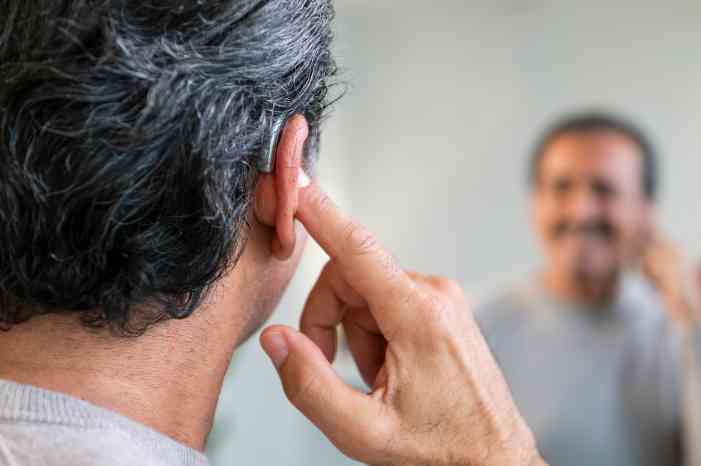
Many people face a dilemma between budget and personalized care when choosing which type of hearing aid is right for them. Prescription hearing aids have long been the standard solution for hearing loss management. It’s a reliable avenue with its personalization features and professional credibility. However, over-the-counter (OTC) hearing aids have introduced an alternative to hearing devices by highlighting accessibility, affordability, and convenience. Investing in hearing aids is certainly not an easy decision, as you must consider what matters most to your hearing needs.
Join the millions of Americans who have trusted Miracle-Ear for hearing care that’s tailored to their needs.
Prescription hearing aids are high-quality, customizable devices that can be adjusted to an individual’s specific hearing loss and lifestyle needs. Their programming requires a hearing test and can only be purchased through a licensed hearing care professional.
Do you need a prescription for a hearing aid? Yes, if you’re buying prescription hearing aids, you do.
OTC hearing aids are FDA-approved hearing devices that do not require a prescription or assistance from a healthcare professional. These non-prescription hearing aids help manage mild-to-moderate hearing loss. Unlike prescription hearing devices, these can be found at the drugstore, online, or at pharmacies.
The hearing aids you pick are important because everyone has a different hearing journey. However, depending on what kind of hearing device you opt for, the hearing experience may vary.
If you are searching for a pair of hearing aids, you might be wondering: What is the difference between OTC and prescription hearing aids? Are OTC hearing aids as good as prescription hearing aids? Although both help amplify sound to help you hear better, there are a few key differences to consider if you want to find the best choice for you.
We offer solutions that transform hearing, from nearly invisible, comfortable designs to robust AI technology.
One of the biggest questions you may come across in your search is, “Are OTC hearing aids programmable?” Unfortunately, they are not. While prescription hearing aids can create a personalized sound programmed by a hearing care professional, OTC hearing aids have limited customization features for sound and fit. The user manually adjusts the noise settings on OTC hearing devices. This can sometimes be done through an app. Features like sound volume have different settings that help make the noise louder or quieter, but there is a range limit. On the other hand, prescription hearing aids have fully customized programming that’s tailored to your unique hearing and lifestyle needs.
OTC hearing aids come in standard designs and sizes. Unlike prescription hearing aids, OTC devices do not have a try-on process, nor do they offer customized earpieces for maximum comfort. In many cases, you will have to purchase the hearing aids and adjust the fit by yourself. It is not uncommon for people to return OTC hearing aids because they do not fit well.
If you are looking for something not easily visible, prescription hearing aids have bigger design portfolios for discreet styles. Prescription hearing aids also offer behind-the-ear and in-the-ear customization for comfort and style. These features are important because they ensure maximum use of the hearing aids.

With a hearing test, prescription hearing aids can deliver a personalized sound. A licensed hearing care professional can adjust sound and volume to your hearing needs. For prescription hearing aids with advanced technology, you can change sound settings to filter or amplify specific noises, experiencing the benefits of background noise reduction, speech isolation, and more. Bluetooth-equipped hearing aids allow you to connect to sounds from other electronic devices, although some OTC hearing devices have these features too.
OTC hearing aids operate differently as they amplify all sounds, not distinguishing speech from background noises. While OTC hearing aids can be more helpful than not having any amplification, over time, the performance of this device can become less effective. If the level of your hearing loss grows severe or profound, OTC hearing aids may no longer help.
OTC hearing aids are self-fitting devices and take on a “do-it-yourself” approach. Opportunities for professional support are little to none. Users often engage in online hearing tests to find which brands or types of OTC hearing devices may be their best fit. After a purchase, there is no need to visit a clinic as the hearing aid fitting and adjustment process is done by the user.
From hearing evaluations to fittings, aftercare, and follow-up appointments, professional support is involved in every step of the prescription hearing aid journey. A licensed professional will help program and fine-tune the hearing aids with results from the hearing test. With follow-up appointments, they can make readjustments and monitor potential changes in your hearing loss, as well as perform routine maintenance on your devices to extend their lifespan.
Accessibility and convenience are the greatest benefits of OTC hearing aids. The cost of OTC hearing aids is significantly more affordable than prescription hearing aids.
The cost and value of prescription hearing aids are rooted in their professional services, technology, and warranty.
Prescription hearing aids can be used by children and adults with any level of hearing loss. This option is best for individuals who have specific hearing needs and require long-term support. Prescription hearing aids can help maintain care for more serious hearing loss.
As per FDA requirements, OTC hearing aids can only be purchased and used by adults 18 years old or older with mild-to-moderate hearing loss2.
For adults with tinnitus considering hearing aids, it is best to visit a professional healthcare provider for an evaluation before using or purchasing. In many cases, tinnitus is not a hearing loss problem3, but symptoms can be alleviated through some hearing aid programming under professional supervision. Therefore, using OTC hearing aids for tinnitus may have varied results and do little to improve your condition, but prescription hearing aids with tinnitus-masking programming can have a positive impact on the condition.
Learn more about how your hearing works from certified experts.
OTC hearing aid reviews showcase a generally positive attitude of OTC devices as an effective alternative to prescription hearing aids4. The most notable features of OTC hearing aids included noise control and sound amplification. In addition, affordability and convenience characteristics strengthen positive reviews for OTC hearing devices. Negative reviews featured sound amplification not being loud enough for users. Long-term hearing aid users often compared their lack of sound quality with prescription hearing aids4.
For prescription hearing aid reviews, the highest points are frequently attributed to customization of sound and fit. Prescription hearing devices are the most effective option for a tailored and comfortable hearing experience. With advanced technology like background noise reduction, rechargeable batteries, Bluetooth connectivity, and AI integration, prescription hearing devices offer more options and settings. Negative reviews focus on the high cost and inconvenience of visiting clinics. But many long-term hearing aid users find this trade-off worthwhile.
Prescription hearing aids are fitted and programmed professionally to help you get the best support for hearing loss. Benefits of prescription hearing aids include:
Although both prescription and OTC hearing aids play a role in managing hearing loss, it’s generally considered that prescription hearing aids are more flexible and effective than OTC devices. OTC devices are a great alternative for individuals experiencing mild hearing loss on a limited budget. However, there’s no comparison to the quality, advanced technology, and personalized support available with prescription hearing aids. Prescription hearing aids have features better suited for those with all types of hearing loss and those who require long-term care.
Never underestimate the importance of ear care, your hearing might depend on it.
With hearing aids, it’s more than just hearing. It’s about confidence, connection, and the joy of doing everything you love. At Miracle-Ear, we have hearing experts ready to help you achieve a clearer hearing experience. We prioritize technological innovation, sound, and comfort in all our hearing aids. Take the first step toward a better hearing journey today with our free online test for prescription hearing aids at Miracle-Ear.
1. “We Ranked the Best Affordable Hearing Aids of 2025.” Ncoa.org, 19 Nov. 2025, www.ncoa.org/product-resources/hearing-aids/best-affordable-hearing-aids/#otc-vs-prescription-hearing-aid-costs. Accessed 20 Nov. 2025.
2. Health, Center for Devices and Radiological. “OTC Hearing Aids: What You Should Know.” FDA, 4 May 2023, www.fda.gov/medical-devices/hearing-aids/otc-hearing-aids-what-you-should-know.
3. “Are Over-The-Counter Hearing Aids Suitable for Adults with Tinnitus | American Tinnitus Association.” American Tinnitus Association | the ATA Is a Non-Profit That Empowers Tinnitus Patients, Health-Care Providers, and Researchers., 11 Jan. 2023, www.ata.org/are-over-the-counter-hearing-aids-suitable-for-adults-with-tinnitus/.
4. Cho, Joshua W, et al. “Understanding Public Perception of Over‐The‐Counter Hearing Aids: A Sentiment and Thematic Analysis of Consumer Reviews.” OTO Open, vol. 9, no. 2, 1 Apr. 2025, doaj.org/article/e6fb15358f00403f8abb6431b4381433, https://doi.org/10.1002/oto2.70131 . Accessed 15 Sept. 2025. https://pmc.ncbi.nlm.nih.gov/articles/PMC12093246/.




 Start your journey towards better hearing
 Find your closest Miracle-Ear center


.jpg/jcr:content/renditions/cq5dam.web.700.700.jpeg)