
*Not Medical Advice
The medical or surgical information provided herein is for general informational and educational purposes only. Miracle-Ear does not perform, recommend, or advise on medical or surgical procedures. The content is not intended to be a substitute for professional medical advice, diagnosis, or treatment. Always seek the advice of your physician or other qualified health provider with any questions you may have regarding a medical condition or treatment.
Meatoplasty of the ear is a surgical procedure that widens the outer ear canal opening to improve ear hygiene, drainage, and ventilation. Learn more about the surgery, symptoms that might lead to meatoplasty, and the recovery timeline in this post.
Meatoplasty surgery is performed on the outer part of the external auditory canal (meatus) to widen the opening. The surgical procedure is used to help patients with ear problems caused by earwax or debris buildup, which can lead to recurrent ear infections and hearing difficulties. Meatoplasty has been shown to be effective at alleviating symptoms that impede hearing and the ability to clean and examine the ear, improving quality of life.1
For patients who suffer from more complicated ear conditions or have not seen significant improvement with previous treatment, meatoplasty surgery is often performed at the same time as a ‘canal wall down’ mastoidectomy, specifically a modified radical mastoidectomy.2 During the procedure, a surgeon will remove diseased or damaged mastoid air cells in the mastoid bone that pose a greater risk of infection or hearing loss. During meatoplasty surgery, small incisions are made in the ear canal to rearrange tissue and enlarge the ear opening to ensure proper ventilation of the cavity.
Ear meatoplasty surgery may be necessary if you experience any of the following symptoms:
Trapped moisture and debris in the ear canal can cause severe pain and discomfort, oftentimes indicating an underlying chronic condition, such as:
Before the surgery, consult your doctor and provide a list of allergies and all the medications, vitamins, and supplements that you take. They may ask you to stop taking some or all of them in the days leading up to the surgery. You may also need to undergo some tests beforehand, including a blood test and an X-ray to examine bone and ear structure.
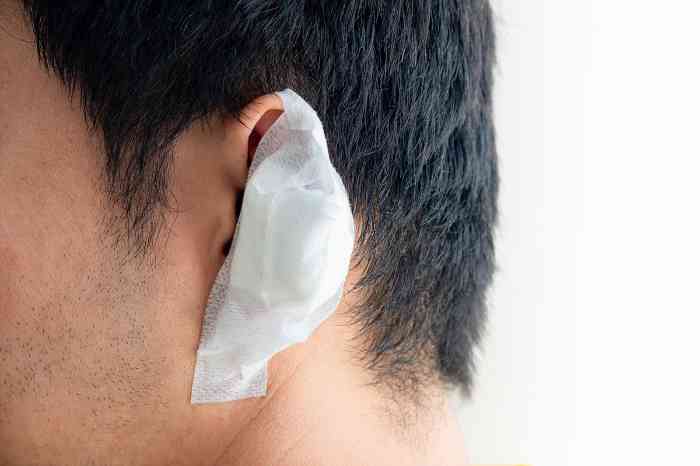
Meatoplasty surgery typically lasts one to three hours, after which the area will be filled with antibiotic fluid and covered with a bandage. Packing inside the ear canal may cause temporary hearing difficulties as the area heals.
Meatoplasty ear recovery time often takes two to three weeks. After the surgery, you may experience some dizziness, which can last up to a few days. However, you should contact your doctor if it worsens. Pain and discomfort are a normal part of the recovery process. During this time, you must follow the instructions given by your doctor and rest.
Make sure to take all medications as directed, and care for the incisions and packing to help manage pain and prevent infection. Refrain from driving or climbing stairs until the initial dizziness after surgery has passed, and avoid heavy lifting and strenuous activity for at least two weeks or as instructed by your doctor. You should also avoid flying and swimming until your doctor gives you clearance to do so.
In the several weeks after your surgery, you will also attend follow-up visits with your doctor to monitor the meatoplasty ear recovery process. Your doctor will help determine when the stitches and packing are ready to be removed, as well as advise you on when you can return to your routine.
A successful meatoplasty will result in a sufficiently enlarged external auditory canal that allows enough air to enter and keep your ear dry and prevent blockage. However, while meatoplasty of the external ear is generally considered safe, there are potential risks associated with the surgery. In some instances, you may experience one or more of the following complications:
Ear canalplasty is another type of surgery proven to safely and effectively widen the ear canal.3 While meatoplasty reconstructs the meatus by rearranging or removing cartilage on the outer part of the ear, canalplasty widens the deeper, bony part of the ear canal. Ear canalplasty is often performed with a meatoplasty or mastoidectomy. It might be needed if there are bone growths in the ear canal. These growths can block the ear and make it hard to hear.
1. Aljehani, Mariam et al. “Effectiveness of meatoplasty techniques alone or as adjunct to other surgeries in chronic ear disease: A systematic review.” Sage Open Medicine, vol. 13, 2025, doi:10.1177/20503121251376179.
2. Narayan, Surbhi, et al. “A clinical study of outcome of two different methods of meatoplasty following modified radical mastoidectomy.” Asian Journal of Medical Sciences, vol. 13, no. 7, 2022, pp. 128-131. doi: 10.3126/ajms.v13i7.43350.
3. Elzomor, Amir et al. “Cholesteatoma: Canalplasty for External Auditory Stenosis in a Pediatric Patient.” Cureus, vol. 15, no. 12, 2023, doi:10.7759/cureus.51188.


 Our licensed experts will help you with any questions you may have

 Schedule your free hearing test