Your ears get most of the credit for hearing, but your brain is an equal partner in the process. Working together, the ears and the brain convert energy waves traveling through the air into words you understand and sounds you recognize. With age, natural changes happen in your ears and your brain—often unavoidably—that affect how you hear. With expert help from Dr. Thomas Tedeschi, Miracle-Ear’s chief audiologist (who holds doctorates in both audiology and neuroscience), we’ll explore what you can expect as a normal part of aging and how you can protect and support your hearing and your brain for the long term.
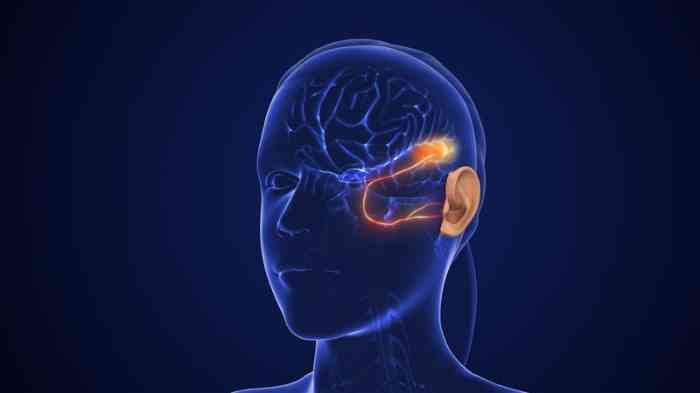
Hearing is a complex process, but Tedeschi breaks it down. “When we hear, sound comes into the ear, going through the middle ear into the inner ear. The inner ear is a transducer that turns mechanical energy into electrical energy and sends it up to the brain. Then it goes to the auditory cortex of the brain and the auditory cortex is what deciphers all the signals that are coming in.”
The quality of that process changes over our lifetime. Natural, age-related hearing loss, known as “presbycusis,” is extremely common. As much as 80% of people over 70 have age-related hearing loss of some degree.¹ When you begin to experience hearing loss, the messages transferred to the brain as electrical energy are not as clear as they used to be.
At the same time, changes naturally occur in the brain. “As we get older, a couple things start to happen,” Tedeschi says. “Our brain starts to get a little smaller and, [because of that], our cognitive function is not as sharp as it used to be.”
It all adds up to different results in the hearing relationship between your ears and your brain. With less processing power in the aging brain and weaker signals coming from the ears, it becomes harder to comprehend what’s being said or identify which sounds are happening around you.
A sound, on its own, is just a series of vibrations moving through the air. Your ears can take that in. But it takes a connection to the brain to identify your spouse’s voice or distinguish between a robin’s or a cardinal’s song. When there’s damage or even changed capacity in the brain, it can alter your ability to make those distinctions and perceptions. “Let’s say the hearing pathway is normal but the brain is undergoing changes,” Tedeschi says. “Then you’re going to have some perception problems.”
He adds that a stroke is a fitting example. “A person who has a stroke may be able to hear very clearly … but they have what we call receptive aphasia. Sound comes in, but their brain can’t process it because of the damage done by the stroke … and they have no idea what you’re saying.”
While a stroke is an extreme example, Tedeschi illustrates how changes in the brain (even the standard shrinkage that comes with age) affect the process we understand as hearing—not just receiving the sound but understanding what it means.
When you think about what your ears do all day every day, age-related hearing loss makes sense. The mechanical energy that Dr. Tedeschi mentioned is part of a physical chain reaction inside the ear every time you hear a noise: Sound bounces off the eardrum and triggers the movement of tiny bones. This then causes the hair cells of the inner ear to flex and wave, producing electrical energy2 that goes to the brain. Now multiply that process by the number of sounds you hear daily over the course of 60 or 70 years—it’s easy to see how wear and tear happens.
Plus, there are other factors that can add to the effects:
The brain is a very adaptable organ. As problems arise in certain areas, it works to compensate in other ways. Tedeschi points out that, consciously or not, people who are starting to struggle with hearing also start to watch and read people’s lips. The portion of the brain that handles visual information starts helping with hearing. “And then we start to see other areas of the brain working to help us hear,” Tedeschi says.
Many older adults also adapt—without even knowing it—by using their lifetime repository of knowledge about how people speak.
They can make educated guesses, using the limited things they’re hearing, the context of the conversation and their natural understanding of speech, to get the gist of what someone is saying. This is called “auditory closure.” It’s another way that the brain compensates, dialing up activity in one area when it’s not working so well in another.
“So now we have a lot of cognitive areas [of the brain] that are trying to help us hear better, which leads to getting tired and fatigued,” Tedeschi says. “That’s why you’ll see that sometimes older people get tired of listening. They’ll…go away where it’s quiet because their brain gets overloaded.”
This kind of fatigue is more than just feeling tired. It becomes a matter of overuse and underuse—and both can affect your brain health. With less input from your ears, the auditory part of your brain doesn’t get enough stimulation, and like a muscle with no exercise, it loses the ability to function. Meanwhile, other parts of your brain are working overtime to compensate for the loss of auditory input, leaving you mentally exhausted and more likely to withdraw from social interaction. Taken together, all these factors can increase the risk of cognitive decline and dementia.
Most age-related hearing loss is gradual, and your adaptable brain helps you adjust, bit by bit, so that everything feels fairly normal. This makes it harder for people to perceive their own hearing loss. “The individual with the hearing loss is the last person to realize they have it,” Tedeschi says. “Family members and people around them will always notice it first.”
It often takes a long time for people with hearing loss to be convinced that they would benefit from help. But in that time, their hearing loss is gradually worsening. Tedeschi says that by the time many people come in for a hearing check, they may have mild, moderate or even severe hearing loss. When they wear hearing aids for the first time, it’s a shock. “Their reaction is ‘Oh, wow, things are way too loud.’ Well, it’s not that they’re not way too loud, it’s just that that’s how much your hearing has changed.
“I [often] tell people, ‘The amount of hearing loss that you have right now, if it would have happened overnight, you would have been in the emergency room or at your family doctor saying, ‘Something’s happened!’”
The flip side to all this is that there are ways you can support your hearing and your brain simultaneously. Tedeschi stresses that the most important advice is to simply “do something.” That means getting a hearing test either regularly or at the prompting of a loved one.
Getting tested and finding hearing loss early makes it more likely that you’ll be able to find a solution that meets your expectations. “As we lose our hearing over time, without amplification, we see our ability to understand—our discrimination ability—[decrease],” Tedeschi says. “When that happens, it becomes more difficult to restore … that discrimination ability. That’s why we try to tell people that it’s better to get into hearing aids earlier than later. We cannot recover what’s been lost in the brain over time. But if we catch it early enough, we can prevent it from getting worse."
Once hearing loss starts, there are limited options for treating it—especially for the majority of people with mild to moderate hearing loss, for whom invasive options like surgery don’t make sense. Hearing aids are not only widely available—they are the most effective solution for people who need hearing support. And as more studies show, their benefits extend to the brain.
“What we see is that, when people start to wear hearing aids, that auditory cortex begins to function more,” Tedeschi says. “In some of the studies that we’ve seen, over six months to a year, in people wearing hearing aids who hadn’t before, the auditory cortex starts to take the sound energy in again and the other areas of the brain that were helping now don’t have to help.”
That reduced demand on the brain may help mitigate cognitive decline 4 but hearing aids also help with other problems associated with dementia. “We know that in cognitive decline, there are a number of comorbidities that are amplified with hearing loss,” Tedeschi says. “We see more falls, we see more social isolation—due to hearing loss. By utilizing hearing aids and by going through hearing remediation, we aren’t saying that we can prevent these things from happening, but we can slow it down. We can actually help an individual live a more sustainable life, a more enjoyable life. And that’s why the use of hearing aids is so important.”



 Are you or a loved one noticing signs of hearing loss?

 Come meet us in our centers