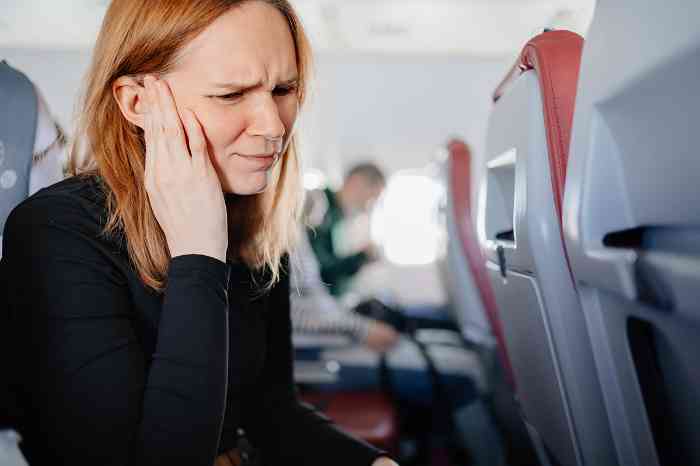

Ear barotrauma causes ear pain, pressure, and temporary hearing changes during flying or diving when pressure cannot equalize properly. Learn symptoms, causes, and prevention tips.
You know when you’re riding in an elevator or plane, and the sudden change in air pressure affects your body? Barotrauma ear (also called otitic barotrauma or eardrum barotrauma) occurs when there is a pressure imbalance between the air in the middle ear and atmospheric pressure outside. This can stress the eardrum and surrounding tissues, causing discomfort and, while rare, potential injury.
“Airplane ear” may come to mind, but the barotrauma meaning extends to any situation with rapid pressure changes, such as scuba diving, hiking in the mountains, and more.1
Ear barotrauma symptoms are similar to those of airplane ear symptoms, but can range from mild discomfort to severe pain, depending on the degree of pressure and individual sensitivity.
Common ear barotrauma symptoms include:
The intensity of ear pain and barometric pressure can fluctuate with changes in altitude, underwater descent, or even weather. Pressure in one ear may be more pronounced than pressure in the other.
Middle-ear barotrauma, also known as ear squeeze barotrauma, is the most common form of ear barotrauma. It occurs when pressure changes affect the space behind the eardrum. The middle ear is ventilated through the Eustachian tube, which connects to the back of the throat. But when this tube is blocked or cannot equalize pressure quickly enough, the eardrum can be pushed inward or outward, causing injury.
Symptoms of middle-ear barotrauma may include:
Inner ear barotrauma is less common, although more serious than middle-ear barotrauma. It occurs when extreme pressure differences damage the inner ear, including the cochlea and vestibular system. This requires immediate medical attention to prevent permanent hearing loss or balance disorders.
Symptoms specific to inner ear barotrauma include:
If you experience these symptoms, particularly sudden hearing loss or severe vertigo, you may need to consult an ENT or other physician about a perilymph fistula—an abnormal opening in the inner ear that can occur from severe pressure trauma.
Join the millions of Americans who have trusted Miracle-Ear for hearing care that’s tailored to their needs.
Barotrauma of the ear can occur in situations where atmospheric pressure changes faster than the Eustachian tube can adapt. The Eustachian tube typically opens during swallowing, yawning, or chewing, allowing air to flow through the middle ear to equalize external pressure. But if the Eustachian tube is overwhelmed, barotrauma can occur.
Common barotrauma ear causes include:
Risk factors for barotrauma include:
Important note: While barotrauma itself does not directly cause ear infections, it can lead to prolonged Eustachian tube closure, which may result in fluid accumulation and subsequent middle ear infection.
Ear barotrauma treatment depends on the severity of the condition and whether symptoms are resolved on their own or require medical intervention. Most cases respond well to at-home ear barotrauma remedies or common airplane ear treatments, but severe cases need medical care. The goal of treatment is to equalize pressure, reduce pain and inflammation, and prevent complications such as infection or permanent damage.
For mild cases, ear barotrauma home remedies can relieve symptoms. These work by helping the Eustachian tube open and equalize pressure.
These techniques are most effective when done during the pressure change itself or immediately afterward. If symptoms persist for hours despite these measures, see a doctor.
Unfortunately, at-home remedies don’t provide an instant ear barotrauma cure, but medications can help. Medicine for ear barotrauma can include:
Always consult a healthcare provider before using medicine for ear barotrauma, especially for children, pregnant individuals, or if you have cardiovascular conditions. Some decongestants can raise blood pressure or interact with other medications.
At-home remedies not providing relief? It’s a similar process for when airplane ear won’t go away. If symptoms like pain or hearing loss linger for more than two days, it’s best to see a healthcare provider. Especially if you experience:
Treatment for complicated barotrauma may include prescription-strength medications, procedures to drain fluid from the middle ear, or surgery to place tympanostomy tubes in chronic cases.
Try out Miracle-Ear online hearing test, your first step to better hearing is only a click away! In less than five minutes you'll have a better understanding of your hearing health.
That depends on how mild or severe your ear barotrauma is and whether complications develop.
Typical ear barotrauma recovery times are:
An ear barotrauma diagnosis is typically made through examination and patient history. A healthcare provider will examine the eardrum for signs of retraction, bulging, fluid behind the tympanic membrane, or perforation, and they will order tests if necessary.
Starting with prevention is the most effective approach. Ear barotrauma prevention strategies include:
For scuba divers: Descend slowly, equalize early and often (before pain occurs), and never dive with congestion or Eustachian tube dysfunction.
For infants and children: Infants have narrow Eustachian tube passageways, making them more susceptible to barotrauma during air travel.3 To alleviate symptoms in infants, feed them (bottle or breastfeed) during takeoff and landing to open their Eustachian tubes through swallowing. Keep the baby upright during feeding to prevent choking. For older toddlers, offer a sippy cup, pacifier, lollipops, chewing gum, or snack during pressure changes. Never force equalization maneuvers on young children—their ear structures are delicate.
It is not recommended to fly with active barotrauma symptoms because additional pressure changes can worsen symptoms and extend recovery time. If you must fly—and symptoms are mild—make preventive action a part of your travel plans and perform equalization techniques throughout the flight.
However, if your symptoms are severe, such as hearing loss, fluid drainage, or suspected eardrum rupture, do not fly until cleared by a healthcare provider, as that will increase the risk of complications.
Many people search for how to sleep with ear barotrauma because the pain and pressure can make rest extremely difficult. Elevating your head with extra pillows can help reduce congestion and promote drainage of the Eustachian tubes.
If only one ear is affected, try sleeping on the opposite side to reduce pressure on the injured ear. A warm compress can provide comfort and reduce inflammation, or taking an over-the-counter pain reliever 40 minutes before sleep can also help. If ear pain significantly affects your sleep or worsens at night, this may be a sign of infection. In that case, consult a healthcare provider.
1“Barotrauma.” Harvard Health Publishing, 21 May 2024, www.health.harvard.edu/a_to_z/barotrauma-a-to-z.
2“Scuba Diving: Decompression Illness and Other Dive-Related Injuries.” Centers for Disease Control and Prevention, Centers for Disease Control and Prevention, 23 Apr. 2025, www.cdc.gov/yellow-book/hcp/environmental-hazards-risks/scuba-diving-decompression-illness-and-other-dive-related-injuries.html.
3“Ears and Altitude (Barotrauma).” ENT Health, American Academy of Otolaryngology–Head and Neck Surgery Foundation, 24 Jan. 2024, www.enthealth.org/conditions/ears-and-altitude-barotrauma/.


 Are you experiencing tinnitus?