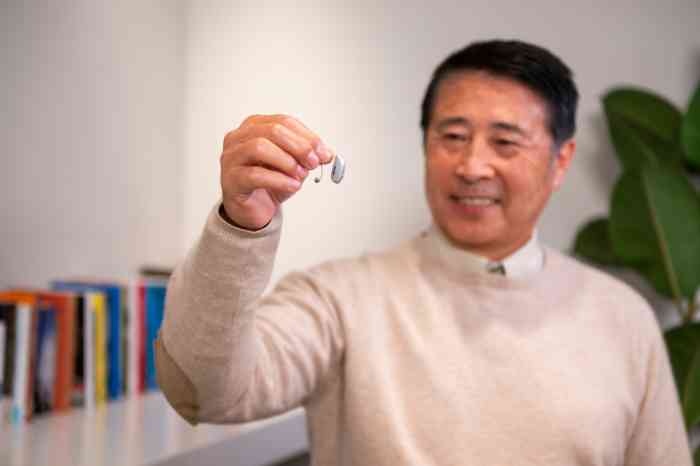
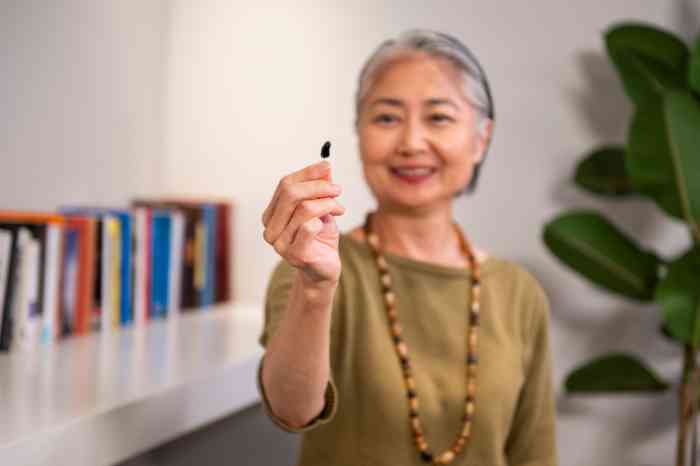
Man showing a hearing aid

Hearing aids for SNHL

Sensorineural hearing loss

Sensorineural hearing loss (SNHL) is the most common type of hearing loss, and it can range from mild to profound, causing communication difficulties, social isolation and other quality-of-life impacts.1 Thankfully, there are various hearing aids that may provide relief—from devices that fit in the outer ear to those that can be implanted. Read on to learn more about the options and types of hearing loss they address.

Key Takeaways

  • Sensorineural hearing loss is the most common type of hearing loss.
  • Sufferers of sensorineural hearing loss may describe a lack of clarity, rather than a lack of volume.
  • Hearing aids may help alleviate symptoms associated with sensorineural hearing loss.
  • Behind-the-ear hearing aids, the most popular type of hearing aid, can help address hearing loss ranging from mild to profound.
  • Certain factors —like hearing loss severity, its cause and your lifestyle preferences—will determine which style of hearing aid is the best fit.
  • Hearing aids might improve speech recognition but do not fully restore hearing in cases of sensorineural hearing loss.

Symptoms of sensorineural hearing loss

Sensorineural hearing loss symptoms may include:1, 2

  • Loss of sound clarity
  • Ringing in the ears (tinnitus)
  • A feeling of ear fullness
  • Disequilibrium (lack of stability)
  • Vertigo (a type of symptom associated with Ménière's disease, an inner ear disorder)
Man experiencing ear pain

Any of those symptoms sound familiar?

If you or a loved one is experiencing sensorineural hearing loss, visit us for a free hearing test.

What do people with sensorineural hearing loss hear?

People with SNHL describe a loss of clarity in their hearing rather than a loss of volume.1 Sounds are often muffled, and those with SNHL might also experience tinnitus, a ringing in the ears.

Can hearing aids help sensorineural hearing loss?

Yes, hearing aids can help sensorineural hearing loss. This mainstay treatment can be beneficial to those who cannot hear sounds softer than 30 db (slightly higher than the volume of a whisper).3

Sudden sensorineural hearing loss (SSHL) is defined as an unexplained, rapid loss of hearing that can occur all at once or over a few days.2 Hearing aids for sudden sensorineural hearing loss may be the same type as those recommended for other forms of hearing loss. The most common are behind-the-ear (BTE) hearing aids, which detect sound and amplify it for the listener.1

A hearing condition is considered to be bilateral sensorineural hearing loss when both ears are affected. In this case, hearing aids may be recommended for both ears.1

How hearing aids help sensorineural hearing loss

Hearing aids help with sensorineural hearing loss by receiving sound through a microphone and amplifying it for the listener. In this process, sound waves are converted to electrical signals and sent to an amplifier, which increases the power of these signals and transfers them to the ear through a speaker (receiver).4

There are two ways hearing aids can amplify sound. While analog hearing aids convert sound waves to electrical signals, digital hearing aids for sensorineural hearing loss convert the sound signal to numerical code and are more programmable than analog. They can be set to amplify specific frequencies or detect sounds coming from a specific direction.4

Most modern hearing aids, including those sold at Miracle-Ear, are digital

Types of hearing aids for sensorineural hearing loss

Miracle-Ear offers several types of hearing aids for sensorineural hearing loss. The best type of hearing aids for sensorineural hearing loss depends on the cause and severity of the condition.  Your hearing care professional can help determine which option is right for you.

Hearing aids for mild-to-moderate hearing loss include:4

  • Receiver in Canal (RIC)
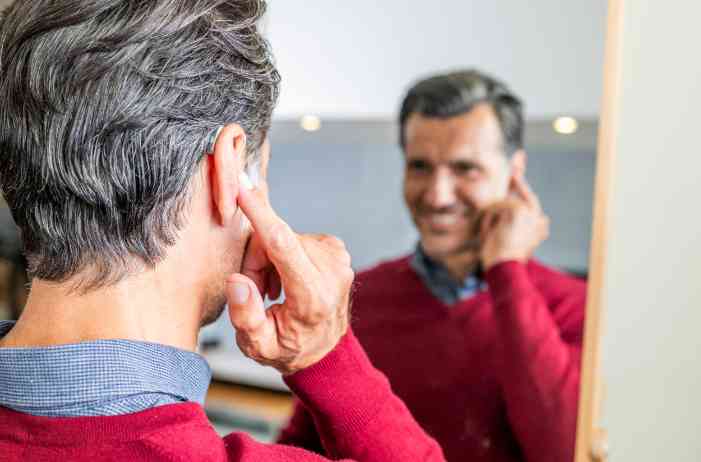
  • Behind-the-ear hearing aids: These types of hearing aids feature a hard plastic case housing the device’s electronics, which is then worn behind the ear. A plastic tube then connects the case to a custom earmold that fits inside the ear.
  • In-the-canal hearing aids: These compact hearing aids fit either partly or almost completely inside the ear canal.
  • In-the-ear hearing aids: These fit completely inside the outer ear.

Hearing aids for severe sensorineural hearing loss include:4

  • Behind-the-ear hearing aids: These types of hearing aids feature a hard plastic case housing the device’s electronics, which is then worn behind the ear. A plastic tube then connects the case to a custom earmold that fits inside the ear.
  • In-the-ear hearing aids: These compact hearing aids fit either partly or almost completely inside the ear canal.
  • Implantable hearing aids: These hearing aids are designed to enhance transmissions of sound vibrations into the inner ear. They may come in the form of middle ear implants, bone-anchored hearing aids and cochlear implants.

Hearing aids for profound sensorineural hearing loss include:

  • Behind-the-ear hearing aids: These types of hearing aids feature a hard plastic case housing the device’s electronics, which is then worn behind the ear. A plastic tube then connects the case to a custom earmold that fits inside the ear.
  • Cochlear implants: These devices are surgically attached to the cochlea, directly stimulating auditory neurons. They may enhance speech perception for those who don’t benefit from traditional hearing aids.5
patient trying hearing aids at store

Find the right hearing aid for you

If you have questions about hearing aid domes or you’re looking to find the right fit, schedule an appointment with a licensed HCP at your local Miracle-Ear.

Hearing aid features for sensorineural hearing loss

Directional microphones are designed to focus on sounds coming from a specific direction, usually the direction the user is facing. In the process, they reduce sound coming from other directions.4

Feedback suppression ensures the hearing aid provides the necessary amplification without producing whistling noises. This can be present when amplified sound from the hearing aid re-enters the speaker or when the necessary amount of sound amplification required is more than the device’s capacity.6

Digital signal processing is a fundamental technology in modern hearing aids. This process converts sound waves to numerical code before amplifying them, which allows enhanced programming and flexibility.4

Also known as T-coil, the telecoil is a small copper coil that acts as an antennae, receiving sound through circuitry rather than a microphone. The telecoil makes it easier to understand speech in particularly noisy environments, reducing background noise while focusing on the desired sound.4

Bluetooth connectivity allows hearing aids to be wirelessly paired with devices for direct sound transmission, nullifying reverberations in the room and improving speech recognition.7

Tinnitus masking augments the sound of external noise to cover ringing in the ears, aiming to blend tinnitus into the background sounds.5

Frequency lowering improves the audibility of high-frequency sounds for those who have trouble hearing in that range. High-frequency sensorineural hearing loss hearing aids may use frequency compression to “squeeze” high frequencies into compressed lower frequencies.8

Hearing aids fitting: Conductive vs sensorineural hearing loss

The hearing aid fitting process is a multi-step procedure that involves collaboration between the hearing care professional, the patient and their care partners.

Hearing aids for chronic conductive hearing loss (CHL) may involve implanting the device. For sensorineural hearing loss, the fitting process includes electroacoustic analysis using a test box and real ear measurements to ensure the hearing aid performs as intended. The process also analyzes physical fit, considering comfort, feedback, ease of removal/insertion and microphone controls.9

Hearing aids for SNHL

Depending on the nature and severity of the hearing loss, in addition to the individual’s lifestyle preferences, hearing aids for SNHL can take the form of behind-the-ear, in-the-ear, canal and implantable devices.4

Hearing aids for CHL

Hearing aids used for conductive hearing loss help bypass the problem preventing sound waves from reaching the inner ear. These hearing aids typically work via bone conduction, which sends sound by vibration directly to the cochlea.9

Cost and insurance of hearing aids for SNHL

Hearing aids typically range in cost from about $1,000 to $7,000 per pair, with the average pair costing $2,100. Medicare Part B may cover a diagnostic hearing and balance exam every 12 months. Original Medicare (Part A and Part B) does not cover hearing aid or hearing exams, but some Medicare Advantage plans include hearing coverage. Private health insurance generally does not include hearing coverage.10

Hearing aids for children with sensorineural hearing loss

The most common types of hearing aids for children are behind-the-ear, though other types may be used depending on the nature of the hearing loss. In-the-ear hearing aids are typically not used for children due to how often the casings need to be replaced as the child grows.11

People in a restaurant

Be a part of the conversation

Don't let vertigo isolate you from the people and moments that matter. Book a free hearing test at your nearest Miracle-Ear today and start your journey to reconnecting with the world around you.

FAQs about hearing aids for sensorineural hearing loss

Hearing aids are designed to improve hearing and speech recognition for individuals with SNHL.

Hearing aids can be used for both conductive hearing loss and sensorineural hearing loss. Conductive hearing loss typically requires devices that bypass the outer and middle ear, often through bone conduction.

Hearing aids may not be able to improve profound sensori-neural hearing loss. In those cases cochlear implants are recommended.4

Sources

1 National Center for Biotechnology Information. "Sensorineural Hearing Loss." NCBI Bookshelf, www.ncbi.nlm.nih.gov/books/NBK565860/.

2 National Institute on Deafness and Other Communication Disorders. "Sudden Deafness." NIDCD, www.nidcd.nih.gov/health/sudden-deafness.

3 Yale Environmental Health & Safety. "Decibel Level Comparison Chart." Yale University, https://ehs.yale.edu/sites/default/files/files/decibel-level-chart.pdf. 

4 National Institute on Deafness and Other Communication Disorders. "Hearing Aids." NIDCD, www.nidcd.nih.gov/health/hearing-aids#hearingaid_04.

5 American Tinnitus Association. "Hearing Aids / Masking Devices." American Tinnitus Association, https://www.ata.org/about-tinnitus/therapy-and-treatment-options/hearing-aids-masking-devices/.

6 Zheng, C., Wang, M., Li, X., and Moore, B. C. J. "DeepMFC for Feedback Control in Hearing Aids: Performance with Speech and Music." PubMed, https://pubmed.ncbi.nlm.nih.gov/37551089/.

7 PubMed Central. "Advances in Hearing Aid Technology." PMC, pmc.ncbi.nlm.nih.gov/articles/PMC10147467/.

8 Glista, Danielle, and Susan Scollie. "The Use of Frequency Lowering Technology in the Treatment of Severe-to-Profound Hearing Loss: A Review of the Literature and Candidacy Considerations for Clinical Application." Seminars in Hearing, vol. 39, no. 4, 26 Oct. 2018, pp. 377–389. PubMed Central, https://pmc.ncbi.nlm.nih.gov/articles/PMC6203461/.

9 American Speech-Language-Hearing Association. "Hearing Aids for Adults." ASHA Practice Portal, n.d., www.asha.org/practice-portal/professional-issues/hearing-aids-for-adults/. Accessed 13 Aug. 2025.

10 National Council on Aging. "Hearing Aid Buyers Guide." NCOA, 3 Apr. 2025, www.ncoa.org/article/hearing-aid-buyers-guide/.

11 American Speech-Language-Hearing Association. "Hearing Aids for Children." ASHA, n.d., www.asha.org/public/hearing/hearing-aids-for-children/.

Get support and advice

Book an appointment online

Book now

Take a free online hearing test

Start test

Find a hearing aid center near you

Search now